- Saint Declan of Ardmore: July 24, c. 5th century (exact dates unknown): Ardmore, County Waterford Declan, a pre-Patrician saint, founded a monastery at Ardmore, a major early Christian site with a cathedral, round tower, and oratory. He converted the Déisi people and performed miracles, such as protecting Ardmore from floods. The St. Declan’s Pilgrim Path connects Ardmore to Cashel, Tipperary. His Vita claims he evangelized before St. Patrick.
- Saint Ita of Killeedy: January 15, c. 475–570: Decies, County Waterford (birthplace) Born in Decies, Waterford, to a noble family, Ita refused marriage to live as a virgin. Known as the “Brigid of Munster,” she embodied wisdom, purity, and needle skills, founding a convent at Killeedy, Limerick. Her miracles included healing and visions. She is venerated in Waterford as a native saint.
- Saint Cataldus of Lismore: May 10, c. 7th century (exact dates unknown): Lismore, County Waterford Cataldus, an Irish monk, founded a monastery at Lismore before traveling to Jerusalem. Shipwrecked in Taranto, Italy, he became its bishop, protecting the city from plague and floods. His coffin contained a Celtic cross and an Irish oak staff, symbols of his Irish origin. His cult is strong in Italy but rooted in Waterford.
- Saint Otteran (Odhran) of Iona: October 27, c. 6th century (exact dates unknown): Waterford City, County Waterford (via diocese) Otteran, a monk of Iona, accompanied St. Columba to Scotland and was the first to die there, buried on Iona. His relics were later venerated in Waterford, where he is patron of the diocese. A Viking-era church in Waterford City is dedicated to him.
- Saint Carthage (Mochuda) of Lismore: May 14, c. 555–637: Lismore, County Waterford Carthage, a disciple of St. Comgall, founded a monastery at Rahan, Offaly, before being expelled and establishing Lismore’s monastery, a major center of learning. Known for strict monastic rules and miracles like curing ailments, he is a patron of the Waterford and Lismore diocese. His Vita highlights his piety.
- Saint Moling of St. Mullins: June 17, c. 6th century (exact dates unknown): Born in Waterford, venerated in St. Mullins, Carlow Born in Waterford, Moling founded a monastery at St. Mullins, Carlow, but his Waterford origin ties him to the county. Known for miracles, such as building a mill without labor, he was a bishop and scholar. His feast is noted in Irish calendars, and his cult spread to Waterford.
- Saint Cronan of Lismore: June 1, c. 6th century (exact dates unknown): Lismore, County Waterford Cronan, distinct from Cronan of Roscrea, is linked to Lismore through monastic foundations. Little is known, but his feast is recorded in the Martyrology of Tallaght, reflecting local veneration. He likely contributed to Lismore’s early Christian community.
- Saint Mac-Óige of Lismore: December 3, c. 6th century (exact dates unknown): Lismore, County Waterford Mac-Óige, an obscure saint, is associated with Lismore’s monastic community. His feast is listed in the Martyrology of Donegal, but details are scarce. He likely lived as a monk or hermit, contributing to Waterford’s early Christian heritage.
- Saint Gobnait of Ballyvourney: February 11, c. 6th century (exact dates unknown): Dunquin, County Waterford (via early life) Gobnait, born in Waterford, fled to the Aran Islands to escape persecution before founding a convent at Ballyvourney, Cork. Known for miracles involving bees and healing, she is venerated in Waterford as a native saint. Her cult is strong in Munster.
- Saint Cuan of Kilcoonagh: February 4, c. 6th century (exact dates unknown): Kilcoonagh, County Waterford Cuan, an obscure saint, is linked to Kilcoonagh, possibly a monastic site in Waterford. His feast is recorded in the Martyrology of Tallaght, but little else is known. He represents the local veneration of early Christian figures in Waterford.
- Saint Fionan Caue: December 8, c. 6th century (exact dates unknown): Unknown parish, County Waterford Fionan Caue is an obscure saint listed in the Martyrology of Donegal, associated with Waterford. Details are minimal, but he likely lived as a monk or hermit, contributing to the county’s early Christian landscape. His feast reflects local devotion.
- Saint Tri Ingena Ailella (Three Daughters of Ailill): August 9, c. 6th century (exact dates unknown): Unknown, venerated in Waterford These three saintly sisters are listed in the Martyrology of Tallaght, associated with Waterford through regional devotion. Their identities are unknown, but their feast reflects the Irish tradition of venerating sibling groups, possibly nuns or ascetics.
Saints
Antrim – Armagh – Carlow – Cavan – Clare – Cork – Derry – Donegal – Down – Dublin – Fermanagh – Galway – Kerry – Kildare – Kilkenny – Laois – Leitrim – Limerick – Longford – Louth – Mayo – Meath – Monaghan – Offaly – Roscommon – Sligo – Tipperary – Tyrone – Waterford – Westmeath – Wexford – Wicklow
Sacred Places
Antrim – Armagh – Carlow – Cavan – Clare – Cork – Derry – Donegal – Down – Dublin – Fermanagh – Galway – Kerry – Kildare – Kilkenny – Laois – Leitrim – Limerick – Longford – Louth – Mayo – Meath – Monaghan – Offaly – Roscommon – Sligo – Tipperary – Tyrone – Waterford – Westmeath – Wexford – Wicklow
Holy Wells
Antrim – Armagh – Carlow – Cavan – Clare – Cork – Derry – Donegal – Down – Dublin – Fermanagh – Galway – Kerry – Kildare – Kilkenny – Laois – Leitrim – Limerick – Longford – Louth – Mayo – Meath – Monaghan – Offaly – Roscommon – Sligo – Tipperary – Tyrone – Waterford – Westmeath – Wexford – Wicklow.County Waterford:
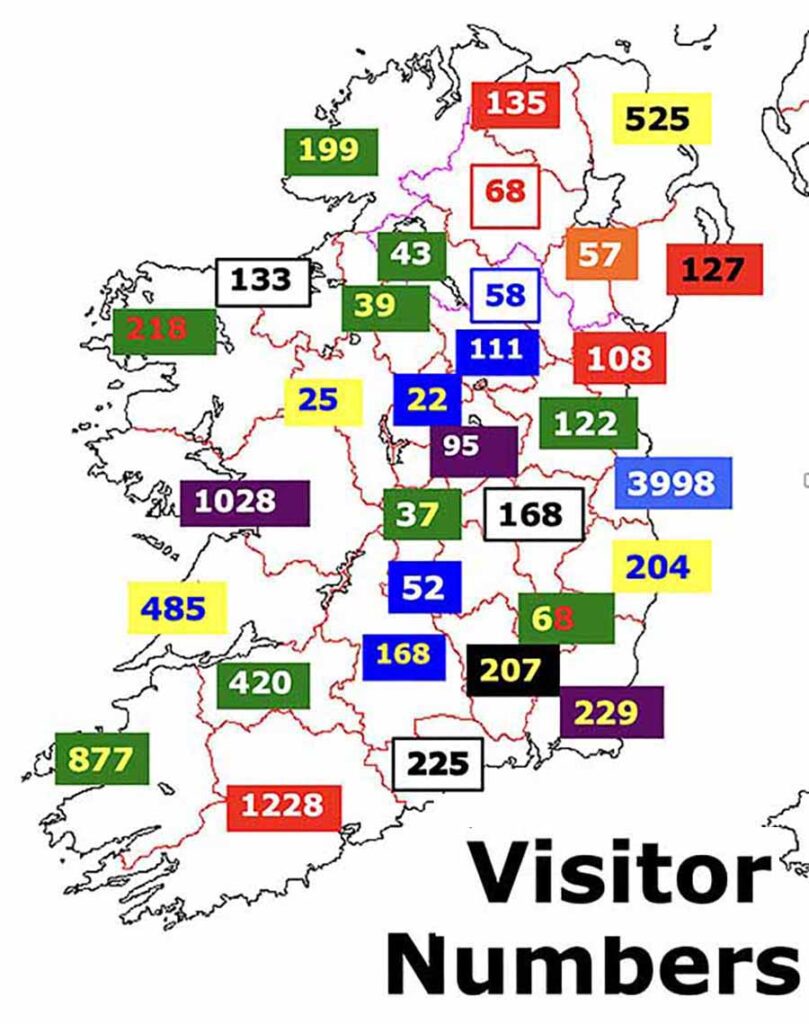
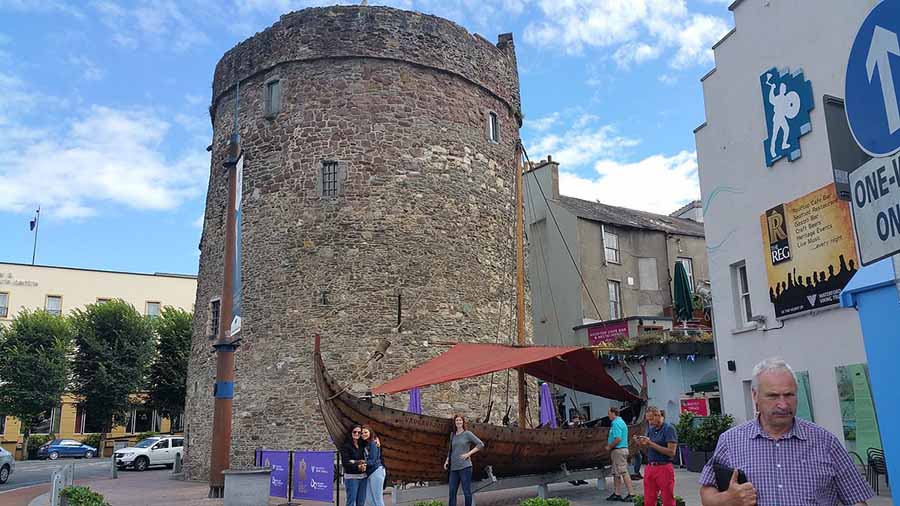
Ireland’s county Waterford is steeped in Viking and medieval history, with Waterford City’s Reginald’s Tower and Viking Triangle showcasing ancient artefacts. The Copper Coast, a UNESCO Geopark, offers dramatic coastal walks, while the Lismore Castle gardens provide serene beauty. Other attractions include the beaches of Tramore and historic Dunmore East. Waterford is Ireland’s 21st largest county by size (1,838 square km) and 20th largest by population (127,363). Population peaked at 196,187 in 1841 and reached its lowest point, 71,439 in 1961. In terms of hospitality, Waterford is Ireland’s ninth most visited tourist county with around 225,000 international visitors per year.
Introduction – Adventure – Anthem – Archaeology – Attractions – Awards – Birdwatching –– Camping –Castles – Churches – Contact list – Cycling – Dining – Equestrian – Festivals – Fishing – Folklore – Gardens – Golf – Graveyards – Happening – Haunted – Highest – Hiking – History – Holy Wells – Hotels – Hotels top 8 – Hunting & shooting – Instagrammable – Itineraries – Largest town – Luxury – MICE – Movies – Music – Name – New – Novelists – Off the beaten track – Poets – Pubs – Quotes – Random Facts – Restaurant Awards – Sacred Places – Saints – Songs – Spas – Sports – Sunsets – Sustainable – Things to do – Towns – Video – Villages – Walking – Wanderlist – Weddings – Wild swimming – Writers – 1837 – 1846– 1852 – 1909 – 1955 – 1980 –