- Saint Columb’s Cathedral, Navan: Built in 1818 by Francis Johnston, this Gothic Revival Catholic church features a prominent tower and pointed arches. Its interior includes a marble altar and stained glass by Harry Clarke. It is located on Ludlow Street.
- Saint Patrick’s Church, Trim: Designed by William Hague in 1891, this Gothic Revival Catholic church replaced an earlier structure. Its spire reaches 120 feet, and the interior includes a high altar of Sicilian marble. It is situated on Market Street.
- Saint Colmcille’s Church, Kells: Built in 1778 and remodelled in 1858 by J.J. O’Callaghan, this Catholic church incorporates a medieval round tower from a 10th-century monastery. Its simple facade contrasts with ornate stained glass. It is located on Carrick Street.
- Saint Mary’s Church, Drogheda (on the south side of the Boyne in cunty Meath): Constructed in 1846 by J.J. McCarthy, this Catholic church blends Gothic and Romanesque styles. Its 150-foot tower houses a bell cast in Dublin, and the interior features a carved oak pulpit. It stands on James Street.
- Saint Peter’s Church, Dunboyne: Constructed in 1867 by John Bourke, this Gothic Revival Catholic church features a cruciform layout and a bell tower. Its interior includes a carved stone font from the 13th century. It stands on Main Street.
- Assumption of the Blessed Virgin Mary, Athboy: Designed by Thomas Dillon in 1845, this Catholic church showcases Gothic Revival elements with a tall spire. Its construction marked the post-Emancipation Catholic revival. It is found on Convent Road.
- Saint Finian’s Church, Clonard: Built in 1809, with no recorded architect, this Catholic church replaced a medieval monastery founded by St Finian. Its plain design includes a small belfry and 19th-century stained glass. It is located in Clonard village.
- Saint Mary’s Church, Oldcastle: Constructed in 1830 and expanded in 1870 by an unknown architect, this Catholic church features a simple Gothic facade. Its interior houses a wooden altar carved locally. It stands on Chapel Street.
- Saint Laurence’s Church, Duleek: Rebuilt in 1816 on a medieval site, this Catholic church, with no documented architect, incorporates a 12th-century stone arch. Its modest design serves a rural parish. It is situated in Duleek village.
- Saint Erc’s Church, Slane: Designed by Francis Johnston in 1820, this Church of Ireland building features a Georgian Gothic style with a square tower. Its graveyard includes 18th-century headstones. It is located on Main Street.
Churches
Antrim – Armagh – Carlow – Cavan – Clare – Cork – Derry – Donegal – Down – Dublin – Fermanagh – Galway – Kerry – Kildare – Kilkenny – Laois – Leitrim – Limerick – Longford – Louth – Mayo – Meath – Monaghan – Offaly – Roscommon – Sligo – Tipperary – Tyrone – Waterford – Westmeath – Wexford – Wicklow
Holy Wells
Antrim – Armagh – Carlow – Cavan – Clare – Cork – Derry – Donegal – Down – Dublin – Fermanagh – Galway – Kerry – Kildare – Kilkenny – Laois – Leitrim – Limerick – Longford – Louth – Mayo – Meath – Monaghan – Offaly – Roscommon – Sligo – Tipperary – Tyrone – Waterford – Westmeath – Wexford – Wicklow
Sacred Places
Antrim – Armagh – Carlow – Cavan – Clare – Cork – Derry – Donegal – Down – Dublin – Fermanagh – Galway – Kerry – Kildare – Kilkenny – Laois – Leitrim – Limerick – Longford – Louth – Mayo – Meath – Monaghan – Offaly – Roscommon – Sligo – Tipperary – Tyrone – Waterford – Westmeath – Wexford – Wicklow
Saints
Antrim – Armagh – Carlow – Cavan – Clare – Cork – Derry – Donegal – Down – Dublin – Fermanagh – Galway – Kerry – Kildare – Kilkenny – Laois – Leitrim – Limerick – Longford – Louth – Mayo – Meath – Monaghan – Offaly – Roscommon – Sligo – Tipperary – Tyrone – Waterford – Westmeath – Wexford – Wicklow
County Meath:
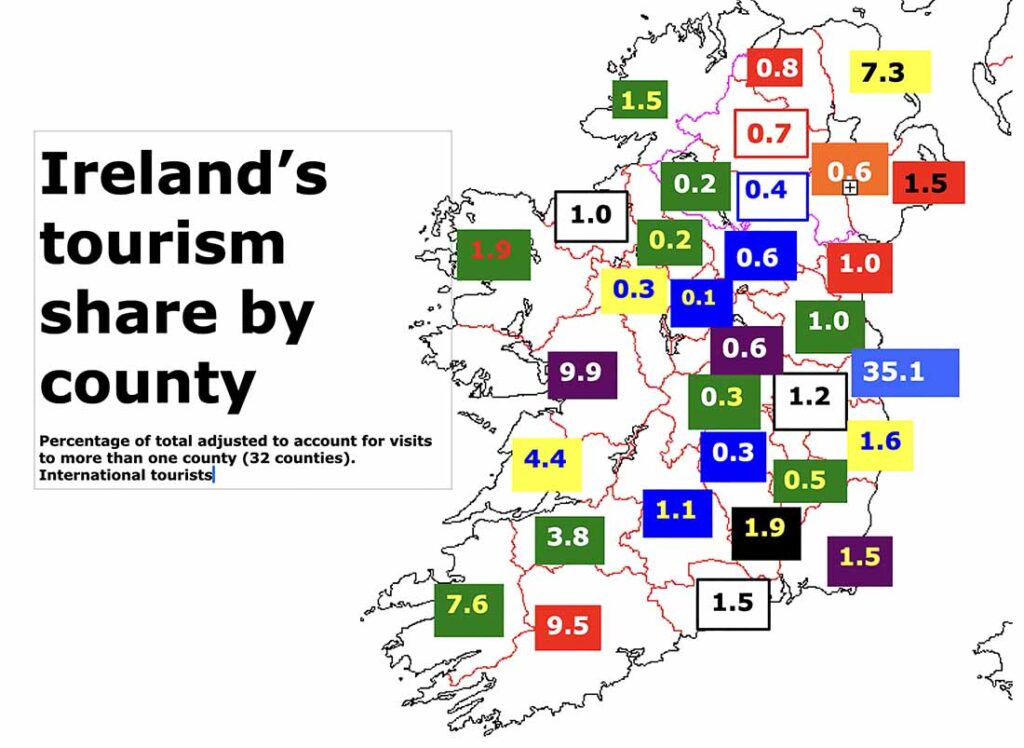
Ireland’s county Meath is steeped in Ireland’s ancient past, with the Hill of Tara offering a glimpse into royal history and panoramic views. The UNESCO-listed Brú na Bóinne complex, including Newgrange and Knowth, showcases intricate Neolithic tombs, while Trim Castle provides medieval grandeur. Other attractions include the Boyne River’s scenic walks and historic Slane Castle. Meath is Ireland’s 14th largest county by size (2,336 square km) and eighth largest by population (220,826). Population previously peaked at 183,828 in 1841 and reached its lowest point, 62,969 in 1926. In terms of hospitality, Meath is Ireland’s 19th most visited tourist county with around 122,000 international visitors per year.
Introduction – Adventure – Anthem – Archaeology – Attractions – Awards – Birdwatching – Camping – Castles – Churches – Contact list – Cycling – Dining – Equestrian – Festivals – Fishing – Folklore – Gardens – Golf – Graveyards – Happening – Haunted – Highest – Hiking – History – Holy Wells – Hotels – Hotels top 8 – Hunting & shooting – Instagrammable – Itineraries – Largest town – Luxury – MICE – Movies – Music – Name – New – Novelists – Off the beaten track – Poets – Pubs – Quotes – Random Facts – Restaurant Awards – Sacred Places – Saints – Songs – Spas – Sports – Sunsets – Sustainable – Things to do – Towns – Video – Villages – Walking – Wanderlist – Weddings – Wild swimming – Writers – 1837 – 1846 – 1852 – 1909 – 1955 – 1980 –