- Our Lady’s Well (Clybanane, near Fanure): Pattern day: August 15 (Feast of the Assumption, revived in August 1975). Located near Killeigh, this well is also known as “The Well of Saint Patrick’s Coachman” due to a legend that Saint Patrick dedicated it to the Blessed Virgin after interring his charioteer Odhran nearby. Historically, pilgrims adorned a nearby oak tree (now gone) with religious objects. It was a significant pilgrimage site for safe journeys, with revived devotions in 1975. The well is noted for general healing properties.
- Boiling Well (near Roscrea): Pattern day: Not specifically recorded, possibly Lughnasa (August 1) or a local saint’s feast. Situated off the old Birr Railway line, about 2 km from Roscrea near the Moneen (a tributary of the Little Brosna), this warm, natural spring is named for its bubbling appearance. It’s a lesser-known well, also used by anglers, and reflects Offaly’s tradition of wells near watercourses with general curative associations.
- Saint Manchan’s Well (Lemanaghan): Pattern day: January 24 (Saint Manchan’s feast day, though not actively observed today). Located near the Lemanaghan ecclesiastical complex, this well is dedicated to Saint Manchan, a 7th-century saint. It’s associated with cures for warts, neuralgia, and even cancer. Pilgrims leave clooties (rags), rosaries, and coins on a nearby tree, following the tradition of “rounds” for healing. The well is part of a historic site with a church and bullaun stones.
- Saint Ciaran’s Well (Clonmacnoise): Pattern day: September 9 (Saint Ciaran’s feast day, or the third Sunday in September). Situated at the famous Clonmacnoise monastic site, this well is linked to Saint Ciaran, the founder. It’s known for curing stomach ailments and promoting vitality. Pilgrims perform “long station” rituals, leaving clooties on a nearby tree. The pattern day attracts over 100-150 people for prayers and devotions, though numbers vary due to competing events like the All-Ireland final.
- Holy Well near Cistercian Abbey Mill (Kilcooly, near Roscrea): Pattern day: Not specifically recorded, possibly August 1 (Lughnasa) or a local saint’s feast. This well, near the former Cistercian Abbey Mill, is one of several in the Sharavogue Bog area. It’s less documented but part of Offaly’s rich holy well tradition, likely visited for general healing. Its proximity to monastic ruins suggests early Christian significance, possibly used for baptisms.
- Tobar na Súl (Eye Well, near Birr): Pattern day: Not specifically recorded, possibly tied to a local saint or August 15 (Assumption). Named for its reputed ability to cure eye ailments, this well is part of Offaly’s tradition of specialized healing wells. Located in the Birr area, it likely attracted pilgrims performing rounds and leaving offerings like coins or rags. Its exact location is less clear in modern records, reflecting the decline of some sites.
- Tober Kieran (near Killeigh): Pattern day: September 9 (Saint Kieran’s feast day, though not actively observed). Dedicated to Saint Kieran (or Ciaran), this well near Killeigh is associated with general healing properties. It’s part of the county’s monastic heritage, likely used for baptisms in early Christian times. The well is less visited today, but its name suggests historical significance for local pilgrims.
- Saint Colman’s Well (near Tullamore): Pattern day: October 29 (Saint Colman’s feast day, though not confirmed for active observance). Linked to Saint Colman, this well is noted for curing general ailments. It’s part of Offaly’s network of wells near ecclesiastical sites, often adorned with simple offerings like pebbles or rosaries. Its exact location may be obscure due to modern disrepair, but it remains part of local folklore.
- Tobar na Plaighe (Well of the Plague, near Edenderry): Pattern day: Not specifically recorded, possibly August 1 (Lughnasa). Named for its association with curing plague-related ailments, this well reflects the tradition of wells addressing specific diseases. Located in the Edenderry area, it was likely a site for rounds and offerings, though detailed records are scarce due to declining pilgrimage practices.
- Saint Brigid’s Well (near Kilcormac): Pattern day: February 1 (Saint Brigid’s feast day, though not actively observed). Dedicated to Saint Brigid, Ireland’s patroness, this well is associated with general healing and blessings. Near Kilcormac, it likely served as a local pilgrimage site, with pilgrims performing rounds and leaving clooties or coins. Its significance ties to Brigid’s widespread veneration in the region.
- Saint Patrick’s Well (near Banagher): Pattern day: March 17 (Saint Patrick’s feast day, though not actively observed). One of several wells in Offaly named for Saint Patrick, this site near Banagher is linked to the saint’s missionary work. It’s reputed for curing sore body parts and general ailments. Pilgrims historically left coins or hair ties as offerings, following traditional rounds.
- Tobar na nGealt (Well of the Insane, near Ferbane): Pattern day: Not specifically recorded, possibly tied to a local saint or August 1 (Lughnasa). This well, named for its association with curing mental illness, is part of Offaly’s tradition of specialized wells. Located near Ferbane, it was likely visited by pilgrims seeking mental clarity or relief from psychological ailments, with rituals involving rounds and water application.
Offaly’s holy wells, like those across Ireland, often predate Christianity, with pagan water worship adapted by early saints like Patrick for baptisms, lending them sacred status.
Holy Wells
Antrim – Armagh – Carlow – Cavan – Clare – Cork – Derry – Donegal – Down – Dublin – Fermanagh – Galway – Kerry – Kildare – Kilkenny – Laois – Leitrim – Limerick – Longford – Louth – Mayo – Meath – Monaghan – Offaly – Roscommon – Sligo – Tipperary – Tyrone – Waterford – Westmeath – Wexford – Wicklow
Sacred Places
Antrim – Armagh – Carlow – Cavan – Clare – Cork – Derry – Donegal – Down – Dublin – Fermanagh – Galway – Kerry – Kildare – Kilkenny – Laois – Leitrim – Limerick – Longford – Louth – Mayo – Meath – Monaghan – Offaly – Roscommon – Sligo – Tipperary – Tyrone – Waterford – Westmeath – Wexford – Wicklow
County Offaly:
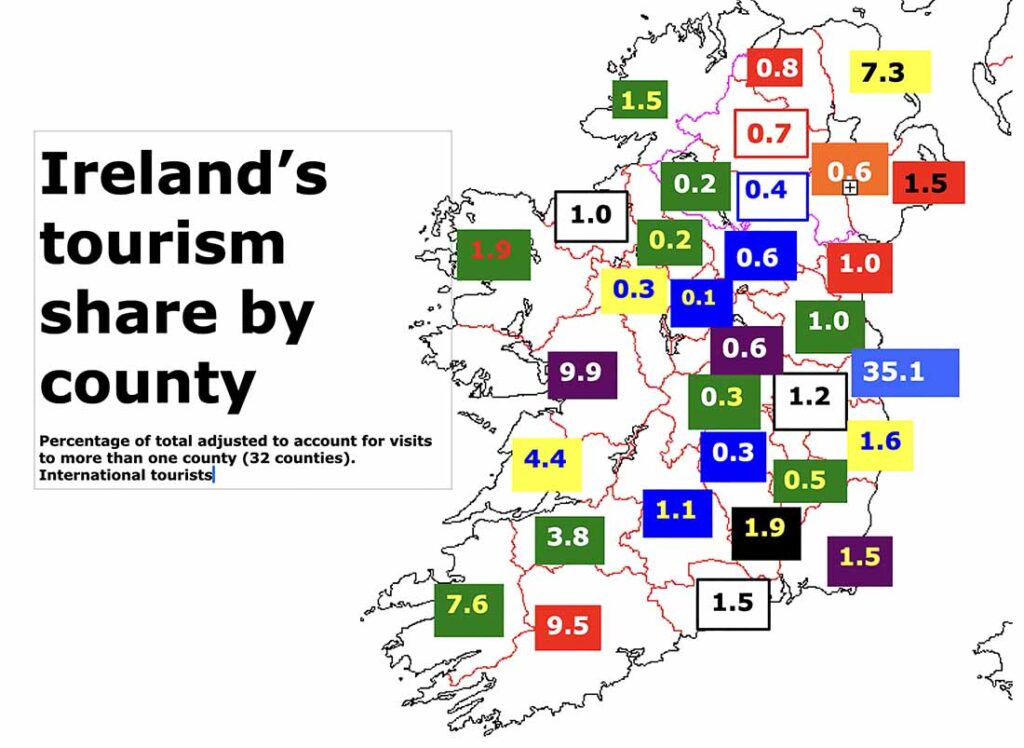
Ireland’s county Offaly is a county of historic depth and natural beauty, with the Clonmacnoise monastic site featuring ancient high crosses and a riverside setting along the Shannon. Tullamore’s historic distillery provides insights into Irish whiskey production, while the Bog of Allen Nature Centre explores the county’s unique peatlands. Other attractions include the Slieve Bloom Mountains’ hiking trails. Offaly is Ireland’s 18th largest county by size (1,998 square km) and ninth smallest by population (83,150). Population peaked at 146,857 in 1841 and reached its lowest point, 51,533 in 1961. In terms of hospitality, Offaly is Ireland’s 30th most visited (and third least visited) tourist county with around 37,000 international visitors per year.
Introduction – Adventure – Anthem – Archaeology – Attractions – Awards – Birdwatching – Camping – Castles – Churches – Contact list – Cycling – Dining – Equestrian – Festivals – Fishing – Folklore – Gardens – Golf – Graveyards – Happening – Haunted – Highest – Hiking – History – Holy Wells – Hotels – Hotels top 8 – Hunting & shooting – Instagrammable – Itineraries – Largest town – Luxury – MICE – Movies – Music – Name – New – Novelists – Off the beaten track – Poets – Pubs – Quotes – Random Facts – Restaurant Awards – Sacred Places – Saints – Songs – Spas – Sports – Sunsets – Sustainable – Things to do – Towns – Video – Villages – Walking – Wanderlist – Weddings – Wild swimming – Writers – 1837 – 1846 – 1852 – 1909 – 1955 – 1980 –