- Birr Castle: Originating in the 12th century as a motte-and-bailey built by the O’Carroll clan, Birr Castle in the Georgian town of Birr was transformed in the 17th century by the Parsons family, who still reside there. Rebuilt in the 19th century in Gothic style, it’s famous for the Leviathan of Parsonstown, a massive 19th-century telescope, and its 100-acre gardens with rare plants. The castle is a private residence but offers access to its gardens and Science Centre. Open daily (March–October, 9 AM–6 PM; November–February, 9:30 AM–4 PM, check birrcastle.com), visitors can explore the gardens and Science Centre for €10 adults, €5 children, €25 family. The castle interior is not open, but the grounds feature the Leviathan telescope, a treehouse adventure playground, and a cafe. Expect a 2–3 hour visit, with guided garden tours (€15, summer only) and events like workshops or star-gazing. Amenities include parking, toilets, and wheelchair access. The Science Centre showcases the Parsons’ astronomical innovations, including spiral galaxy discoveries. Combine with Birr’s Georgian streets or Lough Boora Discovery Park. Ideal for families, science enthusiasts, and garden lovers, offering a blend of history and natural beauty.
- Charleville Castle: Built between 1800 and 1812 in Tullamore, Charleville Castle is a Gothic Revival masterpiece designed by Francis Johnston for Charles Bury, Earl of Charleville. Set in a 30-acre oak forest, it replaced a 17th-century manor and is reputedly one of Ireland’s most haunted castles, featured in films like Becoming Jane and ghost-hunting shows. Restored by volunteers, it’s a community-run heritage site. Open year-round for guided tours by appointment (10 AM–5 PM, check charlevillecastle.ie, €20 adults, €10 children, €50 family), visitors explore the castle’s ornate interiors, including the ballroom, library, and dungeon, with volunteer guides sharing history and ghost stories. Expect a 60–90 minute tour in a forested setting, 2 km from Tullamore. Amenities include parking but limited facilities (no cafe). The castle hosts events like concerts and paranormal tours. Partial wheelchair access. Combine with Tullamore Dew Distillery. Perfect for those seeking Gothic architecture and eerie tales, with a personal touch from dedicated guides.
- Leap Castle: Built in the 13th century by the O’Bannon clan and later controlled by the O’Carroll clan, Leap Castle near Roscrea is known as Ireland’s most haunted castle. Its dark history includes the “Bloody Chapel,” where an O’Carroll priest was murdered, and a hidden dungeon with human remains discovered in the 1900s. Now privately owned by the Ryan family, it’s partially restored. Open by appointment (contact leapcastleireland.com, €6–€10), visitors can take owner-led tours (45–60 minutes) of the castle’s restored chapel, tower, and grounds, hearing tales of its violent past and paranormal activity. Expect a 1-hour visit in a remote setting (10 km from Roscrea). No formal facilities; parking is limited. The castle’s raw, haunted atmosphere suits history and ghost enthusiasts. Booking is essential. Combine with Clonmacnoise for a historical day trip. A unique, spine-chilling experience for those intrigued by the supernatural.
- Kinnitty Castle: Originally a 13th-century castle built by the O’Carroll clan, Kinnitty Castle in Kinnitty was rebuilt in the 19th century in Gothic Revival style after destruction in 1641. Now a four-star hotel, it’s set in the Slieve Bloom Mountains and is reputedly haunted, with stories of ghostly monks. It blends medieval charm with modern luxury. Open year-round as a hotel (check kinnittycastlehotel.com, rooms €120–€250/night), non-guests can arrange guided historical tours (€10–€15, by appointment) of the castle’s public areas, including the great hall and library, with medieval-style furnishings. Expect a 45-minute tour or longer if staying. Amenities include a restaurant, bar, parking, and WiFi, with activities like falconry or mountain walks. The castle hosts weddings and events. Full wheelchair access in public areas. Combine with Slieve Bloom trails or Birr. Best for those wanting to stay in a castle or enjoy a luxurious, historical retreat.
- Clonony Castle: Built in the early 16th century by the MacCoughlan clan near Clonony, this tower house is linked to the Boleyn family, with Anne Boleyn’s cousins reportedly buried nearby. A well-preserved ruin with a restored interior, it’s privately owned but open for tours, offering Tudor-era insights in a rural setting. Open by appointment (May–September, contact clononycastle.ie, €5–€10), visitors can take guided tours (30–45 minutes) of the tower’s interior, including a spiral staircase and Boleyn artifacts. Expect a 45-minute visit, 5 km from Shannonbridge. No facilities like restrooms or a cafe; parking is limited. The castle’s quiet, historical ambiance suits Tudor enthusiasts. Combine with Clonmacnoise or Shannonbridge’s river walks. A niche, intimate site for those interested in Tudor connections and small-group tours.
Offaly has numerous minor castle ruins, such as Ballycowan Castle (16th-century, near Tullamore, ruined, on private land, exterior viewing with permission), Ballindarra Castle (15th-century, ruin, limited access), and Cloghan Castle (14th-century, private, occasional tours). These are less prominent due to their state or restricted access.
Offaly’s castles offer diverse experiences, from Birr’s scientific legacy to Leap’s haunted lore. Birr and Charleville are the most accessible, while Leap, Kinnitty, and Clonony cater to niche interests. Offaly has up to 200 castle sites, many minor or archaeological, per the National Monuments Service.
Castles
Antrim – Armagh – Carlow – Cavan – Clare – Cork – Derry – Donegal – Down – Dublin – Fermanagh – Galway – Kerry – Kildare – Kilkenny – Laois – Leitrim – Limerick – Longford – Louth – Mayo – Meath – Monaghan – Offaly – Roscommon – Sligo – Tipperary – Tyrone – Waterford – Westmeath – Wexford – Wicklow
County Offaly:
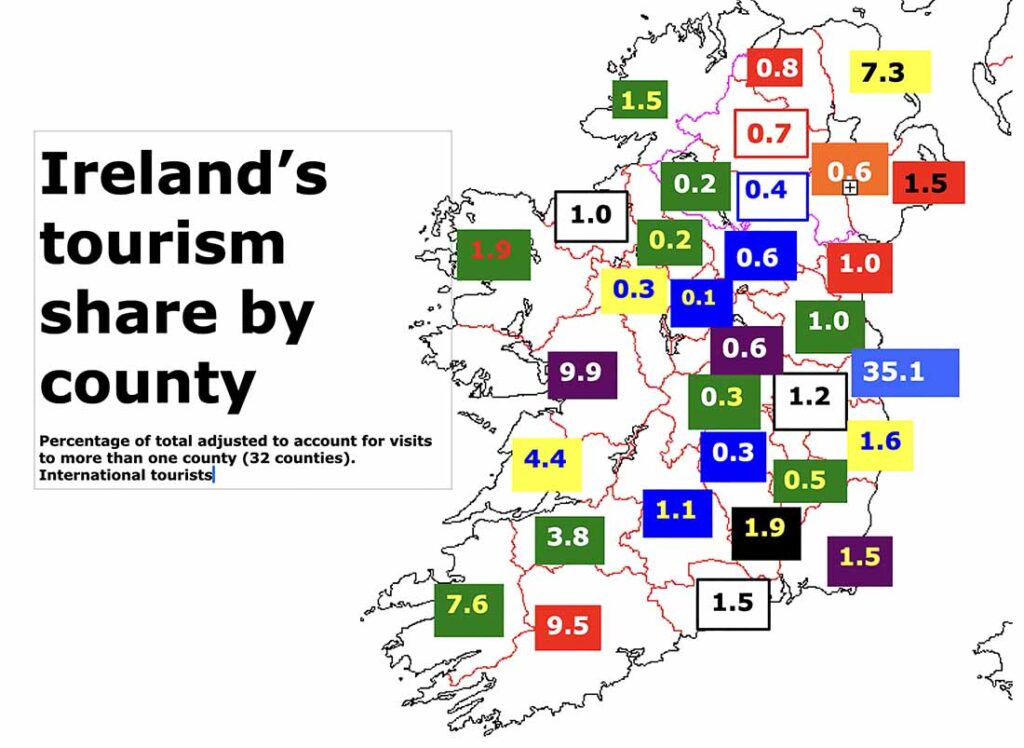
Ireland’s county Offaly is a county of historic depth and natural beauty, with the Clonmacnoise monastic site featuring ancient high crosses and a riverside setting along the Shannon. Tullamore’s historic distillery provides insights into Irish whiskey production, while the Bog of Allen Nature Centre explores the county’s unique peatlands. Other attractions include the Slieve Bloom Mountains’ hiking trails. Offaly is Ireland’s 18th largest county by size (1,998 square km) and ninth smallest by population (83,150). Population peaked at 146,857 in 1841 and reached its lowest point, 51,533 in 1961. In terms of hospitality, Offaly is Ireland’s 30th most visited (and third least visited) tourist county with around 37,000 international visitors per year.
Introduction – Adventure – Anthem – Archaeology – Attractions – Awards – Birdwatching – Camping – Castles – Churches – Contact list – Cycling – Dining – Equestrian – Festivals – Fishing – Folklore – Gardens – Golf – Graveyards – Happening – Haunted – Highest – Hiking – History – Holy Wells – Hotels – Hotels top 8 – Hunting & shooting – Instagrammable – Itineraries – Largest town – Luxury – MICE – Movies – Music – Name – New – Novelists – Off the beaten track – Poets – Pubs – Quotes – Random Facts – Restaurant Awards – Sacred Places – Saints – Songs – Spas – Sports – Sunsets – Sustainable – Things to do – Towns – Video – Villages – Walking – Wanderlist – Weddings – Wild swimming – Writers – 1837 – 1846 – 1852 – 1909 – 1955 – 1980 –