The highest point in County Donegal is Errigal Mountain (An Earagail), standing at 751 meters (2,464 feet). Errigal is located in the Derryveagh Mountains in northwest County Donegal, near the villages of Dunlewey and Gweedore. It is part of the rugged and scenic Donegal Highlands, within the Glenveagh National Park region, known for its dramatic landscapes and wild beauty.
- Elevation: At 751 meters, Errigal is the highest peak in Donegal and one of the most iconic mountains in Ireland, recognizable for its distinctive quartzite cone and steep, scree-covered slopes.
- Terrain: The mountain features a mix of boggy lower slopes, rocky paths, and loose scree near the summit. The peak is a narrow ridge with a trig pillar, offering breathtaking views but requiring careful footing due to its exposed nature.
Starting Point and Access:
- Driving Route: The most popular trailhead is at the Errigal car park along the R251 road, between Dunlewey and Gweedore, approximately 10 km from Gweedore (15 minutes’ drive) or 20 km from Letterkenny (30 minutes). From Donegal town, the drive takes about 1 hour (50 km). The car park is well-marked with space for vehicles, though it can fill up on weekends.
- Alternative Access: A less common approach starts from Dunlewey village, incorporating parts of the Poisoned Glen or looping through nearby hills like Mackoght. This route is longer and more challenging but offers additional scenic views.
- Public Transport: Public transport to the trailhead is limited. Gweedore is served by buses from Donegal town or Letterkenny (e.g., Bus Feda or John McGinley Coaches), but reaching the car park typically requires a car or taxi. Guided hikes, such as those offered by Wild Atlantic Way Adventures or Donegal Climbing, include transport from nearby towns like Letterkenny or Dungloe.
Main Errigal Trail (R251 Car Park):
- Distance: Approximately 4–5 km round trip.
- Duration: 2.5–4 hours, depending on pace and conditions.
- Description: This is the most direct and popular route, starting at the R251 car park. The trail begins on a boggy path across moorland, marked by a gravel track for the first kilometer. It then ascends steeply over rocky and scree-covered slopes to the summit ridge. The final section involves a narrow, exposed ridge with loose stones, requiring caution. The summit is marked by a trig pillar, with a secondary peak nearby. The descent follows the same path, with care needed on the scree.
- Difficulty: Moderate to strenuous, suitable for hikers with good fitness and some experience. The steep ascent and exposed ridge make it challenging, especially in windy or wet conditions.
Dunlewey and Poisoned Glen Loop:
- Distance: 8–12 km round trip.
- Duration: 4–6 hours.
- Description: Starting from Dunlewey, this route combines Errigal with views of the Poisoned Glen, a dramatic valley with cliffs and waterfalls. The trail ascends via a longer, more gradual approach, joining the main route near the summit. It’s ideal for those seeking a more scenic, varied hike but requires navigation skills.
- Difficulty: Strenuous, due to the longer distance and mixed terrain, best for experienced hikers.
Errigal-Mackoght Circuit:
- Distance: 10–14 km round trip.
- Duration: 5–7 hours.
- Description: This circular route includes Errigal and nearby Mackoght (555 meters), starting from the R251 car park or Dunlewey. It offers a broader exploration of the Derryveagh Mountains but involves boggy terrain and additional climbing.
- Difficulty: Challenging, requiring stamina and navigation experience.
Navigation Tips:
- Use an Ordnance Survey map (Discovery Series Sheet 1 or 2) or apps like HiiKER, AllTrails, or PeakVisor for accurate navigation, as the summit ridge can be disorienting in fog.
- Bring a compass or GPS device, as the upper slopes lack clear landmarks and weather can change rapidly.
- Wear sturdy, waterproof hiking boots with good grip, as the scree and boggy sections are slippery. Trekking poles are helpful for stability.
Scenery and Views:
- Summit Views: On clear days, Errigal offers spectacular 360-degree views of the Donegal Highlands, including the Derryveagh Mountains, Glenveagh National Park, and the Atlantic coastline. Notable sights include the Poisoned Glen, Dunlewey Lough, the Bluestack Mountains, and, on exceptional days, Tory Island and the distant hills of Mayo. The quartzite peak glows pink at sunrise or sunset, adding to its allure.
- Landscape: The lower slopes are boggy with heather and grass, transitioning to rocky scree and a sharp, quartzite ridge at the summit. The surrounding area is wild and dramatic, with rugged peaks, lakes, and coastal vistas.
- Unique Features: Errigal’s conical shape and quartzite composition make it one of Ireland’s most photographed mountains. Its prominence in the landscape and cultural significance in Donegal add to its appeal. The nearby Poisoned Glen is steeped in folklore, with tales of mythical creatures.
Hiking Experience:
- Duration: The main trail takes 2.5–4 hours, while longer loops take 4–7 hours, including time to enjoy the summit.
- Conditions: The lower boggy sections can be wet, and the upper scree slopes are loose and steep. The summit ridge is narrow and exposed, with strong winds common. Spring and summer (April–September) are ideal for milder weather and longer daylight, with August offering vibrant heather. Winter hikes are possible but challenging due to snow, ice, and shorter days.
- Cultural Significance: Errigal is a symbol of Donegal’s rugged identity, often featured in art and literature. Its proximity to the Gaeltacht (Irish-speaking) region of Gweedore adds cultural richness, with opportunities to hear Irish spoken in nearby communities.
- Weather: The summit is highly exposed, with frequent mist, strong winds, and rapid weather changes. Check forecasts (e.g., Met Éireann) and avoid hiking in severe conditions.
- Terrain: The loose scree and narrow ridge require careful footing, especially on the descent. Inexperienced hikers should avoid the summit in high winds or poor visibility.
- Safety: Inform someone of your plans, as there are no rangers. Bring water, snacks, and warm clothing, as temperatures can drop significantly. Solo hikers should be confident in navigation or opt for guided tours.
- Wildlife: Expect to see birds like ravens, peregrine falcons, or skylarks, and possibly hares or red deer. The bogs support unique flora like bog cotton and sundews.
Highest point in county
Antrim – Armagh – Carlow – Cavan – Clare – Cork – Derry – Donegal – Down – Dublin – Fermanagh – Galway] – Kerry – Kildare – Kilkenny – Laois – Leitrim – Limerick – Longford – Louth – Mayo – Meath – Monaghan – Offaly – Roscommon – Sligo – Tipperary – Tyrone – Waterford – Westmeath – Wexford – Wicklow
County Donegal:
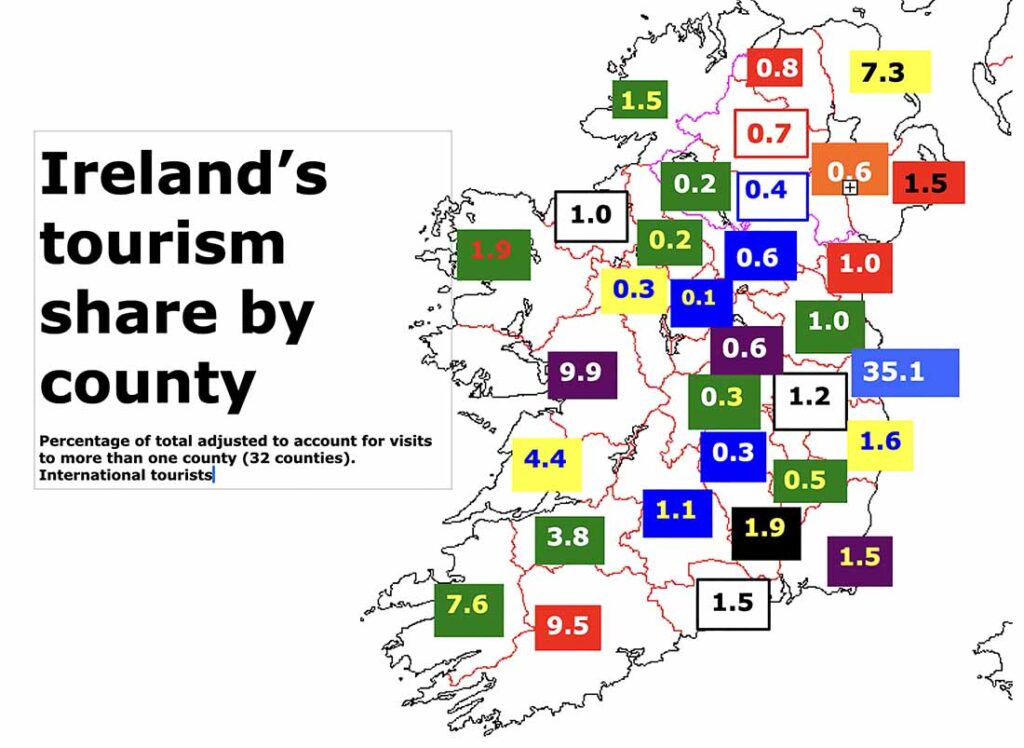
Ireland’s county Donegal is a land of wild coastlines and Gaelic heritage, with Slieve League’s towering sea cliffs offering some of Europe’s highest coastal views. Glenveagh National Park features a historic castle and sprawling gardens amidst rugged mountains. The beaches of Bundoran and the traditional tweed workshops of Ardara make Donegal an engaging destination for nature and cultural enthusiasts. The Grianan of Aileach stone fort adds ancient intrigue and splendid views. Donegal is Ireland’s fourth largest county by size (4,830 square km) and 13th largest by population (167,084). Population peaked at 296,448 in 1841 and reached its lowest point, 108,344 in 1971. In terms of hospitality, Donegal is also Ireland’s 13th most visited tourist county with around 199,000 international visitors per year.
Introduction – Adventure – Anthem – Archaeology – Attractions – Awards – Birdwatching – Camping – Castles – Churches – Contact list – Cycling – Dining – Equestrian – Festivals – Fishing – Folklore – Gardens – Golf – Graveyards – Happening – Haunted – Highest – Hiking – History – Holy Wells – Hotels – Hotels top 8 – Hunting & shooting – Instagrammable – Itineraries – Largest town – Luxury – MICE – Movies – Music – New – Name – Novelists – Off the beaten track – Poets – Pubs – Quotes – Random Facts – Restaurant Awards – Sacred Places – Saints – Songs – Spas – Sports – Sunsets – Sustainable – Things to do – Towns – Video – Villages – Walking – Wanderlist – Weddings – Wild swimming – Writers – 1837 – 1846 – 1852 – 1909 – 1955 – 1980 –