Pre-1000 The Gaelic Nation
County Monaghan, part of the ancient kingdom of Airgialla, was dominated by Gaelic clans, notably the Monaghan (Muineacháin) dynasty, from whom the county derives its name, meaning ‘land of little hills’. Archaeological evidence, such as crannógs and ringforts around Lough Muckno, indicates early settlement and a cattle-based economy. Christianity spread in the 5th century, with St. Macartan, a disciple of St. Patrick, founding a church at Clogher (partly in modern Monaghan) around 500 AD, establishing it as a diocesan centre. The McMahon (Mac Mathúna) dynasty emerged as the dominant Gaelic family by the 9th century. Viking raids, recorded in The Annals of Ulster, targeted Monaghan’s monasteries, but its inland location offered some protection. The region remained a Gaelic stronghold, with the McMahons consolidating power.
1000–1100: Gaelic Power and Regional Conflicts
Monaghan remained under McMahon control, part of Airgialla’s loose confederation of clans. The county’s hilly terrain and lakes supported agriculture and fishing, with Clones Abbey emerging as a monastic centre. The Annals of the Four Masters note conflicts between Airgialla’s lords and the House of Niall’s Ulster, dynasty with Monaghan’s McMahons navigating alliances to maintain autonomy. The Battle of Clontarf (1014) had little direct impact, but it weakened Viking threats, allowing Gaelic lords to focus on internal rivalries. Monaghan’s isolation from major power centres like Tara preserved its local character.
1100–1200: Norman Incursion and Gaelic Resilience
The Norman invasion (1169) had limited impact on Monaghan due to its northern, inland location. The McMahons retained control, resisting Norman advances from nearby Meath. The Normans, led by figures like John de Courcy, briefly influenced eastern Ulster, but Monaghan remained a Gaelic enclave. Clones Abbey, founded in the 6th century but expanded in this period, grew as a religious and economic hub, as noted in historical surveys. The Annals of Tigernach record Airgialla’s interactions with Normans, suggesting the McMahons paid tribute to avoid direct conflict. Monaghan’s bogs and forests deterred large-scale Norman settlement, preserving Gaelic traditions and dynasty structures.
1200–1300: Gaelic Dominance and Monastic Growth
Monaghan continued under McMahon rule, with the dynasty maintaining autonomy within Airgialla. The county’s economy relied on cattle rearing and small-scale agriculture, with market towns like Monaghan and Clones emerging. The Black Death (1348–1350) reduced the population, with the towns and the colonial population suffering mortality rates of up to 50pc, while the native Irish suffered less devastation. Clones Abbey, under Augustinian canons, became a significant centre, as documented in ecclesiastical histories. The Normans established minor outposts in southern Monaghan, but Gaelic lords resisted encroachment. The Annals of Connacht note the McMahons’ alliances with the O’Neills, reflecting Monaghan’s role in regional power dynamics. The county remained peripheral to the Anglo-Norman Pale.
1300–1400: McMahon Ascendancy
The decline of Norman power strengthened the McMahons, who consolidated control over Monaghan. The dynasty built fortified residences, such as crannógs and early castles, around Lough Muckno and Carrickmacross. The O’Neills of Tyrone increasingly influenced Airgialla, with the McMahons balancing submission and independence. Clones and Clogher remained ecclesiastical hubs, supporting local culture. The Annals of Ulster record the McMahons’ involvement in Ulster’s conflicts, often as allies of the O’Neills. Monaghan’s terrain and distance from Dublin preserved its Gaelic identity, with minimal English interference.
1400–1500: Late Medieval Stability
Monaghan remained a Gaelic stronghold under the McMahons, who ruled as lords of Airgialla. The county’s economy depended on agriculture, with oats and cattle prominent. Castles like Rossmore, though built later, had precursors in Gaelic fortifications. The O’Neills’ growing power in Ulster pressured the McMahons, who maintained autonomy through strategic marriages and alliances. Clones Abbey continued as a religious centre, hosting manuscripts and pilgrims. The Annals of Ulster note the McMahons’ feuds with neighbouring clans. Monaghan’s remoteness ensured limited Anglo-Norman impact, preserving its Gaelic character.
1500–1600: Tudor Conquest and McMahon Decline
The Tudor reconquest brought Monaghan under English scrutiny. In 1585, the county was formally shired, weakening McMahon autonomy. The Nine Years’ War (1593–1603) saw Hugh McMahon, a key figure, executed in 1590 for resisting English rule. The O’Neills’ rebellion involved Monaghan, with battles near Clontibret (1595) showcasing Gaelic resistance. After the war, English authorities imposed control, granting lands to Anglo-Irish lords like the Blayneys. The Annals of the Four Masters document the McMahons’ decline, while early plantation efforts introduced English settlers, though less extensively than in Ulster’s core. Monaghan’s Gaelic elite adapted or were displaced.
1600–1700: Plantation and Cromwellian Upheaval
The Ulster Plantation (1609) transformed Monaghan, with lands confiscated from the McMahons and granted to English and Scottish settlers, including the Blayneys and Westenras. Monaghan town became an administrative centre, with Castleblayney and Carrickmacross emerging as plantation hubs. The 1641 Rebellion saw McMahons and other Catholics briefly reclaim lands, but Cromwell’s campaign (1649–1653) crushed resistance, redistributing estates to Colonial/protestan settlers. The Williamite War (1689–1691) saw Monaghan loyal to William III, with no major battles locally. The county’s Catholic population faced marginalisation under Penal Laws. The Confederate Wars documents and the lives of figures like Heber McMahon detail these shifts, while Clones remained a religious focal point.
1700–1800: Anglo-Irish Ascendancy
Monaghan’s Anglo-Irish landlords, such as the Blayneys and Leslies, dominated under the Penal Laws, building estates like Castleblayney House. The county’s economy relied on linen production, with Monaghan and Clones as market towns. The 1798 Rebellion saw limited activity in Monaghan, with local yeomanry suppressing unrest, entries on figures like Charles Powell Leslie. The Act of Union (1800) integrated Monaghan into English rule, reducing local influence. The county’s Catholic majority endured restrictions, but Presbyterian settlers, particularly Scots, shaped its cultural diversity.
1800–1900: Famine and Land Reform
The Great Famine (1845–1852) devastated Monaghan, with its population falling from 200,000 in 1841 to 141,000 by 1851, per census records. Workhouses in Monaghan and Castleblayney were overwhelmed, and emigration surged to America and England. The linen industry declined, but agriculture persisted, with oats and potatoes key crops. The Land League, active in Monaghan, pushed for tenant rights, challenging landlords like the Shirleys. The Gaelic Revival sparked interest in Monaghan’s heritage, including Clogher’s ecclesiastical history.
1900–2025: Independence and Modernisation
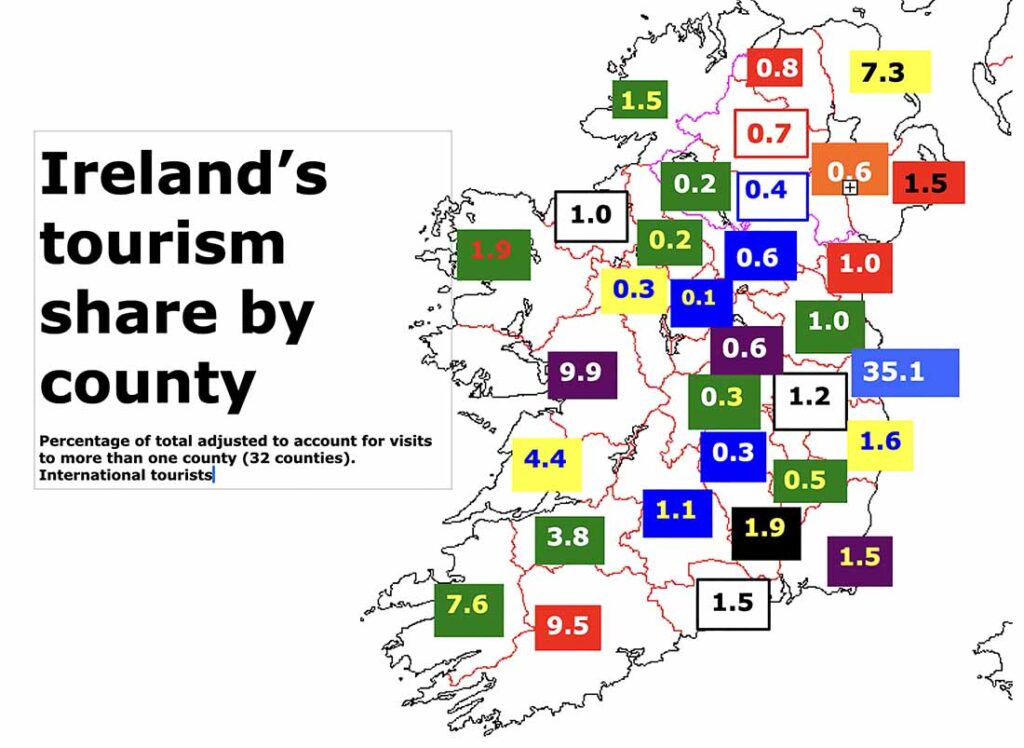
Monaghan played a minor role in the War of Independence (1919–1921), with IRA activity in border areas, as noted in History Ireland. The 1921 Anglo-Irish Treaty placed Monaghan in the Irish Free State, despite its Ulster location, due to its Catholic majority. The population stabilised, reaching 60,483 by 2022, per census data. Infrastructure improvements, including the N2 road, enhanced connectivity. Tourism grew, focusing on sites like Clones Abbey, Lough Muckno, and the Patrick Kavanagh Centre in Inniskeen, celebrating the poet’s legacy. Monaghan’s economy diversified, with agriculture, food processing, and furniture industries prominent. The post-partition border with the six counties shaped its modern identity, with cross-border trade and cultural ties. Monaghan is one of 24 Irish counties that still has a smaller population than it did in 1841.
History
Antrim – Armagh – Carlow – Cavan – Clare – Cork – Derry – Donegal – Down – Dublin – Fermanagh – Galway – Kerry – Kildare – Kilkenny – Laois – Leitrim – Limerick – Longford – Louth – Mayo – Meath – Monaghan – Offaly – Roscommon – Sligo – Tipperary – Tyrone – Waterford – Westmeath – Wexford – Wicklow
County Monaghan:
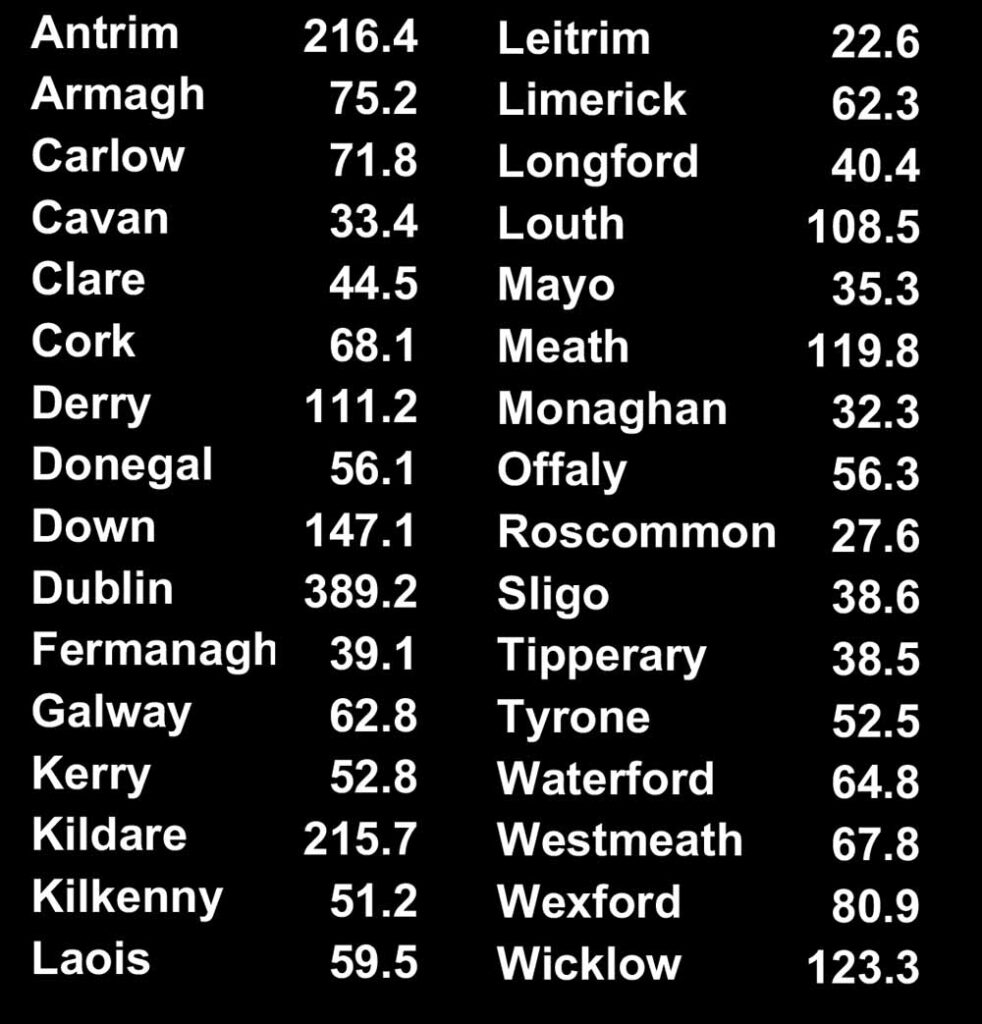
Ireland’s county Monaghan offers a serene blend of rolling hills and cultural heritage, with the Monaghan County Museum showcasing local history through artefacts and exhibits. The scenic Rossmore Forest Park provides walking trails amidst lakes and woodlands, while Castle Leslie’s historic estate offers a glimpse into aristocratic life. Other attractions include the county’s traditional lace-making heritage and quiet countryside. Monaghan is Ireland’s sixth smallest county by size (1,291 square km) and fifth smallest by population (65,288). Population peaked at 200,442 in 1841 and reached its lowest point, 45,732 in 1966. In terms of hospitality, Monaghan is Ireland’s 25th most visited tourist county with around 58,000 international visitors per year.
Introduction – Adventure – Anthem – Archaeology – Attractions – Awards – Birdwatching – Camping – Castles – Churches – Contact list – Cycling – Dining – Equestrian – Festivals – Fishing – Folklore – Gardens – Golf – Graveyards – Happening – Haunted – Highest – Hiking – History – Holy Wells – Hotels – Hotels top 8 – Hunting & shooting – Instagrammable – Itineraries – Largest town – Luxury – MICE – Movies – Music – Name – New – Novelists – Off the beaten track – Poets – Pubs – Quotes – Random Facts – Restaurant Awards – Sacred Places – Saints – Songs – Spas – Sports – Sunsets – Sustainable – Things to do – Towns – Video – Villages – Walking – Wanderlist – Weddings – Wild swimming – Writers – 1837 – 1846 – 1852 – 1909 – 1955 – 1980 –