Pre-1000 The Gaelic Nation
County Waterford, part of the ancient kingdom of Munster, was dominated by the Déisi Muman, a Gaelic dynasty whose name survives in the barony of Decies. The county’s name derives from the Norse Vadrefjord (‘ram fjord’), reflecting Viking influence. Archaeological sites, such as the Woodstown Viking settlement (c. 9th century), indicate early Scandinavian activity along the River Suir. Christianity spread in the 5th century, with St. Declan founding a monastery at Ardmore, one of Ireland’s earliest Christian sites. The Déisi, led by dynasties like the O’Faoláin and O’Brick, controlled the region, as noted in The Annals of Ulster. Waterford city, founded by Vikings c. 914, became a key port, shaping the county’s maritime identity.
1000–1100: Viking Influence and Gaelic Power
Waterford city thrived as a Viking stronghold, with its rulers, the house oí Ímair dynasty, engaging in trade and warfare. The Gaelic Déisi, under the house of Faolán dynasty, maintained control of rural Waterford, resisting Viking dominance. The Battle of Clontarf (1014), weakened Viking power, allowing Munster’s O’Briens to assert influence over Waterford. Ardmore remained a significant monastic centre, producing manuscripts and hosting pilgrims. The county’s fertile lands supported agriculture, while Waterford city’s port facilitated trade with England and Europe. The Synod of Cashel (1101) reinforced Waterford’s diocesan role, as noted in ecclesiastical histories.
1100–1200: Norman Conquest and Urban Growth
The Norman invasion (1169) transformed Waterford. In 1170, Strongbow landed at Passage East, capturing Waterford city after a fierce siege, as detailed in The Annals of Tigernach. The Normans fortified the city with walls and Reginald’s Tower, making it a key stronghold in the Pale. The Déisi were displaced to western Waterford, while Norman lords like the FitzGeralds gained control. Waterford received a royal charter in 1205, boosting its status as a port. Monastic sites, including St. John’s Priory, were established under Norman patronage. The lives of figures like Maurice FitzGerald highlight their role in reshaping Waterford, though Gaelic dynasties resisted in rural areas.
1200–1300: Norman Dominance and Economic Prosperity
Waterford became a core part of the Anglo-Norman Pale, with the FitzGeralds and le Poers consolidating power. The county’s fertile lands, particularly the Suir Valley, supported grain and livestock production, exported through Waterford city’s bustling port. Castles like Dungarvan and Lismore were built to secure Norman control. The Black Death (1348–1350) reduced Waterford’s population, particularly in urban areas. The Annals of Connacht note tensions between Normans and Gaelic dynasties like the O’Driscolls in west Waterford. Waterford city grew as a commercial hub, with its walls and quays defining its medieval character.
1300–1400: Gaelic Resurgence and Norman-Gaelic Hybridity
The decline of Norman authority allowed Gaelic dynasties like the O’Faoláin and O’Driscolls to regain influence in rural Waterford. The FitzGeralds, increasingly Gaelicised, maintained control of key strongholds like Dungarvan Castle. Waterford city remained loyal to the English crown, receiving privileges as a ‘loyal city’. The Statute of Kilkenny (1366) aimed to reinforce Norman control, but intermarriage blurred Gaelic-Norman lines. Monastic decline began, though Ardmore and Molana Abbey remained active. The Annals of Ulster record the FitzGeralds’ conflicts with the Desmond Fitzgeralds, reflecting Waterford’s role in Munster politics.
1400–1500: Late Medieval Stability
Waterford was divided between the Anglo-Norman FitzGeralds and le Poers in the east and Gaelic dynasties in the west. Waterford city thrived as a port, trading wool and wine with England and Europe. Castles like Curraghmore (le Poer stronghold) and Dungarvan were fortified to counter Gaelic raids. The county’s economy relied on agriculture and maritime trade, with market towns like Clonmel (partly in Tipperary) growing. The Annals of Ulster note the FitzGeralds’ alliances with the Butlers, while The lives of figures like John FitzGerald highlight their political influence. Waterford’s loyalty to the crown ensured its status within the Pale, though rural areas retained Gaelic traditions.
1500–1600: Tudor Reconquest and Reformation
The Tudor reconquest strengthened English control in Waterford. The FitzGeralds, loyal to the crown, maintained influence, but the Desmond Rebellions (1569–1583) saw western Waterford support the rebel Fitzgeralds,. Waterford city resisted rebel sieges, reinforcing its royalist stance. The dissolution of monasteries (1536–1541) secularised sites like Ardmore and Molana, redistributing lands to Anglo-Irish lords. The Annals of the Four Masters detail Gaelic resistance, while plantation efforts introduced English settlers, particularly in Dungarvan. Waterford’s port facilitated trade, but religious tensions grew with the Reformation. The lives of figures like Thomas Wyse highlight Waterford’s urban elite.
1600–1700: Cromwellian Upheaval and Plantation
The 1641 Rebellion saw Waterford’s Gaelic and Old English lords join Confederate forces, briefly seizing rural areas. Cromwell’s campaign (1649–1650) captured Waterford city after a siege. Cromwellian confiscations redistributed lands to English settlers like the Boyles, though the FitzGeralds retained some estates. The Williamite War (1689–1691) saw Waterford align with William III, with no major battles locally. The county’s Catholic majority faced Penal Law restrictions, while Colonial/protestan settlers grew in number. Waterford city’s port and glass industry emerged. The Confederate Wars documents detail these shifts, with figures like Richard Boyle shaping the county.
1700–1800: Anglo-Irish Ascendancy
Waterford’s Anglo-Irish elite, including the Boyles and Beresfords, dominated under the Penal Laws, building estates like Curraghmore House. The county’s economy thrived on agriculture, glassmaking, and maritime trade, with Waterford city as a key port. The 1798 Rebellion saw minor unrest in Waterford, suppressed by local militias, entries on figures like John Beresford. The Act of Union (1800) integrated Waterford into English rule, reducing local influence. The county’s Catholic majority endured restrictions, but Colonial/protestan merchants prospered.
1800–1900: Famine and Reform
The Great Famine (1845–1852) impacted Waterford, with its population falling from 196,000 in 1841 to 158,000 by 1851, per census records. Workhouses in Waterford and Dungarvan were overwhelmed, and emigration surged to America, Scotland and England. The county’s fertile lands mitigated some effects, but evictions were common. The Land League, active in Waterford, pushed for tenant rights, with figures like Thomas Meagher inspiring nationalism. Waterford city’s port and glass industry declined with rail competition. The Gaelic Revival highlighted Ardmore and the Déisi heritage.
1900–2025: Independence and Modernisation
Waterford played a role in the War of Independence (1919–1921), with IRA ambushes in Waterford city and Dungarvan, as noted in History Ireland. The county joined the Irish Free State in 1922, with figures like Thomas F. Meagher’s legacy inspiring nationalism. The population stabilised, reaching 113,795 by 2022, per census data. Infrastructure, including the M9 motorway, improved connectivity. Tourism grew, focusing on the Viking Triangle, Reginald’s Tower, and the Waterford Greenway. The county’s economy diversified, with agriculture, crystal production (Waterford Crystal), and tourism prominent. The lives of figures like John Hearn highlight Waterford’s heritage and maritime identity. Waterford is one of 24 Irish counties that still has a smaller population than it did in 1841.
History
Antrim – Armagh – Carlow – Cavan – Clare – Cork – Derry – Donegal – Down – Dublin – Fermanagh – Galway – Kerry – Kildare – Kilkenny – Laois – Leitrim – Limerick – Longford – Louth – Mayo – Meath – Monaghan – Offaly – Roscommon – Sligo – Tipperary – Tyrone – Waterford – Westmeath – Wexford – Wicklow
County Waterford:
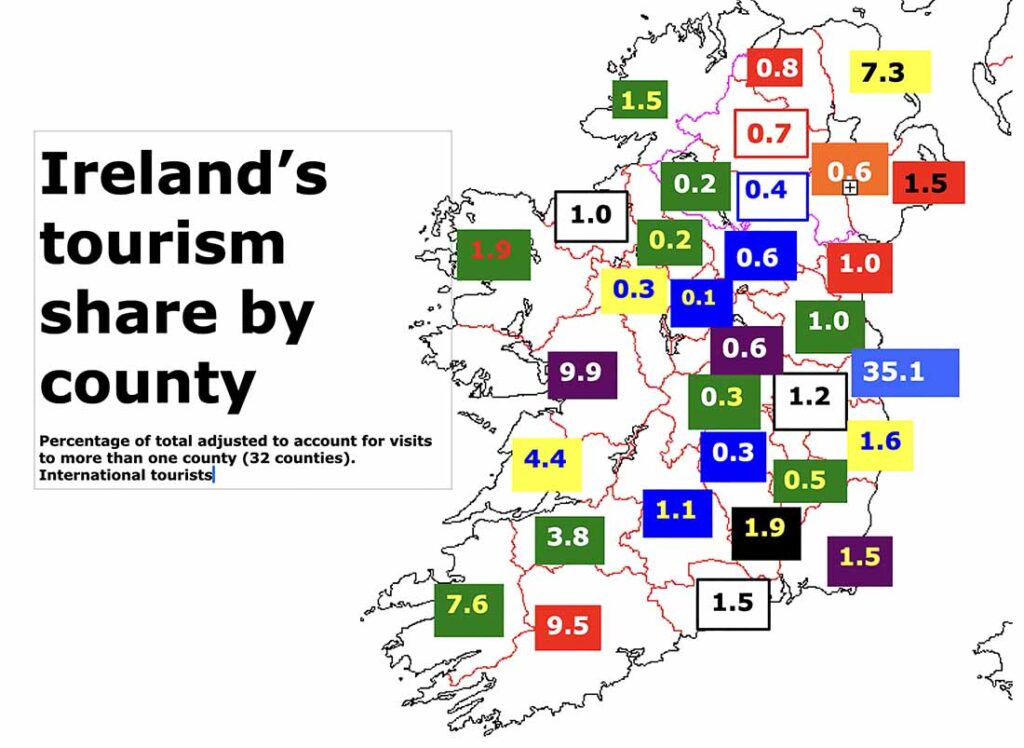
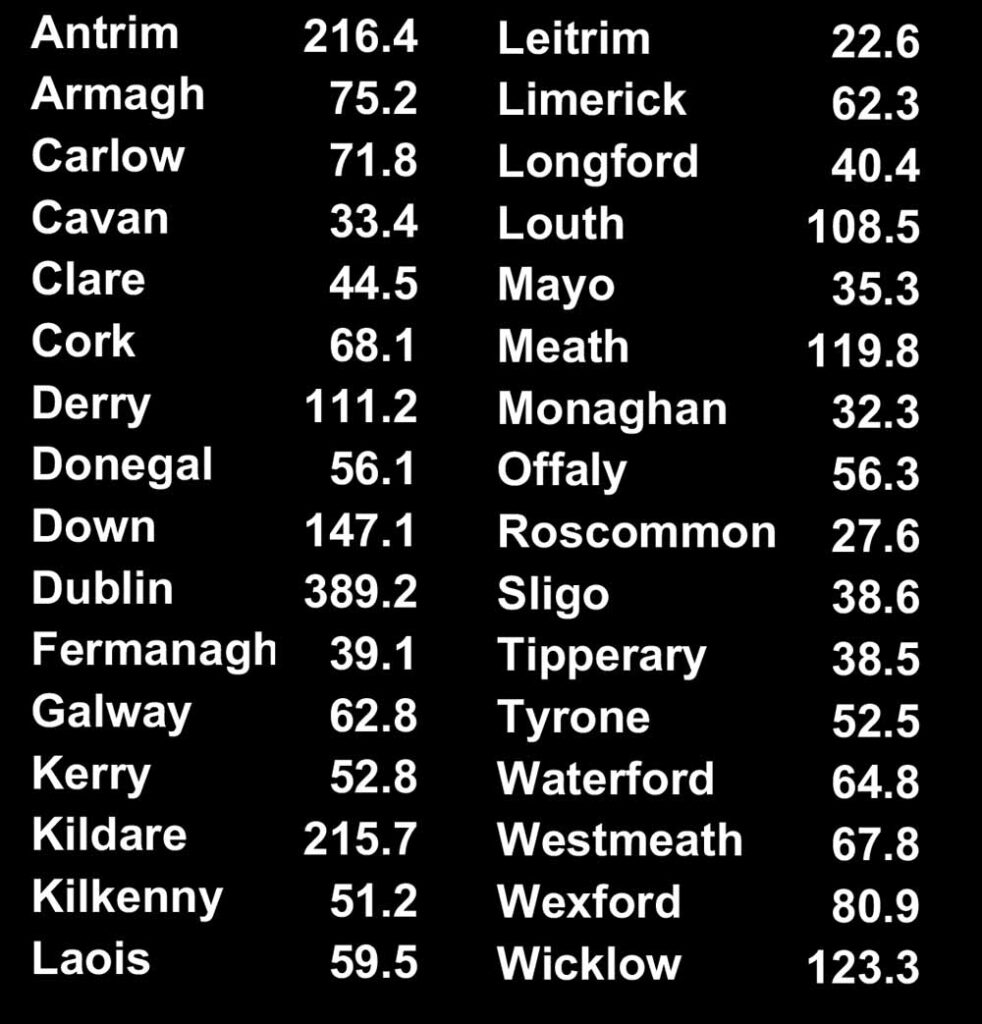
Ireland’s county Waterford is steeped in Viking and medieval history, with Waterford City’s Reginald’s Tower and Viking Triangle showcasing ancient artefacts. The Copper Coast, a UNESCO Geopark, offers dramatic coastal walks, while the Lismore Castle gardens provide serene beauty. Other attractions include the beaches of Tramore and historic Dunmore East. Waterford is Ireland’s 21st largest county by size (1,838 square km) and 20th largest by population (127,363). Population peaked at 196,187 in 1841 and reached its lowest point, 71,439 in 1961. In terms of hospitality, Waterford is Ireland’s ninth most visited tourist county with around 225,000 international visitors per year.
Introduction – Adventure – Anthem – Archaeology – Attractions – Awards – Birdwatching –– Camping –Castles – Churches – Contact list – Cycling – Dining – Equestrian – Festivals – Fishing – Folklore – Gardens – Golf – Graveyards – Happening – Haunted – Highest – Hiking – History – Holy Wells – Hotels – Hotels top 8 – Hunting & shooting – Instagrammable – Itineraries – Largest town – Luxury – MICE – Movies – Music – Name – New – Novelists – Off the beaten track – Poets – Pubs – Quotes – Random Facts – Restaurant Awards – Sacred Places – Saints – Songs – Spas – Sports – Sunsets – Sustainable – Things to do – Towns – Video – Villages – Walking – Wanderlist – Weddings – Wild swimming – Writers – 1837 – 1846– 1852 – 1909 – 1955 – 1980 –