- Saint Felim (Fethlimidh): August 9, c. 6th century: Kilmore (Cathedral of SS. Patrick and Felim, Cavan Town)Felim is the patron saint of the Diocese of Kilmore, which covers most of Cavan. Tradition holds he was a missionary bishop who founded a church at Kilmore, named after him (Cill Mhór, “great church”). Little is known of his life, but his cult is strong in Cavan, with the Cathedral of SS. Patrick and Felim in Cavan Town dedicated to him. His feast is noted in the Martyrology of Donegal, and he is venerated for spreading Christianity in the region.
- Saint Damhnade: June 13, c. 5th–6th century: Drumaloor, Drumlease (historically linked)Damhnade, a female saint, is the patroness of Counties Cavan and Fermanagh. She is associated with Drumaloor parish, where her church and holy well are located. Known for her piety, she is mentioned in the Martyrology of Oengus and linked to early Christian communities in Cavan. Her veneration reflects the prominence of female saints in Irish monasticism.
- Saint Mogue (Aedan): January 31, c. 550–632: Templeport (Bawnboy)Mogue, also known as Aedan of Ferns, was born on Inis Breachmhaigh (Breachmhaigh Island) in Cavan’s Templeport parish. He founded a monastery at Templeport and later became bishop of Ferns, Wexford. Trained by St. David in Wales, he is known for miracles, including calming storms. His holy well and church ruins at Templeport remain pilgrimage sites, and his feast is celebrated in the Diocese of Kilmore.
- Saint Bricin: September 5, c. 6th–7th century: Tomregan (Ballyconnell)Bricin founded a monastic school at Tomregan, near Ballyconnell, renowned for its learning and medical expertise. He is said to have performed brain surgery on King Domhnall during the Battle of Magh Rath (637). His monastery attracted scholars, and his feast is noted in the Martyrology of Donegal. Tomregan’s church site preserves his legacy in Cavan’s ecclesiastical history.
- Saint Ultan of Ardbraccan: September 4, c. 6th–7th century: KillinkereUltan, primarily linked to Ardbraccan in Meath, is associated with Killinkere parish in Cavan through his missionary work in the Diocese of Kilmore. Known for his care of orphans and authorship of a life of St. Brigid, he was a bishop and scholar. His feast is recorded in Irish martyrologies, and his influence in Cavan reflects the region’s ties to Meath’s monastic network.
- Saint Fintan of Clonenagh: February 17, c. 6th century: Kilmore (early associations)Fintan, born in Carlow, spent time in Cavan’s Kilmore area before founding Clonenagh monastery in Laois. A disciple of St. Columba, he is known as the “father of Irish monasticism” for his strict rule and mentorship of saints like Willibrord. His early presence in Kilmore ties him to Cavan, and his feast is noted in the Martyrology of Donegal.
- Saint Tigernach: April 4, c. 5th–6th century: KilleshandraTigernach, a contemporary of St. Patrick, is linked to Killeshandra parish through early Christian traditions in Cavan. He founded Clones monastery in Monaghan but is venerated in Cavan for his missionary work. Known for his holiness and miracles, his feast appears in the Martyrology of Tallaght, and his legacy is preserved in the Diocese of Kilmore.
- Saint Colman of Lismore: January 25, c. 6th–7 initiator: DennColman, a missionary monk, is associated with Denn parish in Cavan, where he may have established a church. His work is less documented, but he is linked to Lismore’s monastic tradition in Waterford, suggesting ties to Cavan’s early Christian network. His feast is recorded in Irish martyrologies, reflecting his role in spreading Christianity in the region.
- Saint Senach: August 21, c. 6th century: Clonard (Diocesan connections via Kilmore)Senach, a bishop and successor to St. Finnian at Clonard, Meath, is linked to Cavan through the Diocese of Kilmore’s monastic ties to Clonard. He was born around 595 and tutored St. Ailbe. His feast is recorded in the Calendar of Drummond and Feilire of Oengus, noting his eloquence and leadership. His influence in Cavan stems from Clonard’s regional network.
- Saint Aireid: September 1, c. 6th century: Ardrinnigh (near Cavan-Monaghan border)Aireid, a priest, lived at Ardrinnigh, on the Cavan-Monaghan border, possibly within Cavan’s Drumgoon parish. He is associated with St. Maidoc of Ferns, who miraculously visited him, per the Life of St. Maidoc. His feast is noted in the Martyrology of Donegal, but details are sparse, reflecting Cavan’s role in hosting obscure local saints.
- Saint Fuinche: January 21, c. 6th–7th century: Clonbroney (near Cavan-Longford border)Fuinche, a female saint, founded Clonbroney monastery near Cavan’s border with Longford, influencing parishes like Ballintemple. She mentored St. Samthann, who succeeded her. Known for her ascetic life, her feast is recorded in the Martyrology of Oengus. Her legacy highlights Cavan’s connections to female monasticism.
- Saint Caillin: November 13, c. 6th century: Fenagh (historically linked to Cavan)Caillin, associated with Fenagh in Leitrim, is linked to Cavan through his missionary work in the Diocese of Kilmore. He founded a monastery at Fenagh and is known for his poetic Book of Fenagh. His feast is noted in the Martyrology of Donegal, and his influence in Cavan reflects the county’s ties to neighboring Leitrim’s monastic sites.
Saints
Antrim – Armagh – Carlow – Cavan – Clare – Cork – Derry – Donegal – Down – Dublin – Fermanagh – Galway – Kerry – Kildare – Kilkenny – Laois – Leitrim – Limerick – Longford – Louth – Mayo – Meath – Monaghan – Offaly – Roscommon – Sligo – Tipperary – Tyrone – Waterford – Westmeath – Wexford – Wicklow
Sacred Places
Antrim – Armagh – Carlow – Cavan – Clare – Cork – Derry – Donegal – Down – Dublin – Fermanagh – Galway – Kerry – Kildare – Kilkenny – Laois – Leitrim – Limerick – Longford – Louth – Mayo – Meath – Monaghan – Offaly – Roscommon – Sligo – Tipperary – Tyrone – Waterford – Westmeath – Wexford – Wicklow
Holy Wells
Antrim – Armagh – Carlow – Cavan – Clare – Cork – Derry – Donegal – Down – Dublin – Fermanagh – Galway – Kerry – Kildare – Kilkenny – Laois – Leitrim – Limerick – Longford – Louth – Mayo – Meath – Monaghan – Offaly – Roscommon – Sligo – Tipperary – Tyrone – Waterford – Westmeath – Wexford – Wicklow
County Cavan:
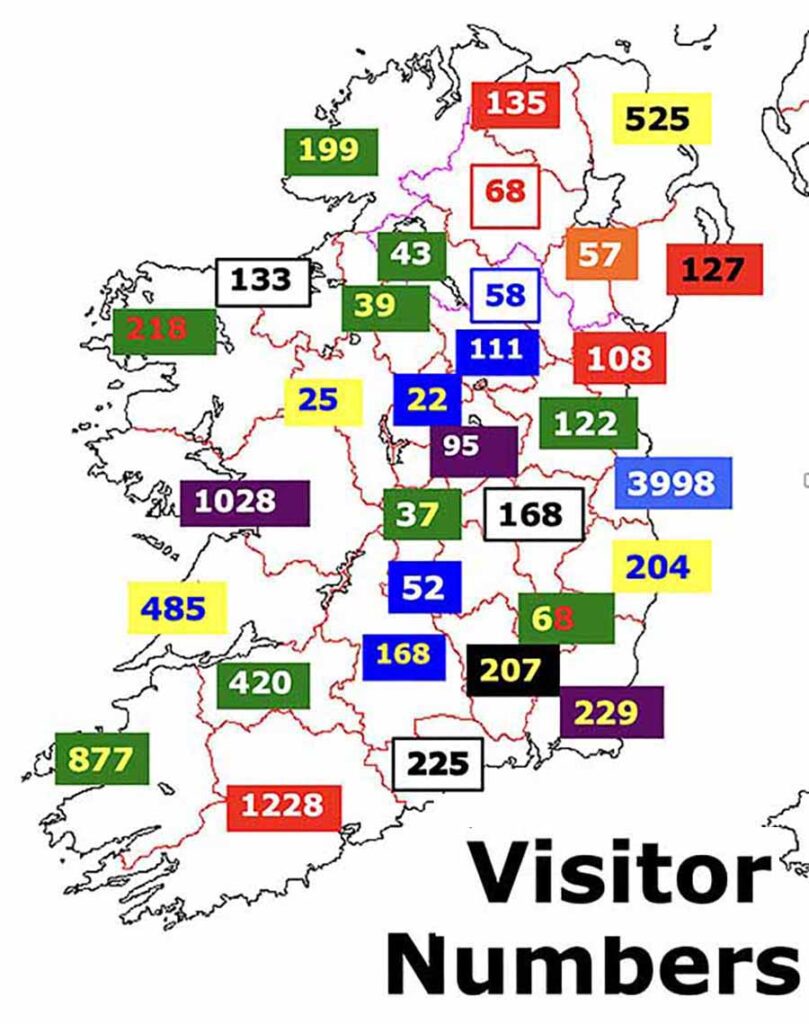
Ireland’s county Cavan is a haven of lakes and rolling hills, with the Shannon-Erne Waterway offering tranquil boating and fishing opportunities. The Cavan County Museum in Ballyjamesduff explores local history, while the Marble Arch Caves, part of a UNESCO Geopark, showcase stunning underground formations. Other attractions include the Killykeen Forest Park’s walking trails. Cavan is Ireland’s 19th largest county by size (1,891 sq km) and eighth smallest by population (81,704). Population peaked at 243,158 in 1841 and reached its lowest point, 52,618 in 1971. In terms of hospitality, Cavan is Ireland’s 20th most visited tourist county with around 111,000 international visitors per year.
IIntroduction – Adventure – Anthem – Archaeology – Attractions – Awards – Birdwatching – Camping – Castles – Churches – Contact list – Cycling – Dining – Equestrian – Festivals – Fishing – Folklore – Gardens – Golf – Graveyards – Happening – Haunted – Highest – Hiking – History – Holy Wells – Hotels – Hotels top 8 – Hunting & shooting – Instagrammable – Itineraries – Largest town – Luxury – MICE – Movies – Music – New – Name – Novelists – Off the beaten track – Poets – Pubs – Quotes – Random Facts – Restaurant Awards – Sacred Places – Saints – Songs – Spas – Sports – Sunsets – Sustainable – Things to do – Towns – Video – Villages – Walking – Wanderlist – Weddings – Wild swimming – Writers – 1837– 1846 – 1852 – 1909 – 1955 – 1980 –