- Saint Finian of Clonard: December 12, c. 470–549: Clonard. Known as the “Teacher of Irish Saints,” Finian founded Clonard monastery, a major center of learning that trained the “Twelve Apostles of Ireland,” including St. Columba. Born in Carlow, he studied in Wales. His feast is in the Martyrology of Donegal, and Clonard’s parish, with its church ruins, honours him, reflecting Meath’s educational prominence.
- Saint Patrick: March 17, c. 385–461: Slane. Ireland’s primary patron saint, Patrick is linked to Slane, where he lit the Paschal fire in 433, challenging pagan rituals. His Confession describes his mission. His feast is in the Martyrology of Donegal, and Slane’s parish, with the Hill of Slane’s ruins, is a pilgrimage site, tying Meath to Ireland’s Christianization.
- Saint Columba (Colum Cille): June 9, c. 521–597: Kells. One of Ireland’s three patron saints, Columba founded Kells monastery before establishing Iona, Scotland. His Life by Adamnan records miracles, including copying a psalter that sparked a battle. His feast is in the Martyrology of Donegal, and Kells’s parish, with the Book of Kells, honours his legacy, reflecting Meath’s monastic art.
- Saint Brigid of Kildare: February 1, c. 451–525: Navan. One of Ireland’s three patron saints, Brigid’s cult spread to Meath, where she is venerated in Navan through church dedications. Known for her generosity and miracles, her feast is in the Martyrology of Donegal. Navan’s St. Mary’s Church reflects her influence, tying Meath to her national prominence.
- Saint Erc of Slane: November 2, c. 5th century: Slane. Erc, a disciple of St. Patrick, was appointed bishop of Slane after converting at the Paschal fire. He also served as a judge for Patrick. His feast is in the Martyrology of Donegal, and Slane’s parish, with its monastic ruins, honours him, reflecting Meath’s Patrician connections.
- Saint Ultan of Ardbraccan: September 4, c. 6th–7th century: Ardbraccan. Ultan founded Ardbraccan monastery and is known for his charity, especially caring for orphans. He also wrote a hymn to St. Brigid. His feast is in the Martyrology of Oengus, and Ardbraccan’s parish, near Navan, preserves his legacy, with church ruins marking Meath’s monastic heritage.
- Saint Ciarán of Clonmacnoise: September 9, c. 516–544: Clonard (early training)One of the “Twelve Apostles of Ireland,” Ciarán studied at Clonard under St. Finian before founding Clonmacnoise, Offaly. Known for his sanctity, he died young. His feast is in the Martyrology of Donegal, and Clonard’s parish ties reflect Meath’s role in training early saints.
- Saint Fechin of Fore: January 20, c. 6th–7th century: Fore (Westmeath, historically linked to Meath)Fechin founded Fore monastery, though now in Westmeath, it was part of Meath’s ecclesiastical sphere. Known for his asceticism and miracles, his feast is in the Martyrology of Donegal. Fore’s parish, with its church ruins and anchorite cell, honours him, reflecting Meath’s eremitical tradition.
- Saint Sechnall (Secundinus): November 27, c. 5th century: Dunshaughlin. Sechnall, a nephew of St. Patrick, founded a church at Dunshaugh and composed the hymn Audite Omnes Amantes in Patrick’s honour. His feast is in the Martyrology of Donegal, and Dunshaugh’s parish, near Navan, preserves his legacy, highlighting Meath’s Patrician connections.
- Saint Colman Elo: September 26, c. 6th century: Lynally (historically linked). Colman, a disciple of St. Columba, founded Lynally monastery, Offaly, but is linked to Meath through missionary work near Kells. Known for his scholarship, his feast is in the Martyrology of Donegal. Kells’s parish reflects his influence, tying Meath to Columba’s network.
- Saint Fintan of Clonenagh: February 17, c. 6th century: Clonard (early training)Fintan, known as the “father of Irish monasticism,” studied at Clonard before founding Clonenagh, Laois. He mentored St. Comgall. His feast is in the Martyrology of Donegal, and Clonard’s parish ties highlight Meath’s role as a monastic training hub.
- Saint Oliver Plunkett: July 1, 1625–1681: Oldcastle. Born in Oldcastle, Plunkett became Archbishop of Armagh and was martyred in London during the Popish Plot. Canonized in 1975, his feast is universal. Oldcastle’s parish, with St. Brigid’s Church, honours him, and his birthplace is a pilgrimage site, reflecting Meath’s modern saintly prominence.
Saints
Antrim – Armagh – Carlow – Cavan – Clare – Cork – Derry – Donegal – Down – Dublin – Fermanagh – Galway – Kerry – Kildare – Kilkenny – Laois – Leitrim – Limerick – Longford – Louth – Mayo – Meath – Monaghan – Offaly – Roscommon – Sligo – Tipperary – Tyrone – Waterford – Westmeath – Wexford – Wicklow
Sacred Places
Antrim – Armagh – Carlow – Cavan – Clare – Cork – Derry – Donegal – Down – Dublin – Fermanagh – Galway – Kerry – Kildare – Kilkenny – Laois – Leitrim – Limerick – Longford – Louth – Mayo – Meath – Monaghan – Offaly – Roscommon – Sligo – Tipperary – Tyrone – Waterford – Westmeath – Wexford – Wicklow
Holy Wells
Antrim – Armagh – Carlow – Cavan – Clare – Cork – Derry – Donegal – Down – Dublin – Fermanagh – Galway – Kerry – Kildare – Kilkenny – Laois – Leitrim – Limerick – Longford – Louth – Mayo – Meath – Monaghan – Offaly – Roscommon – Sligo – Tipperary – Tyrone – Waterford – Westmeath – Wexford – Wicklow
County Meath:
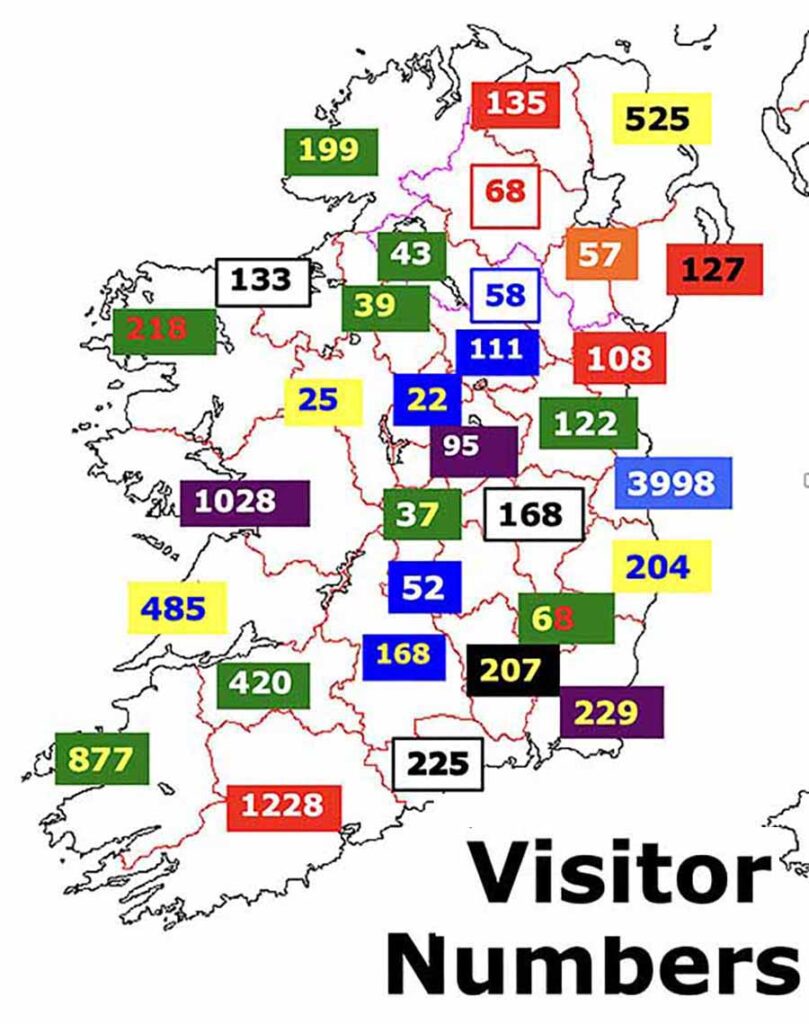
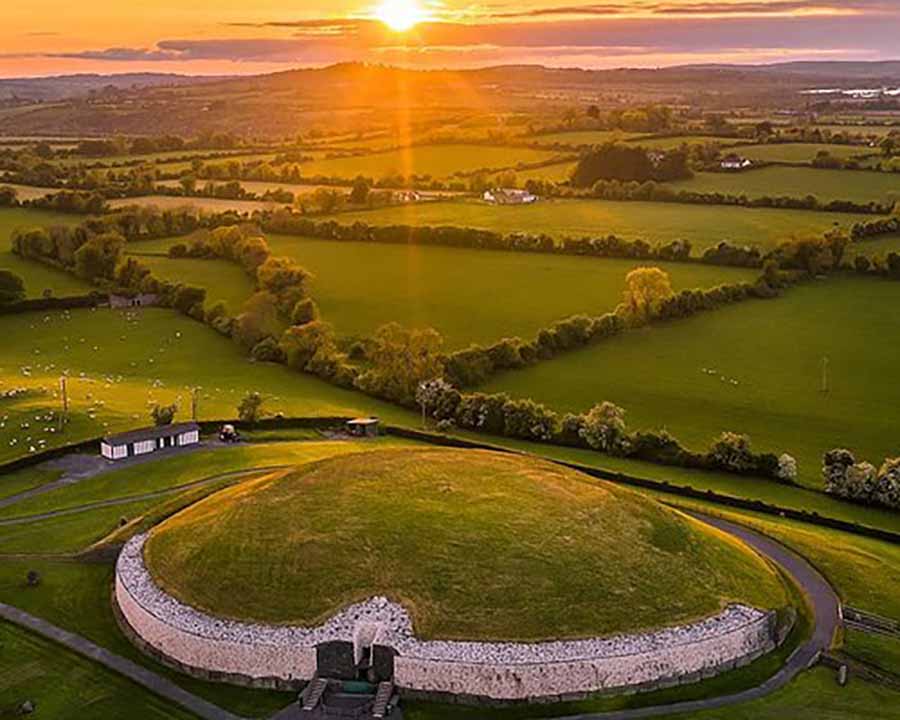
Ireland’s county Meath is steeped in Ireland’s ancient past, with the Hill of Tara offering a glimpse into royal history and panoramic views. The UNESCO-listed Brú na Bóinne complex, including Newgrange and Knowth, showcases intricate Neolithic tombs, while Trim Castle provides medieval grandeur. Other attractions include the Boyne River’s scenic walks and historic Slane Castle. Meath is Ireland’s 14th largest county by size (2,336 square km) and eighth largest by population (220,826). Population previously peaked at 183,828 in 1841 and reached its lowest point, 62,969 in 1926. In terms of hospitality, Meath is Ireland’s 19th most visited tourist county with around 122,000 international visitors per year.
Introduction – Adventure – Anthem – Archaeology – Attractions – Awards – Birdwatching – Camping – Castles – Churches – Contact list – Cycling – Dining – Equestrian – Festivals – Fishing – Folklore – Gardens – Golf – Graveyards – Happening – Haunted – Highest – Hiking – History – Holy Wells – Hotels – Hotels top 8 – Hunting & shooting – Instagrammable – Itineraries – Largest town – Luxury – MICE – Movies – Music – Name – New – Novelists – Off the beaten track – Poets – Pubs – Quotes – Random Facts – Restaurant Awards – Sacred Places – Saints – Songs – Spas – Sports – Sunsets – Sustainable – Things to do – Towns – Video – Villages – Walking – Wanderlist – Weddings – Wild swimming – Writers – 1837 – 1846 – 1852 – 1909 – 1955 – 1980 –