- Parke’s Castle: Parke’s Castle, located on the shores of Lough Gill near Dromahair, is a restored 17th-century plantation castle built around 1634 by Sir Roger Parke on the site of an earlier 15th-century O’Rourke clan tower house, part of the Kingdom of Breffni. The castle, originally a fortified manor house, features defensive flanking towers (one of only six in Ireland with this style) and a well-preserved courtyard with evidence of the older Gaelic structure. Restored by the Office of Public Works using traditional Irish oak and craftsmanship, it’s a fine example of plantation architecture. Open seasonally (typically March-October), managed by the Office of Public Works, with guided tours. Visitors can take guided tours (€5 adults, €3 seniors, free for children) lasting about 1 hour, exploring the castle’s restored interiors, including the great hall and exhibitions with 17th-century artifacts, replica period costumes, and furniture. The lakeside setting offers stunning views, ideal for photography. A small visitor center and tea room are available, but amenities are limited. The nearby Lough Gill, celebrated by W.B. Yeats, enhances the visit with scenic walks. Allow 1-1.5 hours, reachable by car from Carrick-on-Shannon (20-minute drive). The castle’s well-preserved state, historical exhibits, and picturesque Lough Gill location make it a must-visit for history and nature lovers. Check seasonal hours on heritageireland.ie. Steep stairs may limit accessibility.
- Lough Rynn Castle: Lough Rynn Castle, near Mohill in southern Leitrim, is a 19th-century Gothic Revival castle built on the ancestral estate of the Mac Raghnaill (Reynolds) family and later the Clements family, Lords of Leitrim. Originally a fortified house, it was transformed into a luxurious residence and is now one of Ireland’s premier castle hotels. Set on 300 acres with walled gardens and Lough Rynn’s shores, it retains historical features like period furnishings and ornate decor. Operates as a 5-star hotel, open to guests and non-guests for dining, afternoon tea, or occasional tours. Hotel guests can stay in luxurious rooms or suites, while non-guests can book afternoon tea (€40) or dine at the award-winning Sandstone Restaurant, featuring locally sourced menus. The 300-acre estate offers walking trails, walled gardens, and lakeside views. Historical tours, when available (€10-€15, check loughrynn.ie), highlight the castle’s history and the Clements family’s legacy. Activities like kayaking, fishing, or horse riding are nearby. Allow 1-2 hours for dining or grounds exploration, longer for stays. Reachable by car from Carrick-on-Shannon (15-minute drive). The castle’s opulent interiors, extensive grounds, and luxury amenities make it ideal for those seeking a high-end historical experience. Reservations for dining or tours are essential. The castle is wheelchair-accessible on the ground floor.
- Manorhamilton Castle: Manorhamilton Castle, in the town of Manorhamilton, is a 17th-century ruined plantation castle built between 1634 and 1638 by Sir Frederick Hamilton. A fortified bawn with corner towers, it was a stronghold during the Plantation of Ulster but was burned during the 1640s War of the Three Kingdoms. Its ruins dominate the town, with a dramatic history tied to Hamilton’s brutal suppression of O’Rourke-led uprisings. A permanent exhibition showcases 17th-century artifacts. A ruin, open by appointment for guided tours, managed locally. Visitors must arrange tours in advance (~€5, contact Leitrim Tourism or leitrimtourism.com), which explore the castle’s ruins and exhibition of period costumes and artifacts, offering insights into its violent history. The site lacks formal facilities, but Manorhamilton town has cafés and pubs. The ruins’ imposing walls and towers are best viewed externally, with tours lasting about 45 minutes. Reachable by car from Sligo (25-minute drive). The castle’s stark ruins and historical significance, tied to the Plantation era, appeal to those interested in Leitrim’s turbulent past. Pre-booking is required; contact local tourism for access. Uneven terrain may challenge mobility.
- McDermott’s Castle (Castle Island): McDermott’s Castle, located on Castle Island in Lough Key near Boyle (technically on the Leitrim-Roscommon border but often associated with Leitrim), is a 12th-century ruined castle built by the McDermott clan. Set on a tiny island, it features a small keep and later 19th-century folly additions, creating a fairy-tale appearance. Its isolated, romantic setting makes it one of Ireland’s most picturesque ruins, though it’s linked to tragic legends like the lovers Una and Thomas. A ruin, accessible only by boat with no formal public access or facilities. Visitors can view the castle from Lough Key’s shores or book private boat tours through local operators (e.g., Lough Key Boats, ~€20-€30 per person). No interior access is available due to its ruinous state, but the island’s dramatic setting is ideal for photography and storytelling. The nearby Lough Key Forest Park offers trails, a visitor center, and activities like zip-lining, enhancing the visit. Allow 1-2 hours, including boat travel, reachable by car from Carrick-on-Shannon (15-minute drive). The castle’s enchanting island setting and Lough Key’s recreational offerings make it a unique stop for adventurers and photographers. Boat tours depend on weather and availability; check loughkeyboats.com. Dress for outdoor conditions.
Visiting
- Access and Facilities: Parke’s Castle is the most developed, with guided tours and a visitor center. Lough Rynn offers luxury hotel amenities, including dining and gardens. Manorhamilton requires pre-arranged tours with limited facilities, while McDermott’s Castle is remote, accessible only by boat with no amenities. All are reachable by car from Carrick-on-Shannon, Leitrim’s main hub.
- Leitrim’s castles reflect its Gaelic heritage (McDermott’s, Parke’s O’Rourke origins), Plantation history (Manorhamilton, Parke’s), and 19th-century grandeur (Lough Rynn), tied to clans like the O’Rourkes and MacDermotts and later English settlers.
- Activities: Combine visits with Leitrim’s attractions, like Glencar Waterfall, Lough Key Forest Park, or the Shannon-Erne Waterway for boating. Manorhamilton’s pubs offer local music and craic.
- Practical Tips: Check Parke’s Castle hours on heritageireland.ie and book Lough Rynn or Manorhamilton visits in advance. McDermott’s requires boat tour planning. Wear sturdy shoes for ruins and weather-appropriate clothing for Leitrim’s often wet climate.
Castles
Antrim – Armagh – Carlow – Cavan – Clare – Cork – Derry – Donegal – Down – Dublin – Fermanagh – Galway – Kerry – Kildare – Kilkenny – Laois – Leitrim – Limerick – Longford – Louth – Mayo – Meath – Monaghan – Offaly – Roscommon – Sligo – Tipperary – Tyrone – Waterford – Westmeath – Wexford – Wicklow
County Leitrim:
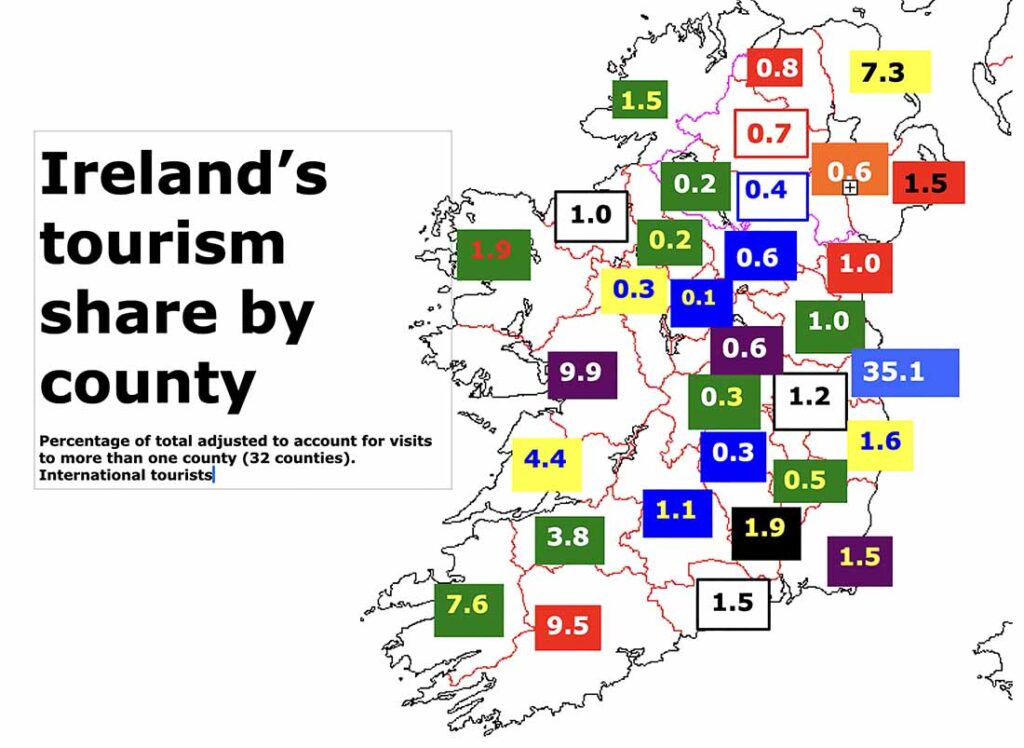
Ireland’s county Leitrim is a haven of waterways and unspoilt scenery, with the Shannon-Erne Waterway offering tranquil boating and fishing opportunities. Carrick-on-Shannon’s historic Costello Chapel and vibrant marina provide cultural and leisurely appeal, while Glencar Waterfall adds natural beauty. Leitrim is Ireland’s seventh smallest county by size (1,525 square km) and smallest by population (35,199). Population peaked at 155,297 in 1841 and reached its lowest point, 25,057 in 1996. In terms of hospitality, Leitrim is Ireland’s 29th most visited tourist county with around 39,000 international visitors per year.
Introduction – Adventure – Anthem – Archaeology – Attractions – Awards – Birdwatching – Camping – Castles – Churches – Contact list – Cycling – Dining – Equestrian – Festivals – Fishing – Folklore – Gardens – Golf – Graveyards – Happening – Haunted – Highest – Hiking – History – Holy Wells – Hotels – Hotels top 8 – Hunting & shooting – Instagrammable – Itineraries – Largest town – Luxury – MICE – Movies – Music – Name – New – Novelists – Off the beaten track – Poets – Pubs – Quotes – Random Facts – Restaurant Awards – Sacred Places – Saints – Songs – Spas – Sports – Sunsets – Sustainable – Things to do – Towns – Video – Villages – Walking – Wanderlist – Weddings – Wild swimming – Writers – 1837 – 1846 – 1852 – 1909 – 1955 – 1980 –