- Rathcline Castle: Rathcline Castle, located south of Lanesborough near Lough Ree, is a 14th-century ruined castle associated with the O’Farrell clan, who were dominant in Longford (historically Annaly). The castle comprises fortified buildings from various eras, including remnants of a tower house and defensive walls, reflecting the area’s complex Gaelic and Plantation history. Its scenic position by the River Shannon adds to its allure, though it fell into ruin after the 17th-century Cromwellian wars. A ruin, accessible with free entry but no formal facilities, managed by local authorities. Visitors can view the castle’s exterior ruins from nearby paths, enjoying its atmospheric setting by Lough Ree. The site lacks signage or tours, so self-guided exploration is required. The crumbling walls and towers offer a glimpse into medieval Gaelic life, ideal for photography. Allow 30-45 minutes, reachable by car from Longford Town (10-minute drive). Combine with Lanesborough’s river walks or fishing on Lough Ree. The castle’s lakeside location and O’Farrell history make it a poignant stop for those interested in Longford’s Gaelic past. Access may be limited due to private land; respect boundaries. Wear sturdy shoes for uneven terrain.
- Castle Forbes: Castle Forbes, near Newtownforbes, is a 19th-century castellated mansion built in 1830 for the Forbes family, Earls of Granard, on the site of an earlier O’Farrell stronghold. Designed in the Gothic Revival style, it replaced a 17th-century house and features turrets and ornate interiors. Still owned by the Forbes family, it’s one of Longford’s few intact castles, reflecting the Anglo-Irish ascendancy. Privately owned, with no regular public access but occasional openings for events or by appointment. Public access is rare, but during events like heritage days (check longford.ie), visitors may tour the castle’s grounds or select interiors, showcasing period decor and Forbes family history. The 600-acre estate offers scenic views, with wooded walks nearby. Visits last 1-1.5 hours, reachable by car from Longford Town (10-minute drive). Combine with the nearby Corlea Trackway Visitor Centre. The castle’s Gothic architecture and historical significance as an Anglo-Irish estate make it a unique stop when accessible. Contact Longford Tourism or the Forbes family for opening details. Limited accessibility due to private ownership.
- Ardanragh Castle: Ardanragh Castle, near Longford Town, is a 13th-century ruined castle associated with the O’Farrell family, who controlled much of Longford until the 17th century. Described in 1835 as an “ancient castle” and later partially converted into a house, it features remnants of a medieval structure. The site is obscure and less documented, but it reflects Longford’s Gaelic heritage. A ruin on private land, with no formal public access or facilities. Visitors can view the ruins from nearby roads, noting fragments of walls and possible tower remnants. No tours or signage exist, so research into O’Farrell history is recommended. The site’s rural setting near Longford Town (10-minute drive) offers a quiet visit, best for those exploring local history. Allow 30 minutes, ideally combined with the Ardagh Heritage Village. The castle’s obscurity and connection to the O’Farrells appeal to those seeking hidden historical sites. Access is restricted; respect private property. Uneven terrain requires caution.
Sources mention a “Longford Castle” in Longford Town, built in 1627 by Lord Aungier during the Plantation of Ulster, which was a focal point during the 1641 Longford Rebellion. This castle fell into ruin and was demolished in 1972, with its site now occupied by modern structures like army barracks. It is no longer a viable visitor site.
Castles
Antrim – Armagh – Carlow – Cavan – Clare – Cork – Derry – Donegal – Down – Dublin – Fermanagh – Galway – Kerry – Kildare – Kilkenny – Laois – Leitrim – Limerick – Longford – Louth – Mayo – Meath – Monaghan – Offaly – Roscommon – Sligo – Tipperary – Tyrone – Waterford – Westmeath – Wexford – Wicklow
County Longford:
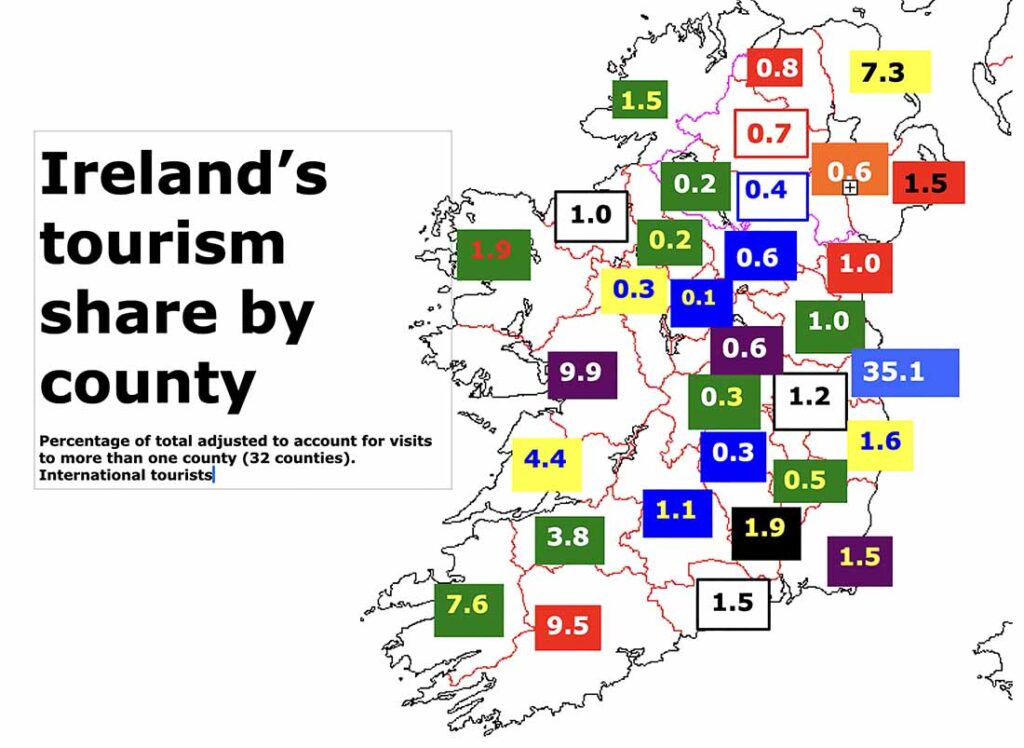
Ireland’s county Longford offers a peaceful blend of history and countryside, with the Corlea Trackway Visitor Centre showcasing an ancient Iron Age road. The county’s St Mel’s Cathedral in Longford town provides architectural beauty, while the River Inny offers opportunities for kayaking and fishing. Other attractions include the rolling farmlands and historic Ardagh village. Longford is Ireland’s fourth smallest county by size and second smallest by population (46,751). Population peaked at 115,491 in 1841 and reached its lowest point, 28,250 in 1971. In terms of hospitality, Longford is Ireland’s 32nd most visited and Ireland’s least visited tourist county with around 22,000 international visitors per year.
Introduction – Adventure – Anthem – Archaeology – Attractions – Awards – Birdwatching – Camping – Castles – Churches – Contact list – Cycling – Dining – Equestrian – Festivals – Fishing – Folklore – Gardens – Golf – Graveyards – Happening – Haunted – Highest – Hiking – History – Holy Wells – Hotels – Hotels top 8 – Hunting & shooting – Instagrammable – Itineraries – Largest town – Luxury – MICE – Movies – Music – Name – New – Novelists – Off the beaten track – Poets – Pubs – Quotes – Random Facts – Restaurant Awards – Sacred Places – Saints – Songs – Spas – Sports – Sunsets – Sustainable – Things to do – Towns – Video – Villages – Walking – Wanderlist – Weddings – Wild swimming – Writers – 1837 – 1846 – 1852 – 1909 – 1955 – 1980 –