County Wexford, in Ireland’s southeast within the Ancient East region, boasts a rich history shaped by Viking, Norman, and Gaelic influences, with castles reflecting its strategic coastal importance and role in events like the 1798 Rebellion.
- Ferns Castle: Ferns Castle, located in Ferns, a historic town in north Wexford, is a 13th-century Norman castle built around 1220 by William Marshal, a key Anglo-Norman lord. Originally a quadrangular fortress with four corner towers, it was a stronghold of the MacMurrough Kavanagh kings of Leinster, linked to Dermot MacMurrough, who invited the Normans to Ireland in 1169. The surviving circular tower and parts of the walls showcase fine stonework and medieval architecture. Open seasonally (May-September, daily; limited hours in spring/fall), managed by the Office of Public Works, with free admission. Visitors can explore the castle ruins, including the circular tower, accessible via a spiral staircase to the top for panoramic views of Ferns and the countryside. Informational panels detail its Norman and Gaelic history. No guided tours or on-site facilities, but the nearby Ferns Heritage Centre offers context and a café. Allow 30-45 minutes, reachable by car from Wexford Town (20-minute drive) or bus from Dublin (2 hours). Combine with St. Edan’s Cathedral or the Ferns Tapestry. The castle’s well-preserved tower, historical ties to the Normans and MacMurroughs, and scenic views make it a must for history enthusiasts. Steep stairs limit accessibility; check heritageireland.ie for exact hours. Wear sturdy shoes for uneven grounds.
- Johnstown Castle: Johnstown Castle, near Wexford Town in Murntown, is a 19th-century Gothic Revival castle built in the 1840s for the Grogan-Morgan family on a site with 12th-century Norman origins. Featuring turrets, battlements, and a stunning lakeside setting, it’s surrounded by 25 acres of ornamental gardens, woodlands, and lakes. The estate also houses the Irish Agricultural Museum, reflecting Wexford’s farming heritage. Open year-round, managed by the Irish Heritage Trust, with admission to gardens and museum (~€10 adults, €4 children, family rates available). The castle interior is closed to the public (used for private events), but visitors can explore the extensive gardens, including a walled garden, lake walks, and a sunken Italianate garden with statues. The Irish Agricultural Museum showcases vintage machinery, rural artifacts, and famine history. A café and gift shop are on-site. Allow 2-3 hours, reachable by car from Wexford Town (10-minute drive) or bus (Wexford local routes). Combine with the Irish National Heritage Park nearby. The castle’s picturesque Gothic exterior, lush gardens, and engaging museum make it ideal for families, gardeners, and history buffs. Book tickets online (johnstowncastle.ie) for discounts. Gardens are wheelchair-accessible; wear comfortable shoes for walking.
- Enniscorthy Castle: Enniscorthy Castle, in the heart of Enniscorthy town, is a 13th-century Norman castle built around 1205 by Philip de Prendergast. Rebuilt after damage in the 16th century, it was a key site during the 1798 Rebellion, when Vinegar Hill rebels used it as a base. Restored in the 20th century, it now houses the Wexford County Museum, blending medieval architecture with exhibits on local history. Open year-round (closed major holidays), managed by Wexford County Council, with admission (~€6 adults, €4 seniors, €3 children). Visitors can explore the castle’s restored rooms and turrets, climbing to the roof for views of Enniscorthy and Vinegar Hill. The museum features exhibits on the 1798 Rebellion, Norman history, and Wexford’s maritime and industrial past, with interactive displays. A small gift shop is available; no café on-site, but Enniscorthy town has dining options. Allow 1-1.5 hours, reachable by car from Wexford Town (20-minute drive) or train/bus from Dublin (2 hours). Combine with Vinegar Hill or the National 1798 Rebellion Centre. The castle’s compact design, rebellion history, and engaging museum make it a top stop for history lovers. Steep stairs to the roof; check enniscorthycastle.ie for hours. Limited parking in town.
- Rathmacknee Castle: Rathmacknee Castle, near Rosslare in south Wexford, is a Ascendant (5th) and final page (6th) of a 15th-century tower house built by the Devereux family, a Norman lineage. This five-story structure, with thick walls and a defensive bawn, was a stronghold designed to protect the family’s lands. Now a ruin, its intact tower and rural setting evoke Wexford’s medieval past. A National Monument, open year-round with free access, no formal facilities. Visitors can view the castle’s exterior, exploring the tower and surrounding grounds via a short walk from nearby roads. No guided tours or signage, so self-guided exploration relies on prior research into its Devereux history. The quiet, rural location offers a peaceful setting for photography or reflection. Allow 30-45 minutes, reachable by car from Wexford Town (15-minute drive). Combine with nearby Tintern Abbey or Rosslare Beach. The castle’s well-preserved tower and serene countryside setting appeal to those seeking an authentic medieval experience. Uneven terrain; wear sturdy shoes. Respect potential private land boundaries nearby.
Castles
Antrim – Armagh – Carlow – Cavan – Clare – Cork – Derry – Donegal – Down – Dublin – Fermanagh – Galway – Kerry – Kildare – Kilkenny – Laois – Leitrim – Limerick – Longford – Louth – Mayo – Meath – Monaghan – Offaly – Roscommon – Sligo – Tipperary – Tyrone – Waterford – Westmeath – Wexford – Wicklow
County Wexford:
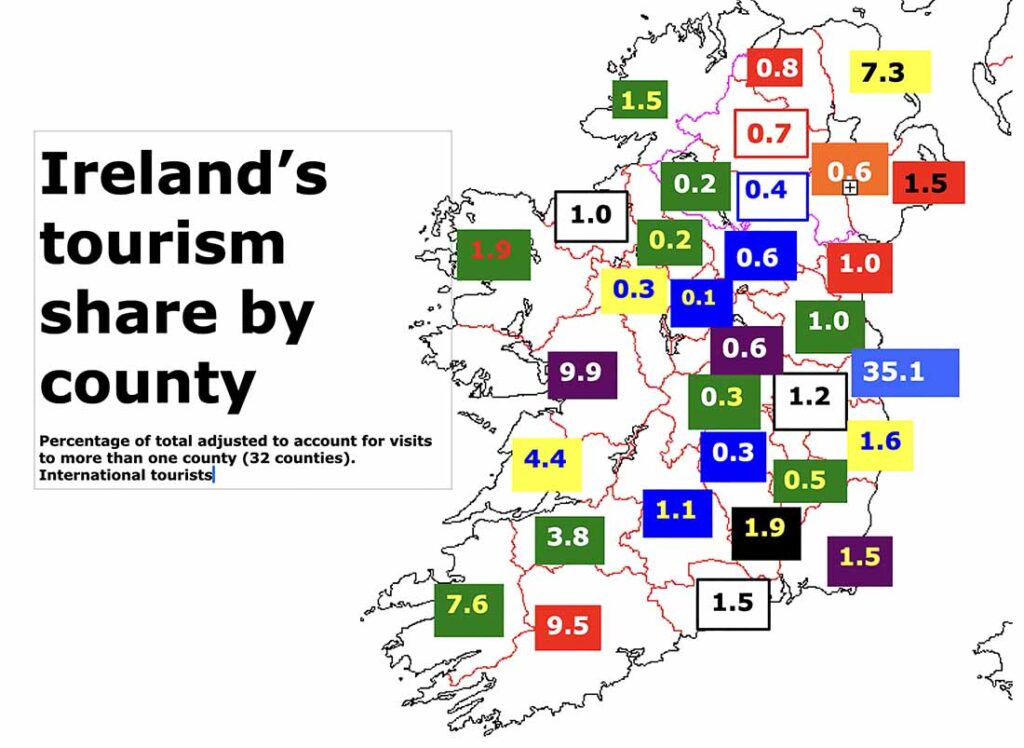
Ireland’s county Wexford combines coastal beauty with historic sites, with the Hook Lighthouse, one of the world’s oldest, offering scenic coastal views. The Irish National Heritage Park recreates ancient and medieval settlements, while Wexford’s beaches, like Curracloe, provide sandy shores for walking. Other attractions include the historic town of Enniscorthy and its castle. Wexford is Ireland’s 13th largest county by size (2,351 square km) and 14th largest by population (163,919). Population peaked at 202,033 in 1841 and reached its lowest point, 83,308 in 1961. In terms of hospitality, Wexford is Ireland’s eighth most visited tourist county with around 229,000 international visitors per year.
Introduction – Adventure – Anthem – Archaeology – Attractions – Awards – Birdwatching – Camping – Castles – Churches – Contact list – Cycling – Dining – Equestrian – Festivals – Fishing – Folklore – Gardens – Golf – Graveyards – Happening – Haunted – Highest – Hiking – History – Holy Wells – Hotels – Hotels top 8 – Hunting & shooting – Instagrammable – Itineraries – Largest town – Luxury – MICE – Movies – Music – Name – New – Novelists – Off the beaten track – Poets – Pubs – Quotes – Random Facts – Restaurant Awards – Sacred Places – Saints – Songs – Spas – Sports – Sunsets – Sustainable – Things to do – Towns – Video – Villages – Walking – Wanderlist – Weddings– Wild swimming – Writers – 1837 – 1846– 1852 – 1909 – 1955 – 1980 –