Pre-1000 The Gaelic Nation
County Wexford, part of the ancient kingdom of Leinster, was dominated by the house of Chennselach, a Gaelic dynasty whose descendants, the MacMurroughs, became prominent. The county’s name derives from the Norse Veisafjǫrðr (‘inlet of the mudflats’), reflecting Viking influence. Archaeological sites, such as the Ferns raths and the Taghmon church, indicate early settlement and Christian activity from the 5th century. St. Ibar and St. Abbán founded monasteries, with Ferns emerging as a religious centre. Viking settlements, including Wexford town (founded c. 800), made it a key port, as noted in The Annals of Ulster. The MacMurroughs controlled inland areas, leveraging Wexford’s fertile lands for agriculture.
1000–1100: Gaelic Power and Viking Integration
Wexford remained under MacMurrough control, with Dermot MacMurrough (later king of Leinster) descending from the House of Chennselach. Wexford town thrived as a Viking-Gaelic port, trading with England and Europe. The Battle of Clontarf (1014), recorded in The Annals of the Four Masters, weakened Viking power, allowing Gaelic lords to reassert dominance. Ferns grew as a diocesan centre, formalised by the Synod of Kells (1152). The county’s coastal access and fertile Slaney Valley supported agriculture and trade. The MacMurroughs navigated alliances with Munster’s O’Briens,. Wexford’s hybrid Gaelic-Norse culture shaped its early medieval identity.
1100–1200: Norman Invasion and MacMurrough Alliance
The Norman invasion (1169) transformed Wexford. Dermot MacMurrough, king of Leinster, invited Normans to regain his throne, landing at Bannow Bay in 1169 with Richard de Clare (Strongbow). Wexford town was captured, becoming a Norman stronghold, as detailed in The Annals of Tigernach. The Normans, including the FitzGeralds and de Prendergasts, built castles like Enniscorthy and Ferns. Dermot’s daughter Aoife married Strongbow, cementing Norman-Gaelic ties. Ferns remained a religious hub, with St. Mary’s Abbey founded. Gaelic dynasties like the O’Kavanaghs resisted in rural areas.
1200–1300: Norman Consolidation and Urban Growth
Wexford became a core part of the Anglo-Norman Pale, with the FitzGeralds and other Norman families dominating. Wexford town received a royal charter c. 1200, boosting its port status. Castles like Johnstown and Bargy were built to secure control. The Black Death (1348–1350) reduced the population, particularly in urban areas, though records are scarce. The Annals of Connacht note tensions between Normans and Gaelic dynasties like the O’Morchoes. The county’s fertile lands supported grain and wool exports, with New Ross emerging as a trade hub. Gaelic influence persisted in the north, with Ferns as a contested centre.
1300–1400: Gaelic Resurgence and Norman-Gaelic Hybridity
The decline of Norman authority allowed Gaelic dynasties like the O’Kavanaghs and O’Morchoes to regain influence in northern Wexford. The FitzGeralds, increasingly Gaelicised, maintained control of southern strongholds like Rosslare. The Statute of Kilkenny (1366) aimed to reinforce Norman control, but intermarriage blurred Gaelic-Norman lines. Wexford town and New Ross remained loyal to the crown, trading with England. Monastic sites like Dunbrody Abbey (founded c. 1182) thrived, driving agriculture. The Annals of Ulster record the MacMurroughs’ conflicts with the Butlers, reflecting Wexford’s role in Leinster politics.
1400–1500: Late Medieval Stability
Wexford was divided between Anglo-Norman lords like the FitzGeralds in the south and Gaelic dynasties like the MacMurroughs in the north. Wexford town and New Ross prospered as ports, exporting wool and hides. Castles like Fethard and Tintern Abbey were fortified to counter Gaelic raids. The county’s economy relied on agriculture and maritime trade, with Enniscorthy growing as a market town. The Annals of Ulster note the MacMurroughs’ alliances with the O’Byrnes. Wexford’s proximity to Dublin ensured English oversight, but rural areas retained Gaelic traditions.
1500–1600: Tudor Reconquest and Reformation
The Tudor reconquest strengthened English control in Wexford. The FitzGeralds, loyal to the crown, maintained influence, but the MacMurroughs resisted, with figures like Cahir MacMurrough rebelling,. The dissolution of monasteries (1536–1541) secularised Dunbrody and Tintern abbeys, redistributing lands to Anglo-Irish lords. Wexford town remained a royalist stronghold, resisting Gaelic uprisings. The Annals of the Four Masters detail limited fighting in Wexford during the Nine Years’ War (1593–1603), though its proximity to the Pale made it a strategic zone. Early plantation efforts introduced English settlers, particularly in the south, reshaping demographics.
1600–1700: Cromwellian Upheaval and Plantation
The 1641 Rebellion saw Wexford’s Gaelic and Old English lords, including the MacMurroughs and Colcloughs, join Confederate forces, seizing Wexford town. Cromwell’s campaign (1649–1650) recaptured it in a brutal siege, massacring much of the population. Cromwellian confiscations redistributed lands to English settlers like the Loftus family. The Williamite War (1689–1691) saw Wexford align with William III, with minor skirmishes. The Penal Laws marginalised Catholics, while Colonial/protestan settlers grew in number. Wexford town’s port and New Ross’s trade sustained the economy. The Confederate Wars documents detail these shifts.
1700–1800: Anglo-Irish Ascendancy and Rebellion
Wexford’s Anglo-Irish elite, including the Loftus and Colclough families, dominated under the Penal Laws, building estates like Loftus Hall. The county’s economy thrived on agriculture and maritime trade, with Wexford and New Ross as key ports. The 1798 Rebellion was a defining event, with Wexford as a rebel stronghold under leaders like Bagenal Harvey and John Kelly, who established a short-lived republic at Vinegar Hill,. The rebellion’s defeat led to harsh reprisals. The Act of Union (1800) integrated Wexford into English rule, reducing local influence.
1800–1900: Famine and Reform
The Great Famine (1845–1852) devastated Wexford, with its population falling from 202,000 in 1841 to 160,000 by 1851, per census records. Workhouses in Wexford and Enniscorthy were overwhelmed, and emigration surged to America, Scotland and England. The county’s fertile lands mitigated some effects, but evictions were common. The Land League, active in Wexford, pushed for tenant rights, with figures like John Redmond leading reform efforts. The Gaelic Revival highlighted Ferns and the house of Cennseallach heritage. Wexford town and New Ross grew as administrative centres. The county’s maritime tradition persisted, with fishing and trade prominent.
1900–2025: Independence and Modernisation
Wexford played a significant role in the War of Independence (1919–1921), with IRA ambushes in Wexford town and Enniscorthy, as documented in History Ireland. The county joined the Irish Free State in 1922, with John Redmond’s legacy shaping nationalism. The population stabilised, reaching 149,722 by 2022, per census data. Infrastructure, including the M11 motorway, improved connectivity. Tourism grew, focusing on the Hook Lighthouse, Johnstown Castle, and the Irish National Heritage Park. The county’s economy diversified, with agriculture, fishing, and tourism prominent. Wexford’s heritage endures, including its opera festival and maritime identity. Wexford is one of 24 Irish counties that still has a smaller population than it did in 1841.
History
Antrim – Armagh – Carlow – Cavan – Clare – Cork – Derry – Donegal – Down – Dublin – Fermanagh – Galway – Kerry – Kildare – Kilkenny – Laois – Leitrim – Limerick – Longford – Louth – Mayo – Meath – Monaghan – Offaly – Roscommon – Sligo – Tipperary – Tyrone – Waterford – Westmeath – Wexford – Wicklow
County Wexford:
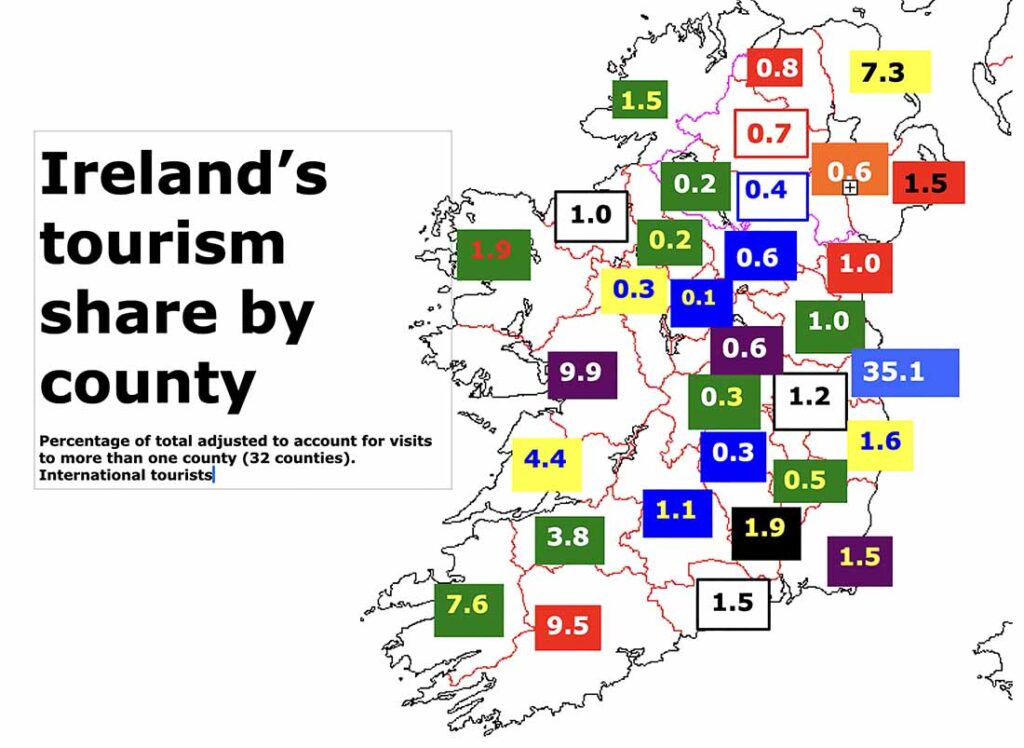
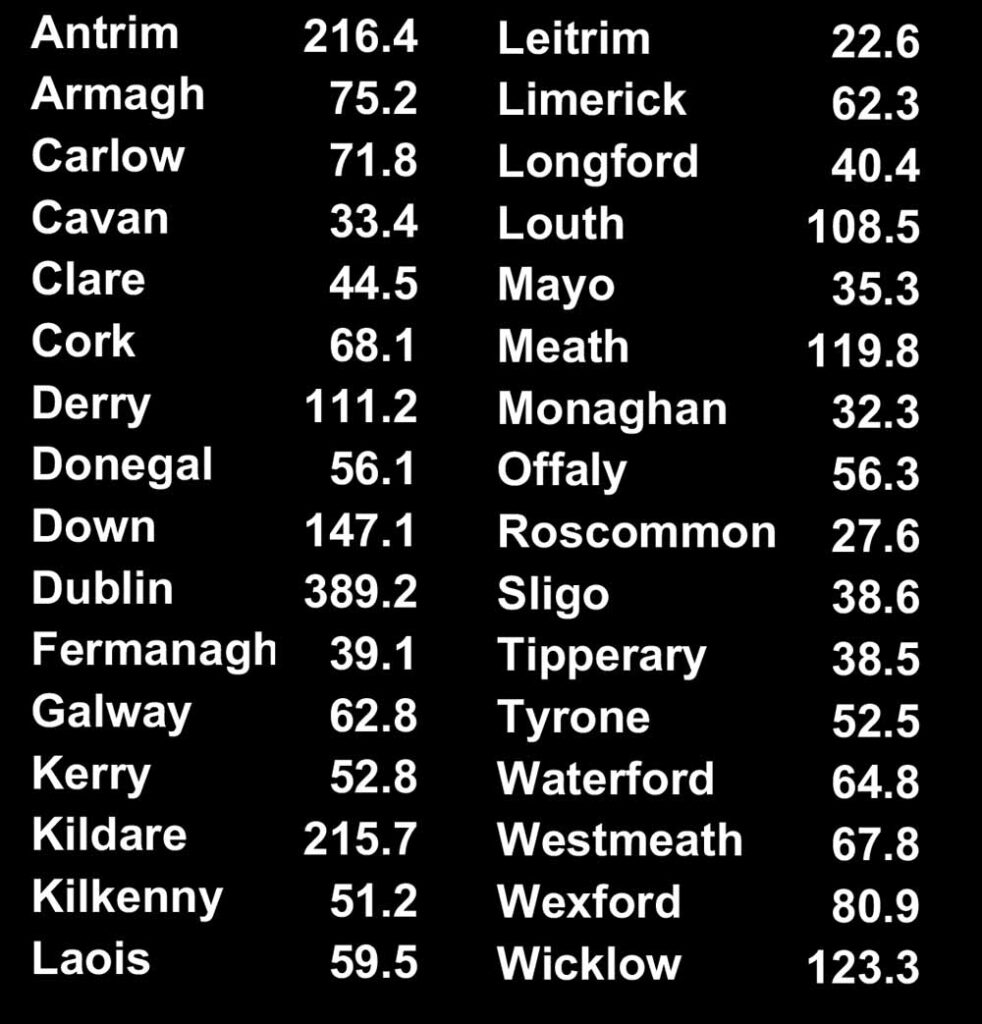
Ireland’s county Wexford combines coastal beauty with historic sites, with the Hook Lighthouse, one of the world’s oldest, offering scenic coastal views. The Irish National Heritage Park recreates ancient and medieval settlements, while Wexford’s beaches, like Curracloe, provide sandy shores for walking. Other attractions include the historic town of Enniscorthy and its castle. Wexford is Ireland’s 13th largest county by size (2,351 square km) and 14th largest by population (163,919). Population peaked at 202,033 in 1841 and reached its lowest point, 83,308 in 1961. In terms of hospitality, Wexford is Ireland’s eighth most visited tourist county with around 229,000 international visitors per year.
Introduction – Adventure – Anthem – Archaeology – Attractions – Awards – Birdwatching – Camping – Castles – Churches – Contact list – Cycling – Dining – Equestrian – Festivals – Fishing – Folklore – Gardens – Golf – Graveyards – Happening – Haunted – Highest – Hiking – History – Holy Wells – Hotels – Hotels top 8 – Hunting & shooting – Instagrammable – Itineraries – Largest town – Luxury – MICE – Movies – Music – Name – New – Novelists – Off the beaten track – Poets – Pubs – Quotes – Random Facts – Restaurant Awards – Sacred Places – Saints – Songs – Spas – Sports – Sunsets – Sustainable – Things to do – Towns – Video – Villages – Walking – Wanderlist – Weddings– Wild swimming – Writers – 1837 – 1846– 1852 – 1909 – 1955 – 1980 –