- Saint Macartin’s Cathedral, Enniskillen: Designed by John O’Neill (1841 rebuild). Built in 1637 as a parish church for Captain William Cole, this Church of Ireland cathedral features a perpendicular Gothic style with a clerestoried nave and a 150-foot spire. It houses a 1666 font and a 1830 John Smith organ. Church Street, Enniskillen.
- Saint Michael’s Church, Enniskillen: Designed by John O’Neill. Constructed in 1875, this Catholic church showcases French Gothic Revival architecture with tall lancet windows and an ornate Last Judgement tympanum. It features a rare oil mural by Michael Healy and a golden swallow above the entrance. Darling Street, Enniskillen.
- Enniskillen Presbyterian Church: Built in 1897, this church houses one of Ireland’s earliest church harmoniums. Its simple Gothic Revival design serves Enniskillen’s Presbyterian community. East Bridge Street, Enniskillen.
- Holy Trinity Church, Lisnaskea: Erected in 1832, this Church of Ireland church features a Gothic Revival design with a modest tower. It serves the Lisnaskea parish and reflects 19th-century Anglican architecture. Main Street, Lisnaskea.
- Saint Patrick’s Church, Derrygonnelly: Built in 1839, this Catholic church features a simple Gothic Revival style. It serves Derrygonnelly’s Catholic community and reflects post-emancipation architecture. Church Road, Derrygonnelly.
- Saint Mary’s Church, Maguiresbridge: Constructed in 1840, this Catholic church features a modest Gothic design with pointed arches. It serves the Maguiresbridge Catholic community. Main Street, Maguiresbridge.
- Saint Ronan’s Church, Colebrooke: Built in 1825, this Church of Ireland church features a Georgian design with a small bell tower. It serves the rural Colebrooke parish and is tied to the Brooke family estate. Colebrooke, near Brookeborough.
- Saint Patrick’s Church, Irvinestown: Erected in 1841, this Catholic church features a Gothic Revival style with a prominent tower. It serves Irvinestown’s Catholic community and reflects early 19th-century architecture. Church Street, Irvinestown.
- Aghavea Parish Church, Brookeborough: Dating to the 17th century, this Church of Ireland church was rebuilt in 1812 with a simple Gothic design. It serves the Aghavea parish and is linked to the 1844 death records. Aghavea, near Brookeborough.
- Devenish Island Church, Lower Lough Erne: Designed by Unknown (medieval). Built in the 12th century, this Catholic church is part of Devenish Monastic Site, featuring a round tower and high crosses. Founded by St Molaise in the 6th century, it showcases Romanesque sculptures. Devenish Island, Lower Lough Erne.
Churches
Antrim – Armagh – Carlow – Cavan – Clare – Cork – Derry – Donegal – Down – Dublin – Fermanagh – Galway – Kerry – Kildare – Kilkenny – Laois – Leitrim – Limerick – Longford – Louth – Mayo – Meath – Monaghan – Offaly – Roscommon – Sligo – Tipperary – Tyrone – Waterford – Westmeath – Wexford – Wicklow
Holy Wells
Antrim – Armagh – Carlow – Cavan – Clare – Cork – Derry – Donegal – Down – Dublin – Fermanagh – Galway – Kerry – Kildare – Kilkenny – Laois – Leitrim – Limerick – Longford – Louth – Mayo – Meath – Monaghan – Offaly – Roscommon – Sligo – Tipperary – Tyrone – Waterford – Westmeath – Wexford – Wicklow
Sacred Places
Antrim – Armagh – Carlow – Cavan – Clare – Cork – Derry – Donegal – Down – Dublin – Fermanagh – Galway – Kerry – Kildare – Kilkenny – Laois – Leitrim – Limerick – Longford – Louth – Mayo – Meath – Monaghan – Offaly – Roscommon – Sligo – Tipperary – Tyrone – Waterford – Westmeath – Wexford – Wicklow
Saints
Antrim – Armagh – Carlow – Cavan – Clare – Cork – Derry – Donegal – Down – Dublin – Fermanagh – Galway – Kerry – Kildare – Kilkenny – Laois – Leitrim – Limerick – Longford – Louth – Mayo – Meath – Monaghan – Offaly – Roscommon – Sligo – Tipperary – Tyrone – Waterford – Westmeath – Wexford – WicklowCounty Fermanagh:
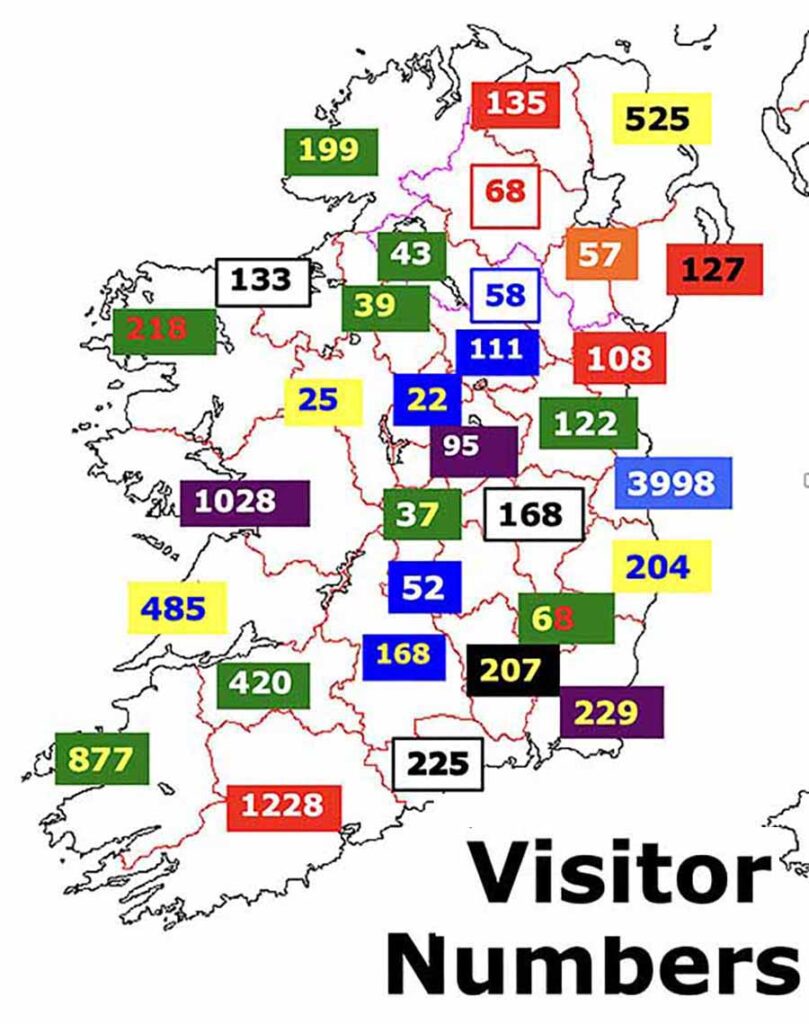
Ireland’s county Fermanagh is a county of lakes and historic charm, with Lough Erne’s waterways offering boating and fishing amidst serene islands. Enniskillen Castle and its museums explore local history, while the Marble Arch Caves, part of a UNESCO Geopark, showcase stunning underground caverns. Other attractions include the historic Florence Court estate and its gardens. Fermanagh is Ireland’s 20th largest county by size (1,876 square km) and fourth smallest by population (63,585). Population peaked at 156,481 in 1841 and reached its lowest point, 49,886 in 1966. In terms of hospitality, Fermanagh is Ireland’s 28th most visited tourist county with around 43,000 international visitors per year.
Introduction – Adventure – Anthem – Archaeology – Attractions – Awards – Birdwatching – Camping – Castles – Churches – Contact list – Cycling – Dining – Equestrian – Festivals – Fishing – Folklore – Gardens – Golf – Graveyards – Happening – Haunted – Highest – Hiking – History – Holy Wells – Hotels – Hotels top 8 – Hunting & shooting – Instagrammable – Itineraries – Largest town – Luxury – MICE – Movies – Music – Name – New – Novelists – Off the beaten track – Poets – Pubs – Quotes – Random Facts – Restaurant Awards – Sacred Places – Saints – Songs – Spas – Sports – Sunsets – Sustainable – Things to do – Towns – Video – Villages – Walking – Wanderlist – Weddings – Wild swimming – Writers – 1837 – 1846 – 1852 – 1909 – 1955 – 1980 –