- Saint Ninnidh of Inismacsaint: January 18, c. 6th century: Inismacsaint (Derryvullan North)Ninnidh, one of the “Twelve Apostles of Ireland,” studied under St. Finnian at Clonard and founded a monastery on Inismacsaint, an island in Lower Lough Erne. Known as Ninnidh Saebhruise, he was a bishop and contemporary of St. Columba. His monastery was a center of learning, and a high cross and ruins remain. His feast is in the Martyrology of Donegal, and Knockninny hill may also be named after him.
- Saint Molaise (Laisrén) of Devenish: September 12, c. 6th century: Devenish (Enniskillen)Molaise, another of the “Twelve Apostles of Ireland,” founded a monastery on Devenish Island in Lower Lough Erne, a major ecclesiastical site. A disciple of St. Finnian, he was known for his asceticism and miracles. His Life mentions mentoring St. Aidan of Ferns. Devenish’s round tower and oratory are pilgrimage sites, and his feast is in the Martyrology of Donegal.
- Saint Damhnade: June 13, c. 5th–6th century: Pubble (Tempo)Damhnade, a female saint, is patroness of Fermanagh and Cavan. She founded a church at Pubble, near Tempo, where her holy well is venerated. Known for her piety, she is mentioned in the Martyrology of Oengus. Her cult reflects the prominence of female monasticism in Fermanagh, and her feast underscores her regional significance.
- Saint Fanchea of Rossory: January 1, c. 6th century: Rossory (Enniskillen)Fanchea, a female saint, founded a nunnery at Rossory, near Enniskillen. Sister of St. Enda of Aran, she converted her brother from a warrior’s life to monasticism. Known for her spiritual guidance, her feast is in the Martyrology of Donegal. Rossory parish’s church and holy well preserve her legacy, highlighting Fermanagh’s early Christian women.
- Saint Nenn (Naile): January 27, c. 6th century: KinawleyNenn, or Naile, founded a monastery at Kinawley, near the Cavan border. A disciple of St. Columba, he was known for his humility and miracles, including healing. His feast is in the Martyrology of Donegal, and Kinawley parish’s church and holy well are pilgrimage sites, reflecting Fermanagh’s ties to Columba’s network.
- Saint Sinell of Cleenish: October 12, c. 6th century: Cleenish (Bellanaleck)Sinell, a disciple of St. Finnian, founded a monastery on Cleenish Island in Upper Lough Erne. One of the first Irish monks to adopt St. Benedict’s rule, he mentored St. Columbanus. His feast is in the Martyrology of Oengus, and Cleenish parish preserves his legacy, with the island’s ruins marking Fermanagh’s monastic heritage.
- Saint Tigernach of Clones: April 4, c. 5th–6th century: Galloon (Clones, partly in Fermanagh)Tigernach, a contemporary of St. Patrick, founded Clones monastery, straddling Fermanagh and Monaghan. Freed from slavery by St. Ninnidh, he became a bishop known for miracles. His feast is in the Martyrology of Donegal, and Galloon parish’s church site reflects his influence in Fermanagh’s border region.
- Saint Ronan of Aghalurcher: May 22, c. 6th century: Aghalurcher (Lisnaskea)Ronan founded a church at Aghalurcher, near Lisnaskea, a significant early Christian site. His feast is in the Martyrology of Oengus, but details of his life are sparse. Aghalurcher parish’s medieval church and graveyard preserve his memory, reflecting Fermanagh’s local saintly tradition.
- Saint Molua (Lugaid): August 4, c. 6th century: DerrybruskMolua, possibly linked to St. Molua of Clonfert, is associated with Derrybrusk parish, where he may have founded a church. His feast is in the Martyrology of Donegal, and his work reflects Fermanagh’s ties to Munster’s monastic network. Derrybrusk’s church site honors his obscure but enduring legacy.
- Saint Aidan (Mogue): January 31, c. 550–632: AghaveaAidan, or Mogue, born in Fermanagh, founded a church at Aghavea before becoming bishop of Ferns, Wexford. Trained by St. David in Wales, he is known for miracles like calming storms. His feast is in the Martyrology of Donegal, and Aghavea parish’s church site reflects his early influence in Fermanagh.
- Saint Laserian (Molaise of Leighlin): April 18, c. 6th–7th century: Inishkeen (historically linked)Laserian, distinct from Molaise of Devenish, is linked to Inishkeen Island in Upper Lough Erne through missionary work, though primarily associated with Leighlin, Carlow. He promoted the Roman Easter date. His feast is in the Martyrology of Oengus, and Inishkeen’s parish ties reflect Fermanagh’s broader monastic connections.
- Saint Fiacre: August 30, c. 7th century: Enniskillen (historically linked)Fiacre, born in Fermanagh, became a hermit in France at Meaux, where he founded a monastery and is patron of gardeners. His feast is in the Martyrology of Donegal, and his early life in Enniskillen parish ties him to Fermanagh’s missionary tradition, with his cult strong in Europe.
Saints
Antrim – Armagh – Carlow – Cavan – Clare – Cork – Derry – Donegal – Down – Dublin – Fermanagh – Galway – Kerry – Kildare – Kilkenny – Laois – Leitrim – Limerick – Longford – Louth – Mayo – Meath – Monaghan – Offaly – Roscommon – Sligo – Tipperary – Tyrone – Waterford – Westmeath – Wexford – Wicklow
Sacred Places
Antrim – Armagh – Carlow – Cavan – Clare – Cork – Derry – Donegal – Down – Dublin – Fermanagh – Galway – Kerry – Kildare – Kilkenny – Laois – Leitrim – Limerick – Longford – Louth – Mayo – Meath – Monaghan – Offaly – Roscommon – Sligo – Tipperary – Tyrone – Waterford – Westmeath – Wexford – Wicklow
Holy Wells
Antrim – Armagh – Carlow – Cavan – Clare – Cork – Derry – Donegal – Down – Dublin – Fermanagh – Galway – Kerry – Kildare – Kilkenny – Laois – Leitrim – Limerick – Longford – Louth – Mayo – Meath – Monaghan – Offaly – Roscommon – Sligo – Tipperary – Tyrone – Waterford – Westmeath – Wexford – Wicklow
County Fermanagh:
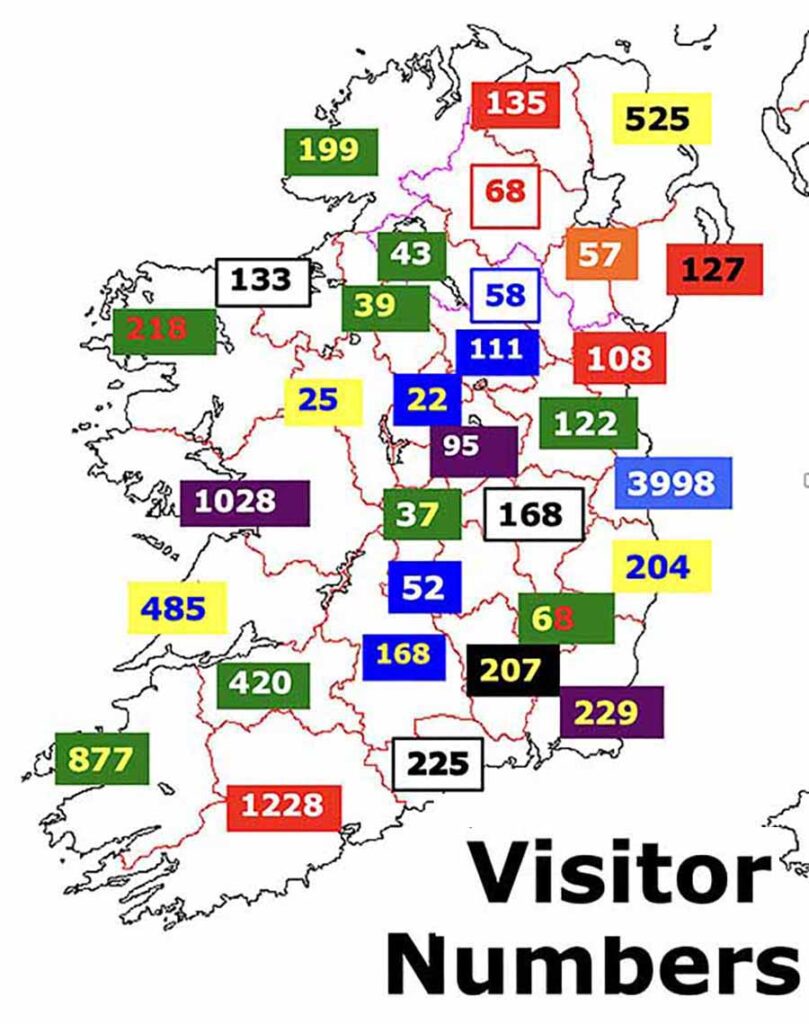
Ireland’s county Fermanagh is a county of lakes and historic charm, with Lough Erne’s waterways offering boating and fishing amidst serene islands. Enniskillen Castle and its museums explore local history, while the Marble Arch Caves, part of a UNESCO Geopark, showcase stunning underground caverns. Other attractions include the historic Florence Court estate and its gardens. Fermanagh is Ireland’s 20th largest county by size (1,876 square km) and fourth smallest by population (63,585). Population peaked at 156,481 in 1841 and reached its lowest point, 49,886 in 1966. In terms of hospitality, Fermanagh is Ireland’s 28th most visited tourist county with around 43,000 international visitors per year.
Introduction – Adventure – Anthem – Archaeology – Attractions – Awards – Birdwatching – Camping – Castles – Churches – Contact list – Cycling – Dining – Equestrian – Festivals – Fishing – Folklore – Gardens – Golf – Graveyards – Happening – Haunted – Highest – Hiking – History – Holy Wells – Hotels – Hotels top 8 – Hunting & shooting – Instagrammable – Itineraries – Largest town – Luxury – MICE – Movies – Music – Name – New – Novelists – Off the beaten track – Poets – Pubs – Quotes – Random Facts – Restaurant Awards – Sacred Places – Saints – Songs – Spas – Sports – Sunsets – Sustainable – Things to do – Towns – Video – Villages – Walking – Wanderlist – Weddings – Wild swimming – Writers – 1837 – 1846 – 1852 – 1909 – 1955 – 1980 –