- Powerscourt House and Gardens: Located near Enniskerry, Powerscourt House is an 18th-century Palladian mansion, not a medieval castle, built on a 13th-century castle site owned by the La Poer (Power) family. Rebuilt in 1731 by Richard Wingfield, Viscount Powerscourt, and restored after a 1974 fire, it’s renowned for its 47-acre gardens, among Ireland’s finest, featuring Italianate terraces, Japanese gardens, and a waterfall. Managed as a major tourist attraction, it reflects Anglo-Irish opulence. Open year-round (9:30 AM–5:30 PM, winter closes at dusk, check powerscourt.com, €12.50 adults, €5 children, €30 family for gardens; house entry free with garden ticket), visitors can explore the mansion’s restored interiors, including a ballroom and exhibition on the estate’s history, and the extensive gardens with lakes and statuary. Expect a 2–3 hour visit, with Avoca Cafe, a gift shop, nursery, and parking. The Powerscourt Waterfall (6 km away, €6.50 adults) adds a scenic detour. Full wheelchair access for gardens; house has limited access. Combine with Glendalough or Bray for a day trip. Ideal for garden lovers, families, and those seeking a grand estate experience, not a fortified castle.
- Russborough House: Situated near Blessington, Russborough House is a mid-18th-century Palladian mansion, not a medieval castle, built by Richard Cassels for Joseph Leeson, Earl of Milltown. Set on a 200-acre estate with Blessington Lakes views, it houses the Beit Collection of art, including works by Vermeer and Goya. While not a defensive structure, its historical and architectural significance makes it a standout in Wicklow. Open March–December (daily, 10 AM–5 PM, check russborough.ie, €13 adults, €6 children, €35 family), visitors can take guided house tours (45–60 minutes) of opulent interiors, including plasterwork ceilings and the art collection, or explore the grounds with a walled garden and maze. Expect a 1.5–2 hour visit, with a tearoom, gift shop, parking, and partial wheelchair access (ground floor). Events like sheepdog demonstrations or craft fairs add appeal. Combine with Blessington Lakes or Glendalough. Perfect for art enthusiasts and those seeking a luxurious, historical visit.
- Carnew Castle: Built in the early 14th century, likely by the de Caunteton family, Carnew Castle is a Norman tower house in Carnew village, near the Wexford border. A stronghold during medieval conflicts, it was damaged in the 1640s and 1798 Rebellion, leaving partial ruins. A National Monument, its remnants include a rectangular tower and walls, reflecting Wicklow’s borderland history. Open year-round (free, dawn–dusk), visitors can view the ruins from public paths in Carnew, as the site is on private land with no interior access due to safety concerns. Expect a 15–30 minute stop to see the tower remnants and read information boards. No facilities like restrooms or a cafe; parking is in the village with nearby cafes. The rural setting suits history buffs. Combine with Tomnafinnoge Wood or Tinahely’s heritage trail. A minor site for those exploring southern Wicklow’s medieval history.
- Castle Howard (Wicklow Castle): Located in Wicklow Town, Castle Howard, also known as Wicklow Castle or Black Castle, is a 12th-century Norman ruin on a rocky promontory overlooking the Irish Sea. Built by Maurice FitzGerald after the 1176 Norman invasion, it was destroyed by local clans in 1301 and later rebuilt, only to be ruined again by the 16th century. Its coastal position makes it a scenic landmark. Open year-round (free, dawn–dusk), visitors can explore the ruins, including fragmented walls and a tower base, via a short coastal path. Expect a 15–30 minute visit with sea views and information boards detailing Norman history. No facilities on-site; parking and cafes are in Wicklow Town. The site suits photographers and those on the Wicklow Way. Combine with Wicklow Gaol or the Murrough coastal walk. A quick, atmospheric stop for coastal and medieval enthusiasts.
Wicklow has other castle ruins like Arklow Castle (13th-century, partial walls in Arklow town, private, exterior viewing only), Castle Kevin (14th-century, near Annamoe, ruined, private land), and Rathdrum Castle (ruin, minimal remains, no public access). These are less prominent due to their condition or restricted access. Glencree Barracks, sometimes listed, is not a castle.
Powerscourt and Russborough dominate as grand estates, not fortified castles. Carnew and Castle Howard offer traditional medieval ruins but lack extensive visitor amenities.
Castles
Antrim – Armagh – Carlow – Cavan – Clare – Cork – Derry – Donegal – Down – Dublin – Fermanagh – Galway – Kerry – Kildare – Kilkenny – Laois – Leitrim – Limerick – Longford – Louth – Mayo – Meath – Monaghan – Offaly – Roscommon – Sligo – Tipperary – Tyrone – Waterford – Westmeath – Wexford – Wicklow
County Wicklow:
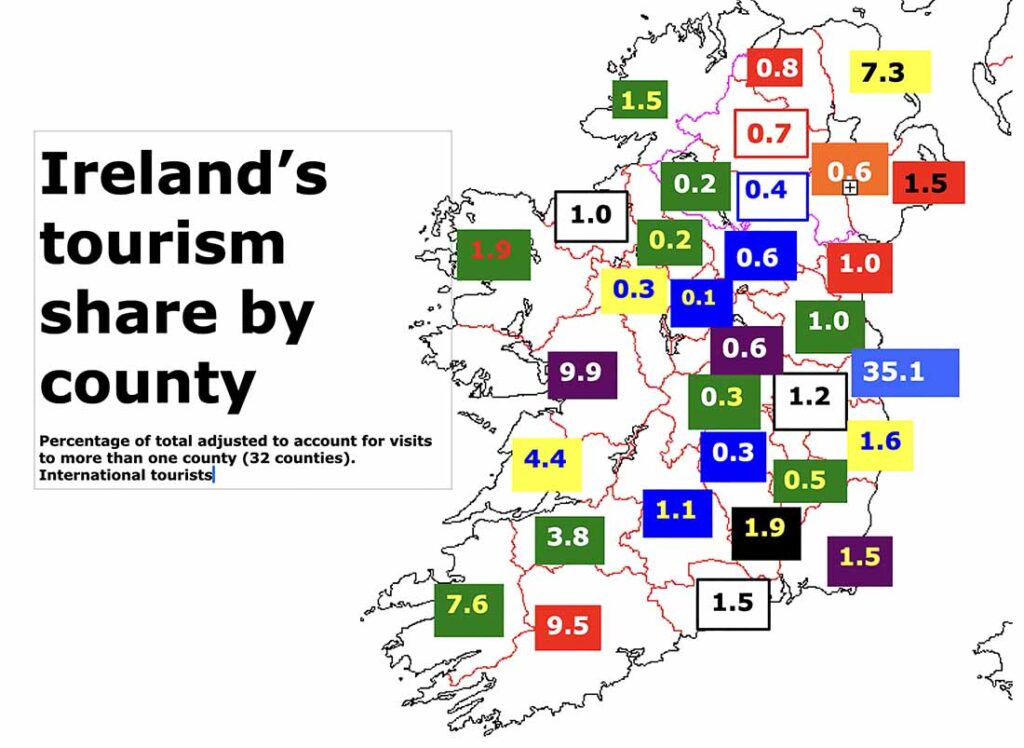
Ireland’s county Wicklow is known as the Garden of Ireland for its lush landscapes, with Glendalough’s monastic ruins and round tower set amidst serene lakes and valleys. The Wicklow Mountains National Park offers hiking trails with stunning views, while Powerscourt Estate’s manicured gardens and waterfall add natural elegance. Other attractions include the coastal paths of Bray. Wicklow is Ireland’s 17th largest county by size (,025 sq km) and 16th largest by population (155,851). Population peaked at 126,143 in 1841 and reached its lowest point, 57,591 in 1926. In terms of hospitality, Wicklow is Ireland’s twelfth most visited tourist county with around 204,000 international visitors per year.
Introduction – Adventure – Anthem – Archaeology – Attractions – Awards – Birdwatching – Camping – Castles – Churches – Contact list – Cycling – Dining – Equestrian – Festivals – Fishing – Folklore – Gardens – Golf – Graveyards – Happening – Haunted – Highest – Hiking – History – Holy Wells – Hotels – Hotels top 8 – Hunting & shooting – Instagrammable – Itineraries – Largest town – Luxury – MICE – Movies – Music – Name – New – Novelists – Off the beaten track – Poets – Pubs – Quotes – Random Facts – Restaurant Awards – Sacred Places – Saints – Songs – Spas – Sports – Sunsets – Sustainable – Things to do – Towns – Video – Villages – Walking – Wanderlist – Weddings – Wild swimming – Writers – 1837 – 1846– 1852 – 1909 – 1955 – 1980 –