- Waterford Castle: Waterford Castle, located on a 310-acre private island in the River Suir, 3 miles from Waterford City, is a 16th-century tower house originally built by the Fitzgerald family, descendants of the 6th Earl of Kildare. Rebuilt in the 19th century in Gothic-Victorian style, it incorporates the original Norman tower and features ivy-clad stone walls, turrets, and oak-paneled interiors. Now a 4-star luxury hotel, it’s renowned for its seclusion and historical charm. Operates as Waterford Castle Hotel & Golf Resort, open to guests and non-guests for accommodation, dining, and activities. A short, complimentary car ferry ride from Ballinakill accesses the island. Hotel guests stay in 19 elegant rooms with antique furnishings, four-poster beds, and views of the estate or golf course. Non-guests can book afternoon tea (€40), dine at the award-winning Munster Room Restaurant (seasonal Irish cuisine, ~€60-€80), or enjoy the Fitzgerald Bar. Activities include an 18-hole golf course, tennis, croquet, clay pigeon shooting, and nature trails with resident deer and wallabies. Guided historical tours, when offered (€15, check waterfordcastleresort.com), highlight Fitzgerald history. Allow 2-3 hours for day visits, longer for stays. Reachable by car from Waterford City (10-minute drive plus ferry). Combine with Waterford Crystal or Reginald’s Tower. The castle’s private island setting, luxurious amenities, and blend of medieval and Victorian elegance make it ideal for romantic getaways or family retreats. Book dining or activities in advance. Rooms can be warm in summer due to no AC; fans provided. The castle may host weddings, limiting non-guest access.
- Lismore Castle: Lismore Castle, in the heritage town of Lismore, is a 12th-century castle built in 1185 by Prince John as a sister castle to Ardfinnan. Originally an ecclesiastical site (7th-century Lismore Abbey), it passed through the hands of the Earls of Desmond, Sir Walter Raleigh, and the Boyle family before becoming the Irish home of the Cavendish family (Dukes of Devonshire) in 1753. Rebuilt in Gothic style in the 19th century by the 6th Duke, it features Pugin-designed interiors and extensive gardens. Guests like Fred Astaire and John F. Kennedy have stayed here. Privately owned by the Duke of Devonshire, with gardens open April-September and the castle available for exclusive hire. The castle interior is closed to the public but can be hired for groups of 8-27 (~€30,000-€50,000 for exclusive use, check thehallandlismorecastle.com). The 17th-century upper walled garden and 19th-century lower garden are open to visitors (€8 adults, €5 children), showcasing yew walks, sculptures, and Blackwater Valley views. The Lismore Castle Arts gallery in the west wing hosts contemporary exhibitions (free with garden entry). Allow 1-2 hours for gardens and gallery, reachable by car from Dungarvan (20-minute drive). Combine with Lismore Heritage Centre or the Blackwater River for fishing. The castle’s fairy-tale exterior, stunning gardens, and artistic offerings make it a cultural highlight for garden lovers and art enthusiasts. Book garden tickets online. Castle access is exclusive; enquire early for rentals. Gardens are partially wheelchair-accessible.
- Dungarvan Castle: Dungarvan Castle, located on Castle Street in Dungarvan, is a 13th-century Norman castle built around 1209 to guard Dungarvan Harbour. Featuring a rare polygonal shell keep, a corner tower, and a gate tower, it was a military stronghold until its destruction by the Anti-Treaty IRA in 1922. Rebuilt as a Garda station, it’s now a well-preserved tourist site managed by the Office of Public Works, with an 18th-century barracks within its walls. Open seasonally (May-September), with free admission and guided tours. Visitors can explore the castle grounds, climb towers for panoramic views of Dungarvan Bay, and view an exhibition on its Norman history and later uses (British Army, RIC, Garda). Guided tours (30-45 minutes) are available during peak season, detailing its strategic role. The castle’s location by the Colligan River is ideal for a riverside walk. Allow 45-60 minutes, reachable by car from Dungarvan (central) or bus from Waterford City (45 minutes). Combine with the Waterford Greenway or Dungarvan’s markets. The castle’s unique shell keep and accessible exhibits make it a compact, engaging stop for history buffs. Check heritageireland.ie for hours. Uneven surfaces and stairs may limit accessibility.
- Dunhill Castle: Dunhill Castle, near Annestown, is a 13th-century castle built in the early 1200s by the la Poer (Power) family, possibly on an earlier Celtic fort site. Its ruins include a 15th-century tower and fragments of 13th-century outer walls, set on a hilltop overlooking the Anne Valley. Infamous for 14th-century attacks on Waterford City, it was sacked by Cromwell in 1649 and abandoned. Its name, from the Irish “fort of the rock,” reflects its rugged setting. A ruin, open year-round with free access, no formal facilities. Visitors can walk to the castle (30-minute trail from Dunhill Lodge) to view its overgrown tower and walls, enjoying scenic ocean and valley views. No tours or signage, so research its la Poer history enhances the visit. Ideal for hikers and photographers, the site takes 30-60 minutes, reachable by car from Waterford City (20-minute drive). Combine with Annestown Beach or the Copper Coast Geopark. The castle’s dramatic hilltop ruins and coastal proximity make it a hidden gem for outdoor enthusiasts. Wear sturdy shoes for uneven terrain. Respect local land boundaries.
Castles
Antrim – Armagh – Carlow – Cavan – Clare – Cork – Derry – Donegal – Down – Dublin – Fermanagh – Galway – Kerry – Kildare – Kilkenny – Laois – Leitrim – Limerick – Longford – Louth – Mayo – Meath – Monaghan – Offaly – Roscommon – Sligo – Tipperary – Tyrone – Waterford – Westmeath – Wexford – Wicklow
County Waterford:
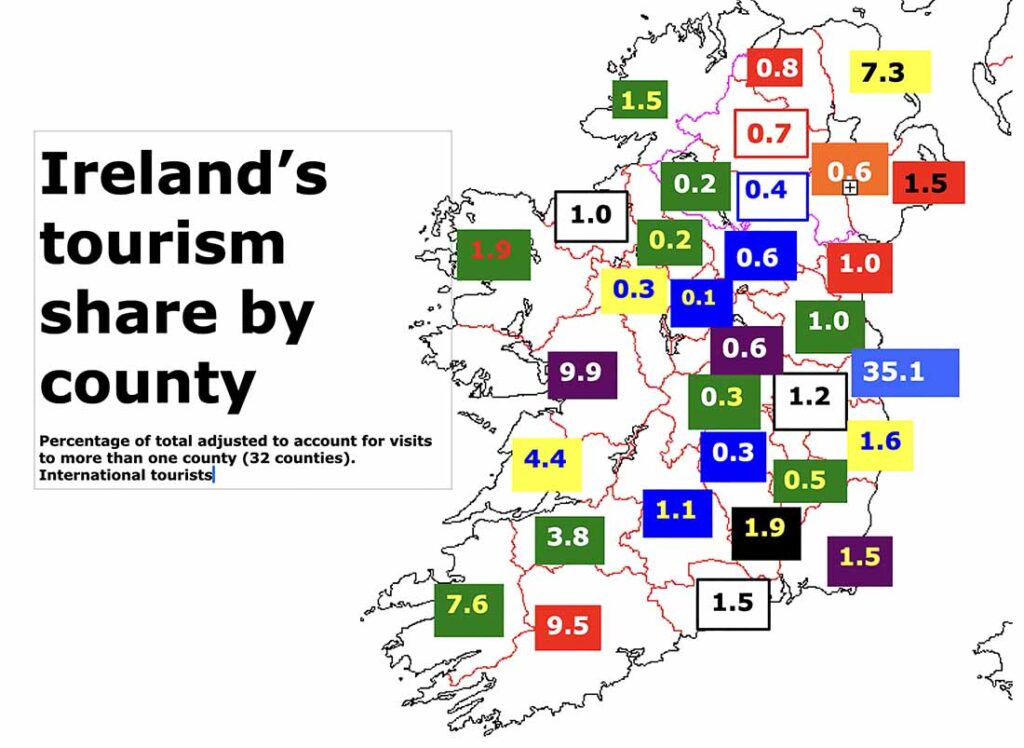
Ireland’s county Waterford is steeped in Viking and medieval history, with Waterford City’s Reginald’s Tower and Viking Triangle showcasing ancient artefacts. The Copper Coast, a UNESCO Geopark, offers dramatic coastal walks, while the Lismore Castle gardens provide serene beauty. Other attractions include the beaches of Tramore and historic Dunmore East. Waterford is Ireland’s 21st largest county by size (1,838 square km) and 20th largest by population (127,363). Population peaked at 196,187 in 1841 and reached its lowest point, 71,439 in 1961. In terms of hospitality, Waterford is Ireland’s ninth most visited tourist county with around 225,000 international visitors per year.
Introduction – Adventure – Anthem – Archaeology – Attractions – Awards – Birdwatching –– Camping –Castles – Churches – Contact list – Cycling – Dining – Equestrian – Festivals – Fishing – Folklore – Gardens – Golf – Graveyards – Happening – Haunted – Highest – Hiking – History – Holy Wells – Hotels – Hotels top 8 – Hunting & shooting – Instagrammable – Itineraries – Largest town – Luxury – MICE – Movies – Music – Name – New – Novelists – Off the beaten track – Poets – Pubs – Quotes – Random Facts – Restaurant Awards – Sacred Places – Saints – Songs – Spas – Sports – Sunsets – Sustainable – Things to do – Towns – Video – Villages – Walking – Wanderlist – Weddings – Wild swimming – Writers – 1837 – 1846– 1852 – 1909 – 1955 – 1980 –