- Trim Castle: Built in the 1170s by Hugh de Lacy, Trim Castle is Ireland’s largest Anglo-Norman fortress, located on the River Boyne in Trim. Covering 30,000 m², it features a massive three-story keep, 20-sided cruciform design, and extensive curtain walls. A key defensive site, it was used in the film Braveheart. Managed by the Office of Public Works (OPW), it’s a National Monument and Meath’s premier historical attraction. Open year-round (mid-March–October, daily 10 AM–5 PM; November–mid-March, weekends 9:30 AM–4:30 PM, check heritageireland.ie), visitors can take guided tours of the keep (€5 adults, €3 children/seniors, €13 family) or explore the grounds (€2 adults, €1 children). Tours (45 minutes) cover Norman architecture, medieval life, and film history. Expect a 1–2 hour visit with panoramic Boyne views from the battlements. Amenities include parking, toilets, and a small visitor center. Partial wheelchair access (grounds only). Combine with Trim’s medieval town or the nearby Hill of Tara. The castle’s imposing size and historical depth make it a must-visit. Ideal for history buffs, families, and Braveheart fans, with excellent accessibility.
- Slane Castle: Located on the River Boyne near Slane, Slane Castle is an 18th-century mansion built in 1785 for the Conyngham family, on a site with medieval origins tied to the Fleming family. While not a fortified castle, its Gothic Revival architecture and 1,500-acre estate make it a cultural landmark, famous for hosting rock concerts (e.g., U2, Rolling Stones) and producing Slane Whiskey. It’s privately owned but open for tours. Open May–August (Sunday–Thursday, 11 AM–4 PM, check slanecastle.ie), visitors can take guided tours (€14 adults, €10 children/seniors, €38 family) of the castle’s opulent interiors, including the ballroom and King George IV’s bedroom, tied to his scandalous visit in 1821. Expect a 45–60 minute tour, with a whiskey distillery tour option (€20, includes tasting). The estate’s Browne’s Bar and cafe offer dining, with parking and toilets available. Expect a 1–2 hour visit, with grounds for strolling. Events like concerts or weddings may limit access, so check schedules. Partial wheelchair access. The scenic Boyne Valley setting enhances the experience. Perfect for music fans, whiskey enthusiasts, and those seeking a lively, modern castle visit.
- Killeen Castle: Built in the 12th century by Hugh de Lacy and rebuilt in the 19th century as a Gothic Revival mansion, Killeen Castle near Dunsany is now a luxury golf resort. Originally a Norman stronghold, it was home to the Cusack and Plunkett families, with ties to St. Oliver Plunkett. The 600-acre estate blends medieval remnants with Georgian elegance, making it a unique site. Open year-round as a resort (check killeencastle.com), public access is limited to guests, event attendees, or golf visitors. Non-guests can book dining at the Jack Nicklaus-designed golf course’s clubhouse (€20–€50) or inquire about occasional historical tours (€10–€15, by appointment). The castle’s exterior and grounds, with medieval ruins, are viewable during visits. Expect a 1–2 hour visit, with amenities like parking, WiFi, and upscale dining. The rural setting, 10 km from Trim, suits luxury travelers or golf enthusiasts. Combine with nearby Dunsany Castle (by appointment). Best for those seeking a high-end experience, with limited historical access unless arranged.
- Dunsany Castle: Dating to the 12th century, Dunsany Castle near Dunshaughlin is one of Ireland’s oldest continuously inhabited castles, home to the Plunkett family for over 800 years. A Norman fortress expanded into a Gothic-style residence, it features medieval towers and 19th-century additions. Privately owned, it houses a collection of art and historical artifacts, including St. Oliver Plunkett relics. Open by appointment (June–September, contact dunsany.com, €10–€15), visitors can take owner-led guided tours (60 minutes) of the castle’s interiors, showcasing medieval architecture, family heirlooms, and art. Expect a 1–1.5 hour visit in a tranquil, rural setting (15 km from Trim). Amenities include parking but no cafe or toilets for day visitors. The castle’s lived-in charm and historical depth appeal to those seeking a personal experience. Booking is essential. Combine with the Hill of Tara or Bective Abbey. A hidden gem for history enthusiasts willing to plan ahead.
- Athlumney Castle: Built in the 15th century and expanded in the 17th century by the Dowdall family, Athlumney Castle is a tower house and manor ruin near Navan on the River Boyne. Burned in 1649 to prevent Cromwellian capture, it’s a National Monument with a mix of medieval and Elizabethan features, including a corner tower and mullioned windows. Open year-round (free, dawn–dusk), the castle is on private land but viewable from public paths or by seeking landowner permission. Visitors can explore the exterior ruins, appreciating the tower and manor remnants. Expect a 15–30 minute visit, with no facilities like restrooms or a visitor center. Parking is limited along local roads. The site’s riverside setting suits photographers and history buffs exploring the Boyne Valley, near the Hill of Tara or Newgrange. A quiet, atmospheric ruin for those comfortable with minimal access.
Meath has minor castles like Skryne Castle (12th-century, private B&B, limited tours), Donore Castle (15th-century ruin, near Drogheda, free but minimal remains), and Rathaldron Castle (15th-century, private, exterior viewing only). These are less prominent due to restricted access or poor condition. Tara Castle is a misnomer for the Hill of Tara’s archaeological site, not a castle.
Meath’s castles are central to Ireland’s medieval history, with Trim as the standout for scale and accessibility. Slane and Killeen offer modern twists, while Dunsany and Athlumney cater to niche historical interests.
Castles
Antrim – Armagh – Carlow – Cavan – Clare – Cork – Derry – Donegal – Down – Dublin – Fermanagh – Galway – Kerry – Kildare – Kilkenny – Laois – Leitrim – Limerick – Longford – Louth – Mayo – Meath – Monaghan – Offaly – Roscommon – Sligo – Tipperary – Tyrone – Waterford – Westmeath – Wexford – Wicklow
County Meath:
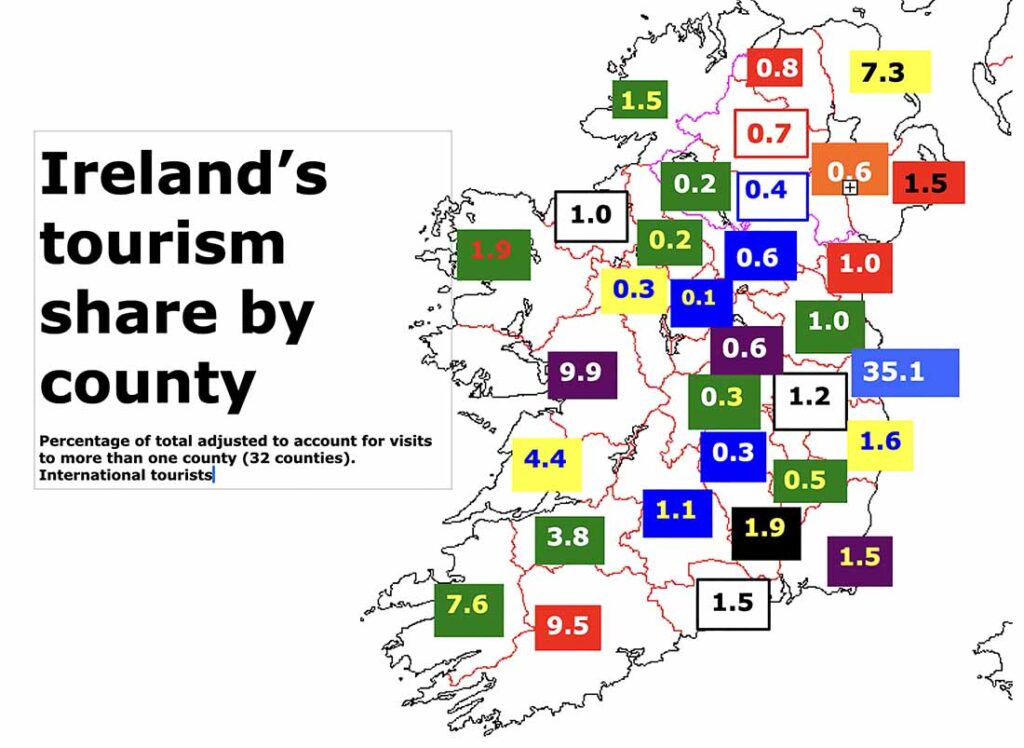
Ireland’s county Meath is steeped in Ireland’s ancient past, with the Hill of Tara offering a glimpse into royal history and panoramic views. The UNESCO-listed Brú na Bóinne complex, including Newgrange and Knowth, showcases intricate Neolithic tombs, while Trim Castle provides medieval grandeur. Other attractions include the Boyne River’s scenic walks and historic Slane Castle. Meath is Ireland’s 14th largest county by size (2,336 square km) and eighth largest by population (220,826). Population previously peaked at 183,828 in 1841 and reached its lowest point, 62,969 in 1926. In terms of hospitality, Meath is Ireland’s 19th most visited tourist county with around 122,000 international visitors per year.
Introduction – Adventure – Anthem – Archaeology – Attractions – Awards – Birdwatching – Camping – Castles – Churches – Contact list – Cycling – Dining – Equestrian – Festivals – Fishing – Folklore – Gardens – Golf – Graveyards – Happening – Haunted – Highest – Hiking – History – Holy Wells – Hotels – Hotels top 8 – Hunting & shooting – Instagrammable – Itineraries – Largest town – Luxury – MICE – Movies – Music – Name – New – Novelists – Off the beaten track – Poets – Pubs – Quotes – Random Facts – Restaurant Awards – Sacred Places – Saints – Songs – Spas – Sports – Sunsets – Sustainable – Things to do – Towns – Video – Villages – Walking – Wanderlist – Weddings – Wild swimming – Writers – 1837 – 1846 – 1852 – 1909 – 1955 – 1980 –