Pre-1000 The Gaelic Nation
County Westmeath, part of the ancient kingdom of Mide, was a core territory of the House of Niall, specifically the Clann Cholmáin dynasty, who ruled from Uisneach, a ceremonial and political centre. The county’s name derives from Mide’s western region, later formalised as Westmeath. Archaeological sites, such as the Catstone at Uisneach and Fore Abbey’s early remains, indicate prehistoric and early Christian activity. Christianity spread in the 5th century, with St. Ciarán founding Clonmacnoise (on Westmeath’s border) c. 544, a major monastic hub. The O’Melaghlin (Ó Máelsechlainn) dynasty emerged as dominant, as noted in The Annals of Ulster. Viking raids targeted the Shannon, but Westmeath’s inland location preserved Gaelic control.
1000–1100: Power of the House of Niall and Monastic Prosperity
Westmeath remained a Gaelic stronghold under the O’Melaghlins, with Máel Sechnaill II (d. 1022), High King of Ireland, ruling from Uisneach. Clonmacnoise and Fore Abbey flourished as centres of learning, producing manuscripts like the Annals of Clonmacnoise. The Annals of the Four Masters record conflicts between the O’Melaghlins and Connacht’s O’Connors, with Westmeath as a contested frontier. The county’s fertile plains and lakes supported agriculture and trade. The Synod of Kells (1152) formalised Westmeath’s diocesan role, with Clonmacnoise and Ardagh as bishoprics. Westmeath’s centrality ensured its prominence in Gaelic politics.
1100–1200: Norman Invasion and Gaelic Resistance
The Norman invasion (1169) significantly impacted Westmeath. In 1172, Henry II granted Mide to Hugh de Lacy, creating the Lordship of Meath, encompassing Westmeath. The Normans built castles like Athlone and Delvin, challenging the O’Melaghlins, who resisted from strongholds like Lough Ennell. Clonmacnoise faced Norman plundering but remained a Gaelic hub, as noted in The Annals of Tigernach. The O’Melaghlins allied with Connacht’s O’Connors to counter Norman expansion. Westmeath’s bogs and rivers limited large-scale settlement, preserving Gaelic influence in rural areas. The lives of such as de Lacy highlight his role in reshaping Westmeath, though the O’Melaghlins retained local power.
1200–1300: Norman Consolidation and Gaelic Retreat
Westmeath became part of the Anglo-Norman Pale, with the de Lacys and later the de Verduns fortifying Athlone Castle as a key stronghold. The O’Melaghlins were pushed to peripheral areas, maintaining influence around Mullingar. Monastic sites like Fore Abbey (founded c. 1200) and Kilbeggan grew under Cistercian patronage, driving agriculture. The Black Death (1348–1350) reduced Westmeath’s population by 50pc. The Annals of Connacht note tensions between Normans and Gaelic clans, with Westmeath as a frontier. Gaelic traditions persisted in rural areas.
1300–1400: Gaelic Resurgence and Norman Decline
The decline of Norman authority allowed the O’Melaghlins to regain ground in Westmeath. The clan, led by figures like Art Ó Máelsechlainn, reasserted control around Lough Ennell,. The Normans, increasingly Gaelicised, included families like the Nugents, who built castles like Delvin. Fore Abbey remained a religious and economic hub, though monastic wealth attracted English scrutiny. Westmeath’s fertile lands supported grain and livestock, with Mullingar emerging as a market town. The Annals of Ulster record the O’Melaghlins’ alliances with the O’Neills, reflecting Westmeath’s role in regional politics. The county balanced Gaelic and Norman influences, with minimal English control.
1400–1500: Late Medieval Hybridity
Westmeath was divided between Gaelic dynasties like the O’Melaghlins and Anglo-Norman families like the Nugents and Dillons. The Nugents, granted baronies like Delvin, intermarried with Gaelic lords, creating a hybrid elite. Castles like Multyfarnham and Killua were fortified to counter Gaelic raids. The county’s economy relied on agriculture, with Athlone and Mullingar as trade centres. Monastic decline began, but Fore Abbey remained a pilgrimage site. The Annals of Ulster note the O’Melaghlins’ feuds with the O’Connors, while the lives of figures like Christopher Nugent highlight Westmeath’s role in the Pale’s frontier. The county’s proximity to Dublin ensured English oversight, but Gaelic autonomy persisted.
1500–1600: Tudor Conquest and Reformation
The Tudor reconquest strengthened English control in Westmeath. The county was shired by 1543, formalising its boundaries. The dissolution of monasteries (1536–1541) secularised Fore and Multyfarnham abbeys, redistributing lands to Anglo-Irish lords like the Nugents,. The O’Melaghlins resisted but were marginalised. The Nine Years’ War (1593–1603) saw Westmeath as a staging ground for English forces, with Athlone Castle reinforced. The Annals of the Four Masters detail Gaelic resistance, while early plantation efforts introduced English settlers. Athlone’s strategic position on the Shannon made it a military hub. The Nugents’ loyalty ensured Westmeath’s alignment with Tudor policies.
1600–1700: Cromwellian Upheaval and Plantation
The 1641 Rebellion saw Westmeath’s Gaelic and Old English lords, including the Nugents, join Confederate forces, briefly seizing Athlone and Mullingar. Cromwell’s campaign (1649–1653) crushed resistance, confiscating lands for English settlers like the Lambarts. The transplantation to Connacht forced many Gaelic families westward, reshaping demographics. The Williamite War (1689–1691) saw Athlone’s siege (1691) as a key Williamite victory. Westmeath’s Catholic majority faced Penal Law restrictions, while Colonial/protestan settlers grew in number. Athlone and Mullingar developed as administrative centres. The Confederate Wars documents detail these shifts.
1700–1800: Anglo-Irish Ascendancy
Westmeath’s Anglo-Irish elite, including the Lambarts and Rochforts, dominated under the Penal Laws, building estates like Belvedere House. The county’s economy thrived on agriculture, with the Royal Canal (opened 1804) boosting trade through Mullingar. The 1798 Rebellion saw minor unrest in Westmeath, suppressed by local militias, entries on figures like Robert Rochfort. The Act of Union (1800) integrated Westmeath into English rule, reducing local influence. The county’s Catholic majority endured restrictions, but Colonial/protestan landlords prospered.
1800–1900: Famine and Reform
The Great Famine (1845–1852) devastated Westmeath, with its population falling from 141,000 in 1841 to 111,000 by 1851, per census records. Workhouses in Athlone and Mullingar were overwhelmed, and emigration surged to America, Scotland and England. The county’s fertile lands mitigated some effects, but evictions were common. The Land League, active in Westmeath, pushed for tenant rights, challenging landlords like the Lambarts. The Gaelic Revival highlighted Uisneach and Clonmacnoise as heritage sites. Mullingar and Athlone grew as administrative centres.
1900–2025: Independence and Modernisation
Westmeath played a role in the War of Independence (1919–1921), with IRA ambushes in Athlone and Mullingar, as documented in History Ireland. The county joined the Irish Free State in 1922, with figures like Seán Mac Eoin, the ‘Blacksmith of Ballinalee’ (born near Westmeath’s border), shaping nationalism. The population stabilised, reaching 88,770 by 2022, per census data. Infrastructure, including the M4 and M6 motorways, improved connectivity. Tourism grew, focusing on Belvedere House, Fore Abbey, and the Hill of Uisneach. The county’s economy diversified, with agriculture, manufacturing, and tourism prominent. Westmeath is one of 24 Irish counties that still has a smaller population than it did in 1841.
History
Antrim – Armagh – Carlow – Cavan – Clare – Cork – Derry – Donegal – Down – Dublin – Fermanagh – Galway – Kerry – Kildare – Kilkenny – Laois – Leitrim – Limerick – Longford – Louth – Mayo – Meath – Monaghan – Offaly – Roscommon – Sligo – Tipperary – Tyrone – Waterford – Westmeath – Wexford – Wicklow
County Westmeath:
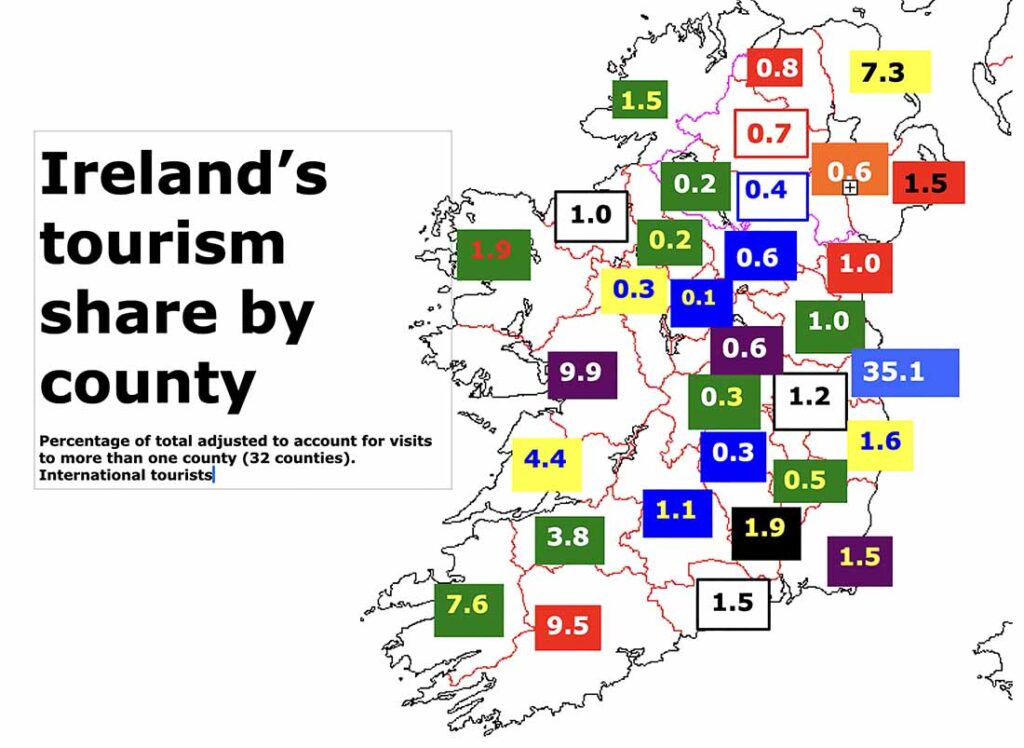
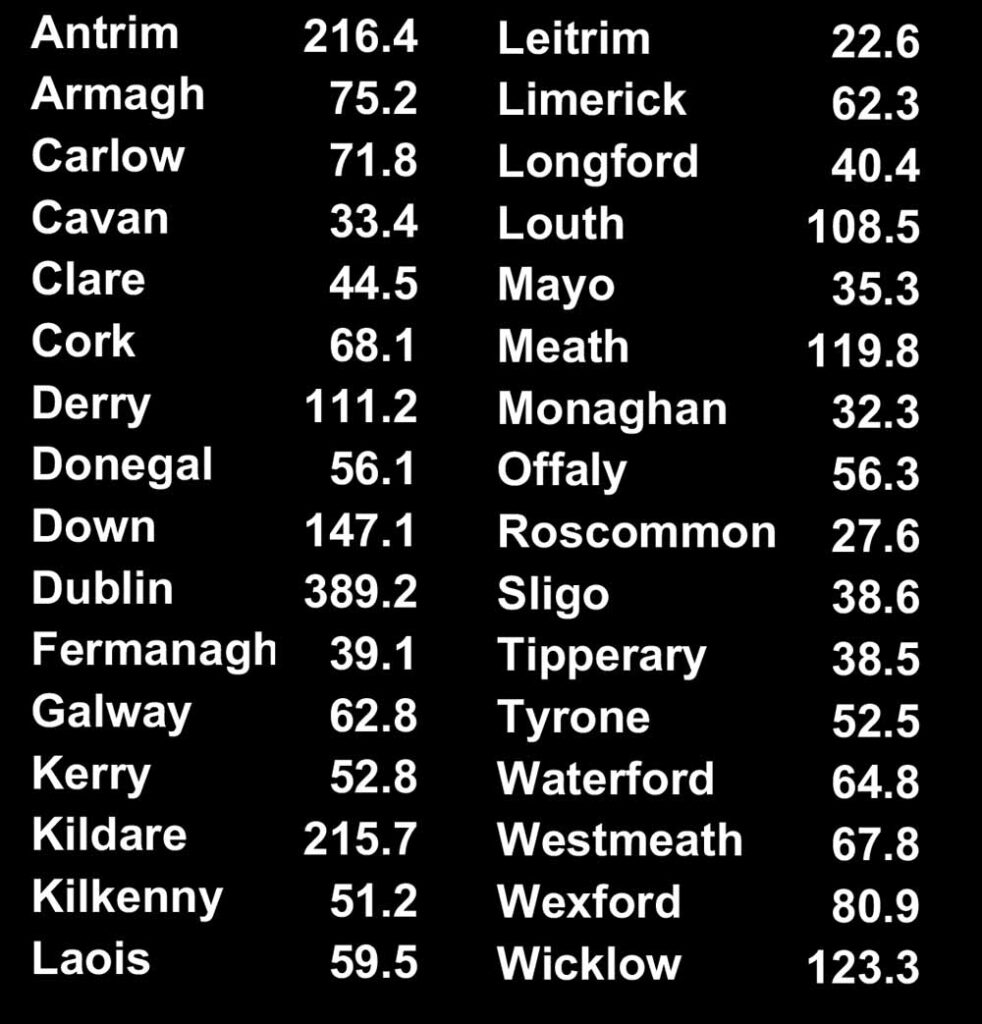
Ireland’s county Westmeath offers a blend of lakes and historic charm, with Athlone Castle providing insights into medieval Ireland along the Shannon River. The Belvedere House and Gardens showcase Georgian elegance, while Lough Ree offers boating and fishing opportunities. Other attractions include the ancient Fore Abbey and its monastic ruins and traditional seven wonders. Westmeath is Ireland’s tenth smallest county by size (1,763 square km) and 11th smallest by population (96,221). Population peaked at 141,300 in 1841 and reached its lowest point, 52,861 in 1961. In terms of hospitality, Westmeath is Ireland’s 22nd most visited tourist county with around 95,000 international visitors per year.
Introduction – Adventure – Anthem – Archaeology – Attractions – Awards – Birdwatching – Camping – Castles – Churches – Contact list – Cycling – Dining – Equestrian – Festivals – Fishing – Folklore – Gardens – Golf – Graveyards – Happening – Haunted – Highest – Hiking – History – Holy Wells – Hotels – Hotels top 8 – Hunting & shooting – Instagrammable – Itineraries – Largest town – Luxury – MICE – Movies – Music – Name – New – Novelists – Off the beaten track – Poets – Pubs – Quotes – Random Facts – Restaurant Awards – Sacred Places – Saints – Songs – Spas – Sports – Sunsets – Sustainable – Things to do – Towns – Video – Villages – Walking – Wanderlist – Weddings – Wild swimming – Writers – 1837 – 1846– 1852 – 1909 – 1955 – 1980 –