Pre-1000 The Gaelic Nation
County Tyrone, part of the ancient kingdom of Ulster, was dominated by the Cenél nEógain, a branch of the house of Niall dynasty, who established their power base at Grianán of Aileach (on Tyrone’s border). The county’s name derives from Tír Eoghain (‘land of Eoghan’), named after a Cenél nEógain ancestor. Archaeological sites, such as the Beaghmore stone circles (c. 2000 BCE), indicate prehistoric settlement. Christianity spread in the 5th century, with St. Patrick founding churches like Ardstraw. Monastic sites, including Dungannon, emerged as cultural hubs. Viking raids targeted Tyrone’s monasteries, as noted in The Annals of Ulster, but its inland location preserved Gaelic control under the O’Neills, who rose as Ulster’s dominant dynasty by the 9th century.
1000–1100: O’Neill Ascendancy and Monastic Influence
Tyrone remained a Gaelic stronghold under the O’Neills, who consolidated power as kings of Aileach and later Ulster. The Battle of Clontarf (1014), recorded in The Annals of the Four Masters, saw the O’Neills support Brian Boru, strengthening their regional influence. Monastic centres like Ardstraw and Clogher (partly in Tyrone) flourished, producing manuscripts and hosting pilgrims. The annals note conflicts between the O’Neills and rival branches of the house of Niall, with Tyrone as a strategic heartland. The county’s fertile lands supported agriculture, while its hills offered defence. The Synod of Kells (1152) formalised Tyrone’s diocesan role, with Clogher as a bishopric. The O’Neills’ dominance ensured Gaelic stability.
1100–1200: Norman Incursion and Gaelic Resilience
The Norman invasion (1169) had limited impact on Tyrone due to its northern location. John de Courcy’s conquest of eastern Ulster (1177) brought Normans to Down, but Tyrone remained under O’Neill control. The Cenél nEógain fortified sites like Dungannon to resist encroachment. Monastic centres continued to thrive, with Clogher’s influence growing, as noted in The Annals of Tigernach. The O’Neills navigated alliances with other Gaelic lords, maintaining autonomy. Tyrone’s rugged terrain and distance from Dublin deterred Norman settlement, preserving its Gaelic character.
1200–1300: Gaelic Dominance and Regional Conflicts
Tyrone remained a Gaelic stronghold under the O’Neills, who expanded their influence as kings of Ulster. The county’s economy relied on cattle rearing and agriculture, with market centres like Omagh emerging. The Black Death (1348–1350) reduced Tyrone’s population, though records are scarce. The O’Neills clashed with the O’Donnells of Donegal, as recorded in The Annals of Connacht, with Tyrone as a contested region. Norman influence was minimal, with the O’Neills fortifying sites like Tullyhogue, a ceremonial inauguration site.
1300–1400: O’Neill Supremacy
The decline of Norman power strengthened the O’Neills, who ruled Tyrone as Ulster’s paramount Gaelic lords. The clan, led by figures like Niall Mór O’Neill, used Dungannon and Tullyhogue as power bases. Tyrone’s economy depended on agriculture and trade, with the River Blackwater facilitating connections. Clogher remained an ecclesiastical hub, though monastic wealth attracted scrutiny. The Annals of Ulster record the O’Neills’ conflicts with the O’Donnells and MacDonnells, reflecting Tyrone’s centrality in Ulster politics. O’Neills’ alliances with other Gaelic lords ensured Tyrone’s autonomy from English control.
1400–1500: Late Medieval Gaelic Power
Tyrone remained under O’Neill dominance, with leaders like Eoghan O’Neill consolidating power. The dynasty fortified strongholds like Dungannon Castle, resisting English encroachment. Tullyhogue continued as the O’Neill inauguration site, symbolising Gaelic sovereignty. The county’s fertile lands supported agricultureίν, with Omagh and Strabane as market centres. The Annals of Ulster note the O’Neills’ feuds with the O’Donnells and MacMahons, while their alliances with Connacht’s O’Connors strengthened regional ties. Tyrone maintained a role as Ulster’s Gaelic heartland, distant from the Pale’s influence.
1500–1600: Tudor Conquest and O’Neill Resistance
The Tudor reconquest brought Tyrone under intense English pressure. The O’Neills, led by Shane O’Neill (d. 1567) and Hugh O’Neill (2nd Earl of Tyrone), resisted fiercely. Hugh’s leadership during the Nine Years’ War (1593–1603) made Tyrone the epicentre of Gaelic resistance, with battles like Clontibret (1595) and the Yellow Ford (1598) fought nearby, as noted in The Annals of the Four Masters. Tyrone was shired in 1585, but English control was weak until the war’s end. Hugh O’Neill’s flight in 1607 (Flight of the Earls) marked the collapse of Gaelic power. Early plantation efforts followed, targeting Tyrone for English settlement.
1600–1700: Plantation and Cromwellian Upheaval
The Ulster Plantation (1609) transformed Tyrone, with O’Neill lands confiscated and granted to English and Scottish settlers, including the Hamiltons and Stewarts. Dungannon and Omagh became plantation hubs, with new towns planned. The 1641 Rebellion saw Gaelic forces, led by Phelim O’Neill, briefly recapture Tyrone,. Cromwell’s campaign (1649–1653) crushed resistance, redistributing lands to Colonial/protestan settlers. The Williamite War (1689–1691) saw Tyrone align with William III, with minor skirmishes. The Penal Laws marginalised Catholics, reshaping Tyrone’s demographics. The Confederate Wars documents detail these shifts, while Strabane grew as a market town.
1700–1800: Anglo-Irish Ascendancy
Tyrone’s Anglo-Irish landlords, such as the Abercorns and Powerscourts, dominated under the Penal Laws, building estates like Mountjoy Castle. The county’s economy relied on linen production and agriculture, with Omagh, Dungannon, and Strabane as market centres. The 1798 Rebellion saw limited activity in Tyrone, with local militias suppressing unrest, entries on figures like James Hamilton. The Act of Union (1800) integrated Tyrone into English rule, reducing local influence. The county’s Catholic majority faced restrictions, but Presbyterian settlers, particularly Scots, shaped its diversity.
1800–1900: Famine and Land Reform
The Great Famine (1845–1852) devastated Tyrone, with its population falling from 312,000 in 1841 to 239,000 by 1851, per census records. Workhouses in Omagh and Dungannon were overwhelmed, and emigration surged to America, Scotland and England. The linen industry declined, but agriculture persisted, with potatoes and oats key crops. The Land League, active in Tyrone, pushed for tenant rights, challenging landlords like the Abercorns. The Gaelic Revival sparked interest in Tyrone’s heritage, including Tullyhogue and the O’Neill legacy. Omagh and Dungannon grew as administrative centres. John Dunlap, a Tyrone-born American printer of America’s declaraton of independence, was among those that left at a time of high emigration impact.
1900–2025: Partition and Modernisation
Tyrone played a role in the War of Independence (1919–1921), with IRA ambushes in Dungannon and Omagh, as noted in History Ireland. The 1921 Anglo-Irish Treaty placed Tyrone in the six counties, like Fermanagh a hostage county subject to the Stormont protestants-only regime despite its Catholic majority, causing tensions over the next century. The Troubles (1968–1998) saw significant violence in Tyrone. The population stabilised, reaching 177,986 by 2022, per census data. Infrastructure, including the A5 road, improved connectivity. Tourism grew, focusing on the Ulster American Folk Park and Beaghmore stones, per DiscoverNorthernIreland.co.uk. Tyrone’s economy diversified, with agriculture, manufacturing, and tourism prominent. Tyrone is one of 24 Irish counties that still has a smaller population than it did in 1841.
History
Antrim – Armagh – Carlow – Cavan – Clare – Cork – Derry – Donegal – Down – Dublin – Fermanagh – Galway – Kerry – Kildare – Kilkenny – Laois – Leitrim – Limerick – Longford – Louth – Mayo – Meath – Monaghan – Offaly – Roscommon – Sligo – Tipperary – Tyrone – Waterford – Westmeath – Wexford – Wicklow
County Tyrone:
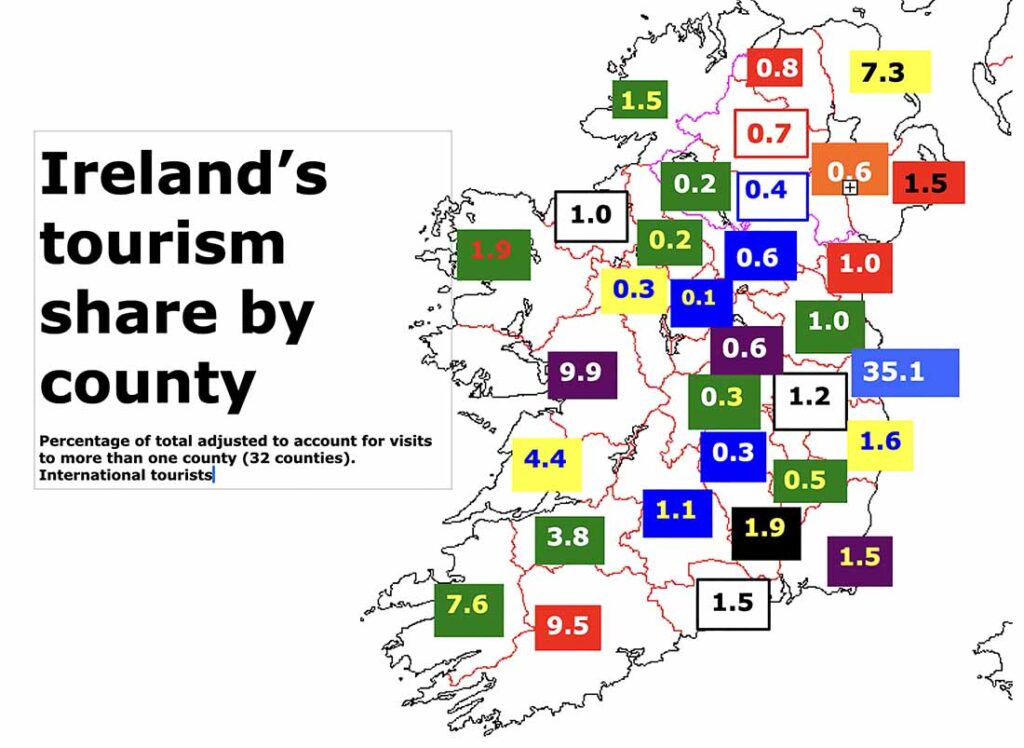
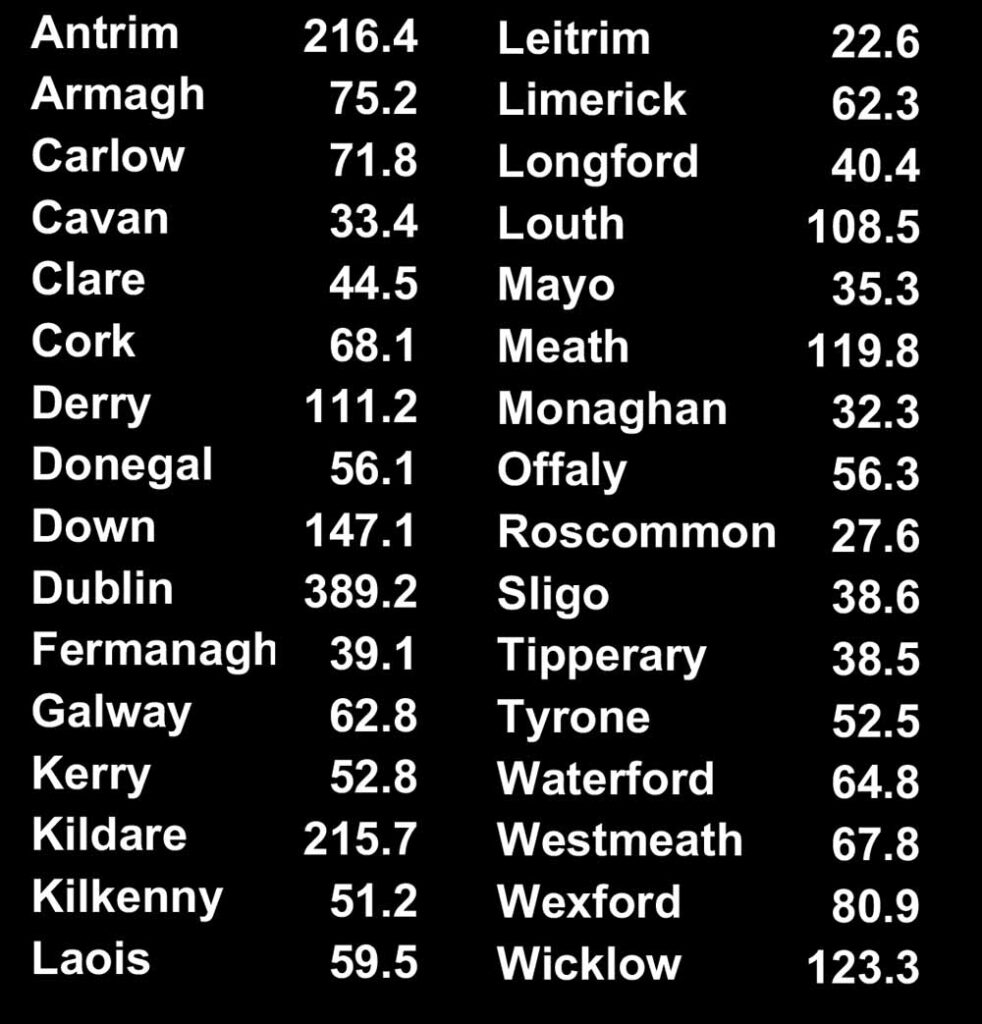
Ireland’s county Tyrone is a county of rolling landscapes and historic sites, with the Ulster American Folk Park in Omagh offering a fascinating look at emigration history through recreated villages. The Sperrin Mountains provide hiking trails with panoramic views, while the Beaghmore Stone Circles add ancient intrigue. Other attractions include the historic town of Dungannon and its castle ruins. Tyrone is Ireland’s seventh largest county by size (3,263 square km) and 11th largest by population (188,383). Population peaked at 312,956 in 1841 and reached its lowest point, 127,586 in 1936. In terms of hospitality, Tyrone is Ireland’s 24th most visited tourist county with around 68,000 international visitors per year.
Introduction – Adventure – Anthem – Archaeology – Attractions – Awards – Birdwatching – Camping – Castles – Churches – Contact list – Cycling – Dining – Equestrian – Festivals – Fishing – Folklore – Gardens – Golf – Graveyards – Happening – Haunted – Highest – Hiking – History – Holy Wells – Hotels – Hotels top 8 – Hunting & shooting – Instagrammable – Itineraries – Largest town – Luxury – MICE – Movies – Music – Name – New – Novelists – Off the beaten track – Poets – Pubs – Quotes – Random Facts – Restaurant Awards – Sacred Places – Saints – Songs – Spas – Sports – Sunsets – Sustainable – Things to do – Towns – Video – Villages – Walking – Wanderlist – Weddings – Wild swimming – Writers – 1837 – 1846– 1852 – 1909 – 1955 – 1980 –