Pre-1000 The Gaelic Nation
County Down’s pre-1000 history is rooted in its role within the Ulaid kingdom, a major power in Ulster. Archaeological sites, such as the Navan Fort (Emain Macha, partly in Down’s borders) and the Mound of Down, indicate Iron Age settlement. The region was controlled by the Dál Fiatach, a dominant Ulaid dynasty. Christianity arrived early, with Saint Patrick founding churches at Saul and Downpatrick (c. 432 CE), the latter becoming a major ecclesiastical centre and Patrick’s reputed burial place. The Annals of Ulster (record monastic activities at Bangor, founded by Saint Comgall (c. 558), a hub for learning and missionary work. Viking raids targeted Down’s coast, particularly Strangford Lough, from the 9th century. Down’s proximity to the Irish Sea made it a trade and raid hub, but ecclesiastical sources dominate, potentially exaggerating Christian influence while marginalising pre-Christian Gaelic culture.
1000–1100: Gaelic Power and Viking Influence
In the 11th century, Down remained under Dál Fiatach control, with the Ulaid resisting Viking incursions. The Annals of Ulster (record raids on Bangor and Downpatrick, but Down’s inland areas were less affected. The monastery at Bangor produced the Antiphonary of Bangor, a key liturgical text, highlighting its intellectual significance. The Battle of Clontarf (1014) weakened Viking influence, but Down’s coastal ports maintained Norse trade links. The lack of urban development and sparse secular records reflect Down’s peripheral status, with sources focusing on ecclesiastical or major political events.
1100–1200: Norman Conquest and Ecclesiastical Reform
The Norman invasion (1169–1171) transformed Down. In 1177, John de Courcy conquered much of eastern Ulster, including Down, establishing Downpatrick as a key stronghold. He built castles, such as Dundrum, and patronised monasteries, including Inch Abbey (c. 1180). The Synod of Cashel (1172) aligned Down’s churches, particularly Downpatrick and Bangor, with Roman reforms. The Dál Fiatach resisted but were marginalized. The “Song of Dermot and the Earl” (details de Courcy’s conquests, while the Annals of the Four Masters (record Gaelic resistance. Down’s coastal access facilitated Norman settlement, but Norman sources dominate, often marginalising Gaelic perspectives.
1200–1300: Anglo-Norman Consolidation and Gaelic Resistance
In the 13th century, Down was formally shired, with boundaries close to modern definitions. The Normans, under families like the Savages and de Lacys, consolidated control, building castles at Newry and Dundrum. Downpatrick remained a religious and administrative centre, with its cathedral rebuilt. The Dál Fiatach and other Gaelic dynasties resisted in rural areas, particularly in the Mourne Mountains. Coastal trade through Strangford Lough grew, but Norman records overemphasise their control, requiring balance with Gaelic sources..
1300–1400: Gaelic Revival and Norman Decline
The 14th century saw a Gaelic revival in Down, as Norman power weakened post-Black Death (1348–1350). Gaelic clans, including the O’Neills from nearby Antrim, regained influence in rural areas. The Statute of Kilkenny (1366) aimed to curb Gaelicisation but had limited impact in Down, where Anglo-Norman families like the Savages adopted Gaelic customs. Downpatrick’s cathedral and Bangor’s monastery remained active, but their influence waned. English sources portray Gaelic lords as disruptive, necessitating critical interpretation.
1400–1500: Gaelic Resurgence and Anglo-Irish Autonomy
The 15th century saw Down under mixed Gaelic and Anglo-Irish control. The O’Neills expanded influence, while Anglo-Norman families like the Savages maintained coastal strongholds. The Wars of the Roses (1460–1485) distracted English authorities, allowing local autonomy. Downpatrick remained a religious centre, with its cathedral a pilgrimage site. Down’s coastal trade grew, but the lack of secular records limits insights into daily life. Ecclesiastical sources dominate, focusing on church activities, and English records tend to downplay Gaelic agency.
1500–1600: Tudor Reconquest and Plantation Beginnings
The 16th century brought Tudor efforts to control Ulster, impacting Down. The O’Neills, under Hugh O’Neill (d. 1616), resisted during the Nine Years’ War (1594–1603), with Down as a contested area. Early plantation efforts began, with English settlers arriving in coastal Down. The Reformation had limited impact, as Down remained Catholic. The Ulster Plantation (1609) targeted northern Ulster, but Down saw some land confiscations, particularly from Gaelic clans. The annals document resistance, while English records portray Gaels as rebels, requiring balance. Downpatrick and Newry grew as market towns.
1600–1700: Ulster Plantation and Civil War
The 17th century saw Down transformed by the Ulster Plantation. Gaelic lands were confiscated, particularly in north Down, and granted to English and Scottish settlers, including the Hamiltons and Montgomerys. Towns like Bangor and Holywood developed as plantation centres. The 1641 Rebellion saw native Irish forces attack colonial settlements in the hope of recovering their stolen property, but Down remained relatively stable. The Cromwellian conquest (1649–1653) led to further confiscations, marginalising Catholic landowners. The Williamite War (1689–1691) saw Down loyal to William III, with no major battles. The Annals of the Four Masters document Gaelic losses. English sources vilify Catholic rebels, necessitating critical interpretation.
1700–1800: Colonial/Protestant Ascendancy and Industrial Growth
The 18th century saw Down under the Colonial/Protestant Ascendancy, with Anglo-Irish landlords dominating. The Penal Laws marginalised Catholics, who formed the majority in rural Down. The linen industry thrived, particularly in Banbridge and Newry, with Belfast Lough supporting trade. The 1798 Rebellion saw significant United Irishmen activity in Down, with battles at Saintfield and Ballynahinch, led by figures like Henry Munro. The Act of Union (1800) strengthened English control. Down’s ports and market towns grew, but English narratives tend to downplay Catholic grievances.
1800–1900: Famine, Industry, and Political Division
The 19th century brought challenges to Down. The Great Famine (1845–1849) reduced the population from 361,000 in 1841 to 320,000 in 1851, though Down’s proximity to Belfast mitigated some impacts. The linen industry and shipbuilding in nearby Belfast drove economic growth. Railways enhanced connectivity. The Gaelic Revival had limited traction in Colonial/protestan-dominated Down, but Catholic nationalism grew in south Down. The Home Rule movement divided the county, with unionism strong in north Down. English famine records tend to understate suffering.
1900–2025: Partition, The Troubles, and Modernisation
The 20th and 21st centuries saw Down shaped by Ireland’s political upheavals. The War of Independence (1919–1921) saw limited IRA activity in Down, but partition (1921) placed it in the six counties, reinforcing its unionist identity. The Troubles (1968–1998) saw violence in Down, particularly in Newry, a stronghold of resistance, though less intense than in Derry or Belfast. The Good Friday Agreement (1998) brought peace, but sectarian divides persist. Down’s economy diversified, with tourism around the Mourne Mountains and Downpatrick’s Patrick sites growing. The GAA remains strong, with Down winning All-Ireland football titles in 1960, 1961, 1968, 1991, and 1994. Colonial/Unionist narratives often dominate, requiring balance with native/nationalist perspectives. Down s one of just EIGHT Irish counties that has a larger population than it did in 1841.
History
Antrim – Armagh – Carlow – Cavan – Clare – Cork – Derry – Donegal – Down – Dublin – Fermanagh – Galway – Kerry – Kildare – Kilkenny – Laois – Leitrim – Limerick – Longford – Louth – Mayo – Meath – Monaghan – Offaly – Roscommon – Sligo – Tipperary – Tyrone – Waterford – Westmeath – Wexford – Wicklow
County Down:
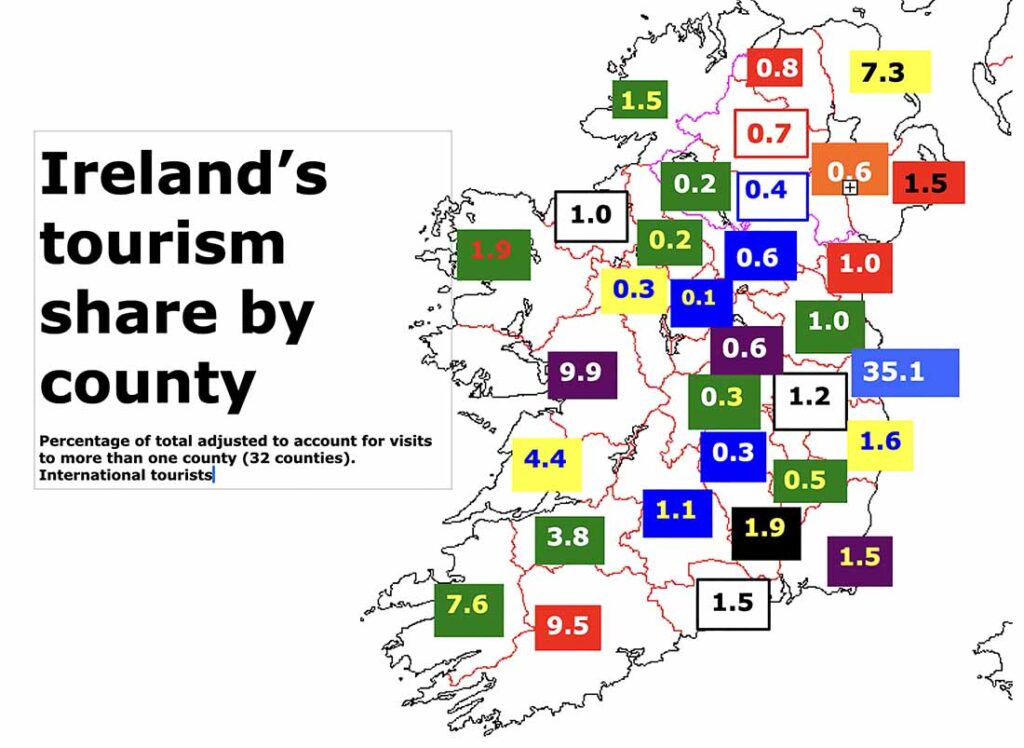
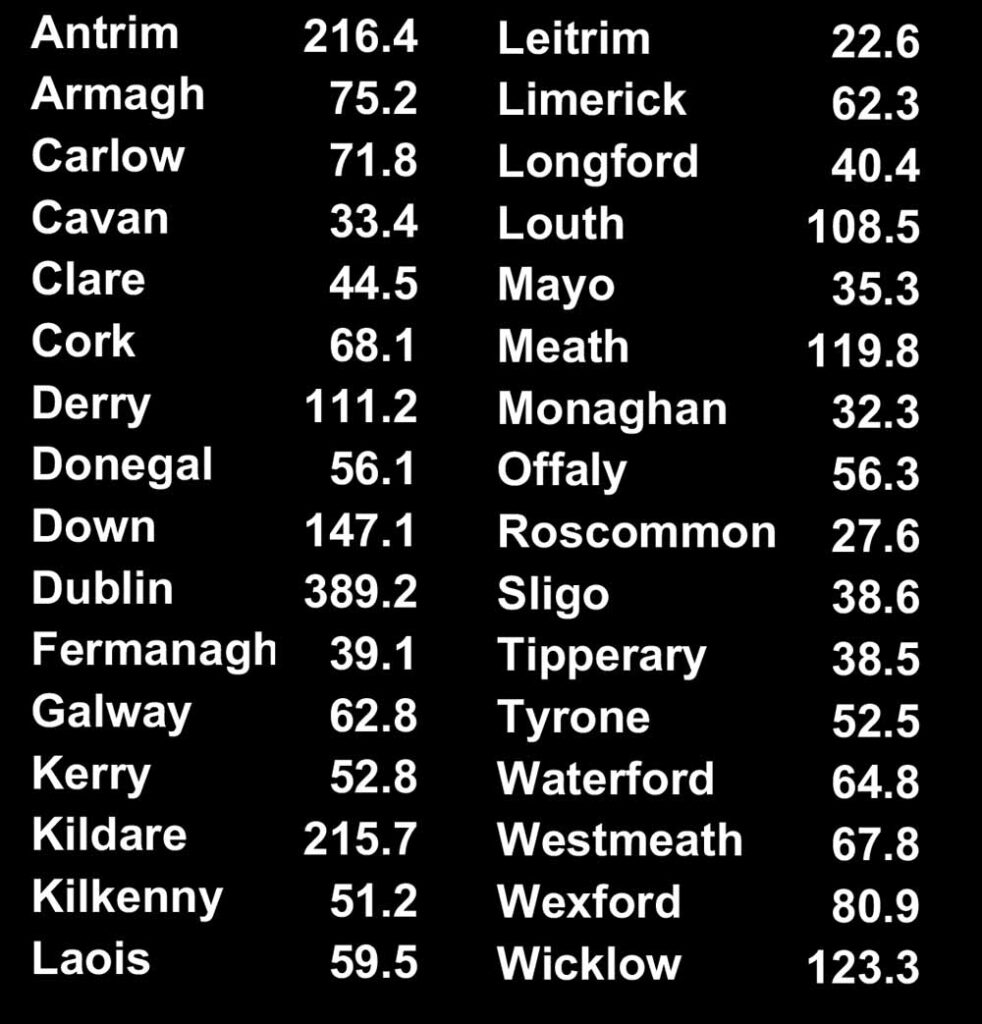
Ireland’s county Down offers a mix of historic sites and scenic landscapes, with Downpatrick’s Saint Patrick Centre and cathedral providing insights into Ireland’s patron saint. The Mourne Mountains offer hiking trails with sweeping views, while Strangford Lough provides kayaking and wildlife spotting. Other attractions include the historic Tollymore Forest Park. Down is Ireland’s 12th largest county by size (2,447 square km) and fourth largest by population (553,261). Population peaked at 361,446 in 1841 and reached its lowest point, 204,303, in 1911. In terms of hospitality, Down is Ireland’s 18th most visited tourist county with around 127,000 international visitors per year.
Introduction – Adventure – Anthem – Archaeology – Attractions – Awards – Birdwatching – Camping – Castles – Churches – Contact list – Cycling – Dining – Equestrian – Festivals – Fishing – Folklore – Gardens – Golf – Graveyards – Happening – Haunted – Highest – Hiking – History – Holy Wells – Hotels – Hotels top 8 – Hunting & shooting – Instagrammable – Itineraries – Largest town – Luxury – MICE – Movies – Music – New – Name – Novelists – Off the beaten track – Poets – Pubs – Quotes – Random Facts – Restaurant Awards – Sacred Places – Saints – Songs – Spas – Sports – Sunsets – Sustainable – Things to do – Towns – Video – Villages – Walking – Wanderlist – Weddings – Wild swimming – Writers – 1837 – 1846 – 1852 – 1909 – 1955 – 1980 –