- Saint Peter’s Church, Portlaoise: Built in 1804, this Church of Ireland church features a Georgian design with a prominent tower added in 1867. It serves Portlaoise’s Anglican community and is near the old county jail. Main Street, Portlaoise.
- Church of the Assumption, Portlaoise: Designed by William Hague. Completed in 1897, this Catholic church features a Gothic Revival design with a tall spire. It serves Portlaoise’s Catholic community and replaced an earlier chapel. Dublin Road, Portlaoise.
- Saint Fintan’s Church, Mountrath: Constructed in 1836, this Catholic church features a simple Gothic Revival style. It serves Mountrath’s Catholic community and is dedicated to St Fintan, a 6th-century monk. Main Street, Mountrath.
- Saint Brigid’s Church, Mountmellick: Built in 1878, this Catholic church features a Gothic Revival design with pointed arches. It serves Mountmellick’s Catholic community and reflects the town’s Quaker heritage. Sarsfield Street, Mountmellick.
- Saint John’s Church, Rathdowney: Erected in 1830, this Church of Ireland church features a simple Gothic design with a modest tower. It serves Rathdowney’s Anglican community and is near the River Erkina. Church Street, Rathdowney.
- Church of the Holy Rosary, Abbeyleix: Designed by William Hague. Completed in 1893, this Catholic church features a Gothic Revival style with intricate stonework. It serves Abbeyleix’s Catholic community and was funded by the de Vesci family. Main Street, Abbeyleix.
- Saint Michael’s Church, Stradbally: Built in 1840, this Catholic church features a Gothic Revival design with a small tower. It serves Stradbally’s Catholic community and is near the Cosby estate. Main Street, Stradbally.
- Saint Paul’s Church, Mountmellick: Constructed in 1825, this Church of Ireland church features a Georgian design with a simple façade. It serves Mountmellick’s Anglican community and reflects the town’s textile history. Irishtown, Mountmellick.
- Saint Cronan’s Church, Roscrea: Designed by Unknown (medieval, with later additions). Founded in the 7th century, this Church of Ireland church features a 12th-century Romanesque doorway and a high cross. It serves Roscrea’s Anglican community and is part of a monastic site. Church Street, Roscrea.
- Saint Joseph’s Church, Borris-in-Ossory: Built in 1844, this Catholic church features a modest Gothic Revival style. It serves Borris-in-Ossory’s Catholic community and reflects post-emancipation architecture. Main Street, Borris-in-Ossory.
Churches
Antrim – Armagh – Carlow – Cavan – Clare – Cork – Derry – Donegal – Down – Dublin – Fermanagh – Galway – Kerry – Kildare – Kilkenny – Laois – Leitrim – Limerick – Longford – Louth – Mayo – Meath – Monaghan – Offaly – Roscommon – Sligo – Tipperary – Tyrone – Waterford – Westmeath – Wexford – Wicklow
Holy Wells
Antrim – Armagh – Carlow – Cavan – Clare – Cork – Derry – Donegal – Down – Dublin – Fermanagh – Galway – Kerry – Kildare – Kilkenny – Laois – Leitrim – Limerick – Longford – Louth – Mayo – Meath – Monaghan – Offaly – Roscommon – Sligo – Tipperary – Tyrone – Waterford – Westmeath – Wexford – Wicklow
Sacred Places
Antrim – Armagh – Carlow – Cavan – Clare – Cork – Derry – Donegal – Down – Dublin – Fermanagh – Galway – Kerry – Kildare – Kilkenny – Laois – Leitrim – Limerick – Longford – Louth – Mayo – Meath – Monaghan – Offaly – Roscommon – Sligo – Tipperary – Tyrone – Waterford – Westmeath – Wexford – Wicklow
Saints
Antrim – Armagh – Carlow – Cavan – Clare – Cork – Derry – Donegal – Down – Dublin – Fermanagh – Galway – Kerry – Kildare – Kilkenny – Laois – Leitrim – Limerick – Longford – Louth – Mayo – Meath – Monaghan – Offaly – Roscommon – Sligo – Tipperary – Tyrone – Waterford – Westmeath – Wexford – Wicklow
County Laois:
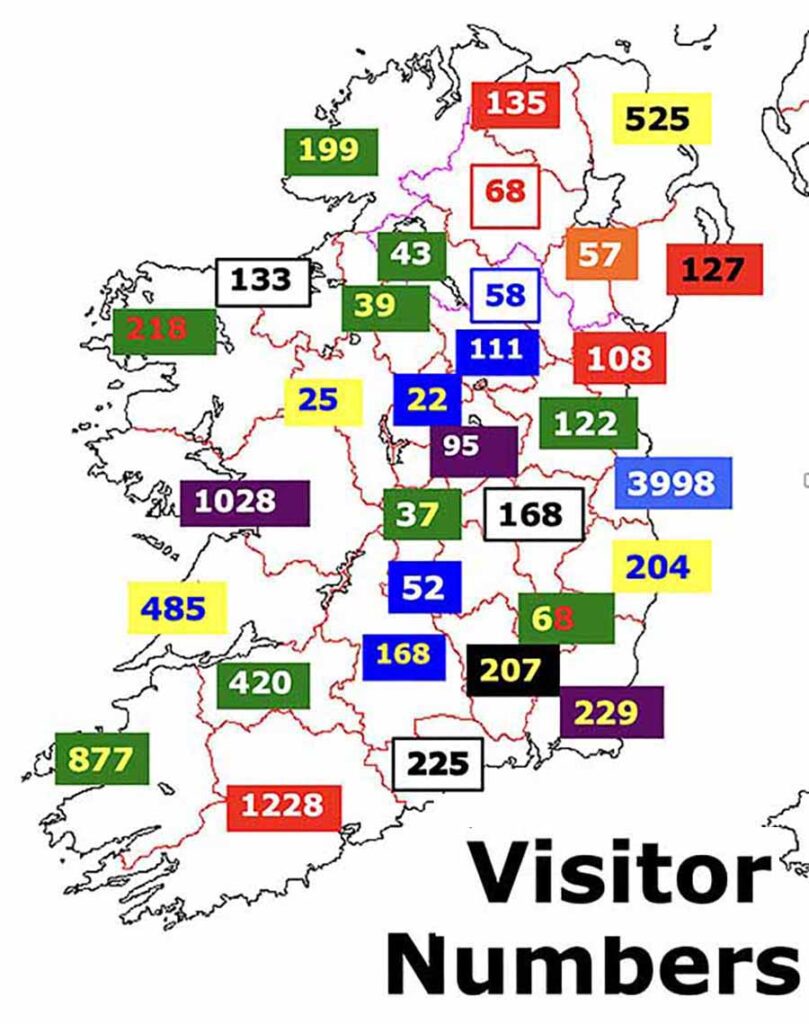
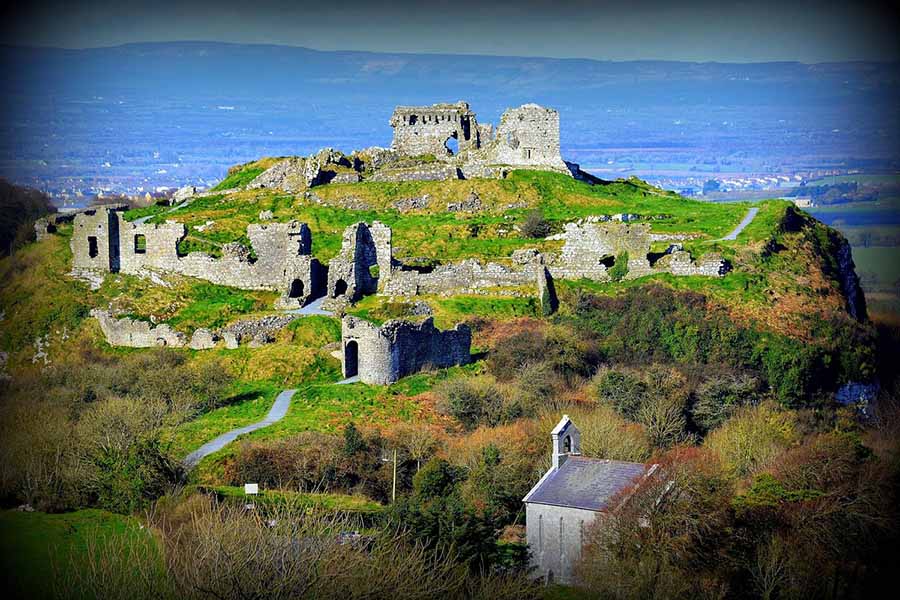
Ireland’s county Laois offers a serene blend of historic sites and natural landscapes, with the Rock of Dunamase providing panoramic views from its ancient castle ruins. Emo Court’s elegant Georgian mansion and gardens offer a peaceful retreat, while the Slieve Bloom Mountains provide hiking trails through rolling hills. Laois is Ireland’s ninth smallest county by size (1,719 square km) and tenth smallest by population (91,877). Population peaked at 153,930 in 1841 and reached its lowest point, 44,595 in 1966. In terms of hospitality, Laois is Ireland’s 27th most visited tourist county with around 52,000 international visitors per year.
Introduction – Adventure – Anthem – Archaeology – Attractions – Awards – Birdwatching – Camping – Castles – Churches – Contact list – Cycling – Dining – Equestrian – Festivals – Fishing – Folklore – Gardens – Golf – Graveyards – Happening – Haunted – Highest – Hiking – History – Holy Wells – Hotels – Hotels top 8 – Hunting & shooting – Instagrammable – Itineraries – Largest town – Luxury – MICE – Movies – Music – Name – New – Novelists – Off the beaten track – Poets – Pubs – Quotes – Random Facts – Restaurant Awards – Sacred Places – Saints – Songs – Spas – Sports – Sunsets – Sustainable – Things to do – Towns – Video – Villages – Walking – Wanderlist – Weddings – Wild swimming – Writers – 1837 – 1846 – 1852 – 1909 – 1955 – 1980 –