- Saint Brendan of Clonfert: May 16, c. 484–577: Clonfert (St. Brendan’s Cathedral)Known as “the Navigator,” Brendan founded Clonfert monastery, a major center of learning. His Navigatio Sancti Brendani describes voyages possibly reaching North America. A disciple of St. Finnian, he trained St. Columba. His feast is in the Martyrology of Donegal, and Clonfert’s cathedral and parish honor him, with his legacy tied to Galway’s maritime spirituality.
- Saint Colman Mac Duagh: October 29, c. 560–632: Kilmacduagh (Gort)Colman, son of a Connacht chieftain, founded Kilmacduagh monastery, now a diocesan site with a leaning round tower. A hermit, he lived ascetically, befriending animals like a cock and mouse, per legend. His feast is in the Martyrology of Donegal, and Kilmacduagh parish venerates him, with his holy well and cathedral ruins as pilgrimage sites.
- Saint Enda of Aran: March 21, c. 5th–6th century: Inishmore (Aran Islands)Enda, a warrior-prince converted by his sister St. Fanchea, founded a monastery on Inishmore, one of Ireland’s earliest. His school trained saints like Ciaran and Brendan, earning him the title “Patriarch of Irish Monasticism.” His feast is in the Martyrology of Oengus, and Inishmore’s Killeany parish preserves his legacy with church ruins and holy wells.
- Saint Ciaran of Clonmacnoise: September 9, c. 516–544: Clonfert (early associations)One of the “Twelve Apostles of Ireland,” Ciaran studied at Clonfert under St. Brendan before founding Clonmacnoise in Offaly. Known for his sanctity, he died young. His feast is in the Martyrology of Donegal, and Clonfert parish ties him to Galway, reflecting the county’s role in early monastic education.
- Saint Fursey: January 16, c. 597–650: AnnaghdownFursey, born in Connacht, founded a monastery at Annaghdown before evangelizing in East Anglia and France. Known for visions of the afterlife, his Vita influenced Dante. His feast is in the Martyrology of Donegal, and Annaghdown parish, with its cathedral ruins, honors his legacy, showcasing Galway’s missionary tradition.
- Saint Grellán: November 10, c. 6th century: Ballinasloe (Craughwell)Grellán, patron of the Kelly clan, founded a church at Craughwell, near Ballinasloe. Tradition credits him with miracles, including protecting his people from plague. His feast is in the Martyrology of Oengus, and Ballinasloe parish venerates him, with his crozier once a clan relic, reflecting Galway’s tribal saintly ties.
- Saint Sourney (Sairnait): January 3, c. 6th century: Drumacoo (Ballinderreen)Sourney, a female saint, founded a church at Drumacoo, near Ballinderreen. A disciple of St. Enda, she is known for her ascetic life. Her feast is in the Martyrology of Donegal, and Drumacoo’s church and holy well are pilgrimage sites, highlighting Galway’s female monastic heritage.
- Saint Ceannanach: September 24, c. 6th century: Inishmore (Aran Islands)Ceannanach, a bishop, founded a church on Inishmore, possibly Tempull Ceannanach. A disciple of St. Enda, he is venerated for his pastoral work. His feast is in the Martyrology of Oengus, and Inishmore’s Killeany parish preserves his legacy, with his church ruins tied to Galway’s Aran monasticism.
- Saint Gobnet: February 11, c. 6th century: Inisheer (Aran Islands)Gobnet, primarily linked to Ballyvourney, Cork, is associated with Inisheer, where she founded a church before moving south. Known for her healing miracles and bees, her feast is in the Martyrology of Donegal. Inisheer’s parish venerates her, reflecting Galway’s connections to Munster’s female saints.
- Saint Colga: February 20, c. 8th century: KilcolganColga, a monk and scholar, is linked to Kilcolgan parish, where he may have founded a church. Known for his Prayer of Colga, a devotional text, his feast is in the Martyrology of Donegal. Kilcolgan’s church site reflects Galway’s role in preserving early Christian scholarship.
- Saint Feichin: January 20, c. 6th–7th century: Omey Island (Clifden)Feichin founded a monastery on Omey Island, near Clifden, before establishing Fore in Westmeath. Known for his asceticism and miracles, his feast is in the Martyrology of Oengus. Omey’s parish preserves his legacy with church ruins, highlighting Galway’s coastal monastic tradition.
- Saint Cuana: February 4, c. 6th century: AthenryCuana, an obscure saint, founded a church at Athenry, possibly Kilcoona. His feast is in the Martyrology of Donegal, but little is known of his life. Athenry parish’s early Christian sites reflect his role, underscoring Galway’s network of local saints tied to monastic foundations
Saints
Antrim – Armagh – Carlow – Cavan – Clare – Cork – Derry – Donegal – Down – Dublin – Fermanagh – Galway – Kerry – Kildare – Kilkenny – Laois – Leitrim – Limerick – Longford – Louth – Mayo – Meath – Monaghan – Offaly – Roscommon – Sligo – Tipperary – Tyrone – Waterford – Westmeath – Wexford – Wicklow
Sacred Places
Antrim – Armagh – Carlow – Cavan – Clare – Cork – Derry – Donegal – Down – Dublin – Fermanagh – Galway – Kerry – Kildare – Kilkenny – Laois – Leitrim – Limerick – Longford – Louth – Mayo – Meath – Monaghan – Offaly – Roscommon – Sligo – Tipperary – Tyrone – Waterford – Westmeath – Wexford – Wicklow
Holy Wells
Antrim – Armagh – Carlow – Cavan – Clare – Cork – Derry – Donegal – Down – Dublin – Fermanagh – Galway – Kerry – Kildare – Kilkenny – Laois – Leitrim – Limerick – Longford – Louth – Mayo – Meath – Monaghan – Offaly – Roscommon – Sligo – Tipperary – Tyrone – Waterford – Westmeath – Wexford – Wicklow
County Galway:
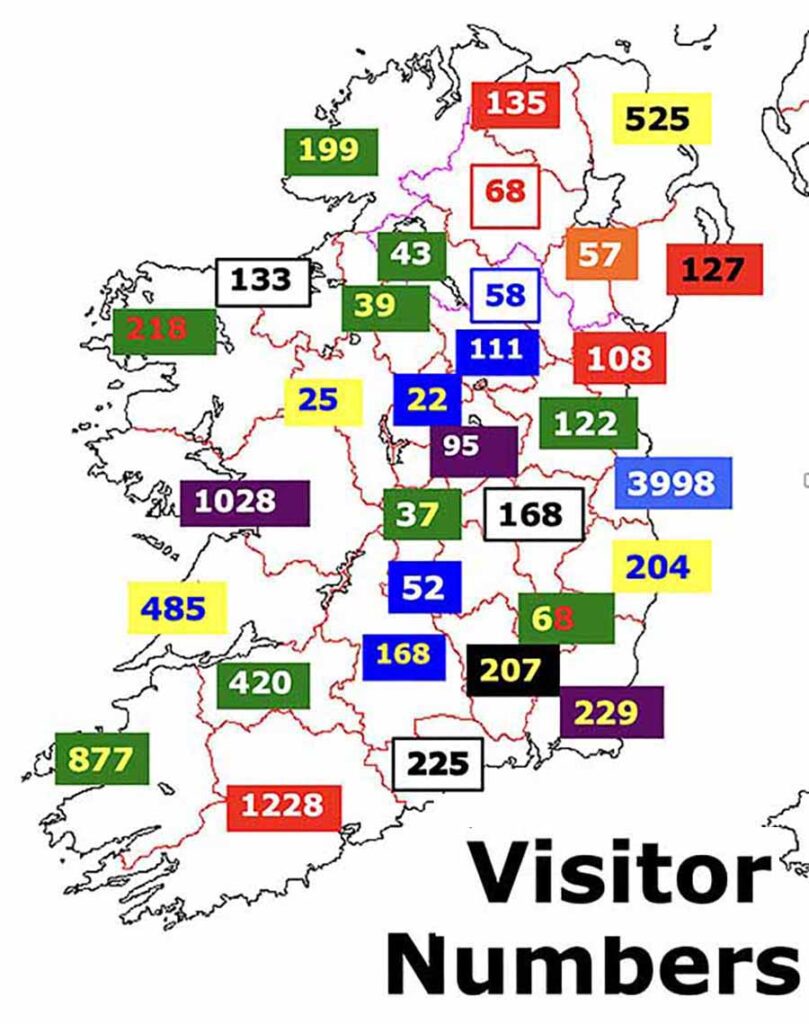
Ireland’s county Galway offers a delightful mix of cultural heritage and coastal beauty, with Galway City’s Latin Quarter showcasing historic streets and traditional music venues. The Connemara National Park provides hiking trails through rugged mountains and bogs, while the Aran Islands offer ancient stone forts like Dún Aonghasa. Other favourite stop is ithe Kylemore Abbey’s Victorian gardens and coastal cliffs. Galway is Ireland’s second largest county by size (5,939 sq km) and fifth largest by population (277,737). Population peaked at 440,198 in 1841 and reached its lowest point, 148,340 in 1966. In terms of hospitality, Galway is Ireland’s third most visited tourist county with around 1,028,000 international visitors per year.
Introduction – Adventure – Anthem – Archaeology – Attractions – Awards – Birdwatching – Camping – Castles – Churches – Contact list – Cycling – Dining – Equestrian – Festivals – Fishing – Folklore – Gardens – Golf – Graveyards – Happening – Haunted – Highest – Hiking – History – Holy Wells – Hotels – Hotels top 8 – Hunting & shooting – Instagrammable – Itineraries – Largest town – Luxury – MICE – Movies – Music – Name – New – Novelists – Off the beaten track – Poets – Pubs – Quotes – Random Facts – Restaurant Awards – Sacred Places – Saints – Songs – Spas – Sports – Sunsets – Sustainable – Things to do – Towns – Video – Villages – Walking – Wanderlist – Weddings – Wild swimming – Writers – 1837 – 1846 – 1852 – 1909 – 1955 – 1980 –