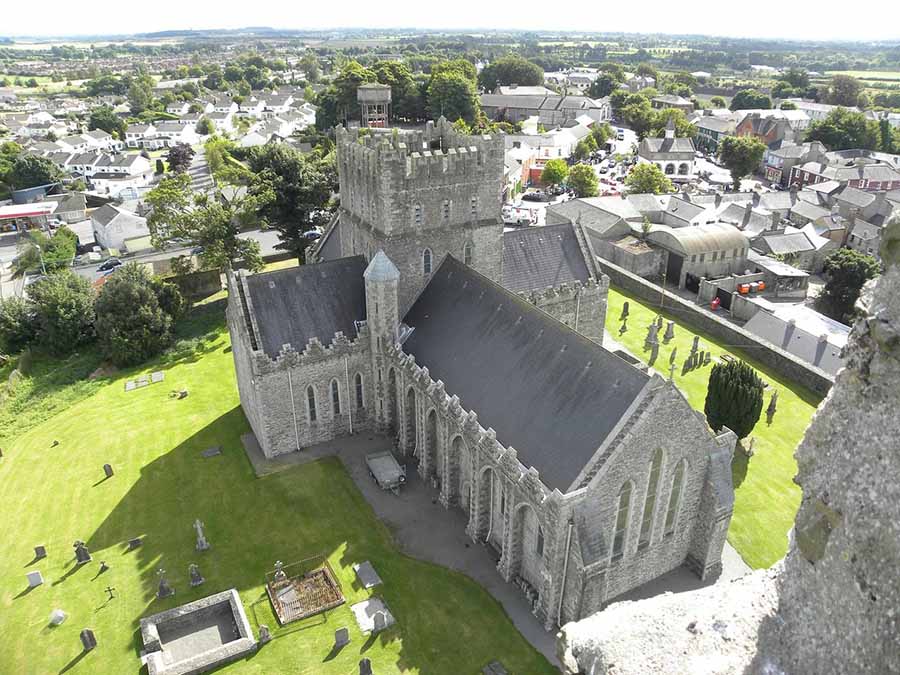
- Saint Brigid of Kildare: February 1, c. 451–525: Kildare Town (St. Brigid’s Cathedral), CurraghOne of Ireland’s three patron saints, Brigid founded a double monastery (for men and women) in Kildare, a major ecclesiastical center. Daughter of a Leinster king, she is known for her generosity, miracles (e.g., making a cross from rushes), and influence over Kildare’s bishops. Her feast is in the Martyrology of Donegal, and Kildare’s cathedral and holy well are pilgrimage sites. Tradition claims she is buried in Downpatrick with St. Patrick.
- Saint Conleth (Conlaed): May 3, c. 5th–6th century: Kildare TownConleth, a metalworker and hermit, became the first bishop of Kildare under St. Brigid’s patronage. Known for crafting liturgical vessels, he co-administered her monastery. His Life is sparse, but his feast is in the Martyrology of Donegal. Kildare Town’s parish, with St. Conleth’s Church, honors him, reflecting his role in Kildare’s early Christian community.
- Saint Ibar (Iberius): April 23, c. 5th century: Kildare Town (early associations)Ibar, a pre-Patrician saint, is primarily linked to Beggerin Island, Wexford, but tradition places him in Kildare as a missionary before St. Brigid’s time. He trained at Lérins, France, and resisted St. Patrick’s primacy. His feast is in the Martyrology of Oengus, and Kildare’s parish ties reflect his early influence in Leinster’s Christianization.
- Saint Fiachra: August 30, c. 7th century: ClaneFiachra, born in Connacht, founded a monastery at Clane and later became a hermit at Meaux, France, where he is patron of gardeners. Known for his hospitality, his feast is in the Martyrology of Donegal. Clane parish’s church and holy well preserve his legacy, tying Kildare to European monasticism.
- Saint Coca (Cuach): June 6, c. 6th century: KilcockCoca, a female saint, founded a church at Kilcock, where she is patroness. Tradition holds she was St. Brigid’s embroiderer, crafting vestments. Her feast is in the Martyrology of Oengus, and Kilcock parish’s St. Coca’s Church and holy well are pilgrimage sites, highlighting Kildare’s female monastic tradition.
- Saint Eimhin (Evin): December 22, c. 6th century: MonasterevinEimhin, possibly from Munster, founded a monastery at Monasterevin, a significant Leinster site. Known for his scholarship, he is credited with the Trias Thaumaturga, a hagiography of Irish saints. His feast is in the Martyrology of Donegal, and Monasterevin parish’s church honors him, reflecting Kildare’s monastic learning.
- Saint Laserian (Molaise): April 18, c. 6th–7th century: CaraghLaserian, primarily linked to Leighlin, Carlow, is associated with Caragh parish through missionary work in Kildare. He advocated for the Roman Easter at the Synod of Mag Lene (630). His feast is in the Martyrology of Donegal, and Caragh’s early Christian sites reflect his influence, connecting Kildare to broader Leinster networks.
- Saint Mogue (Aidan): January 31, c. 550–632: KilteelMogue, or Aidan, born in Fermanagh, founded a church at Kilteel before becoming bishop of Ferns, Wexford. Trained by St. David in Wales, he is known for miracles like calming storms. His feast is in the Martyrology of Donegal, and Kilteel parish’s church site ties him to Kildare’s early Christian landscape.
- Saint Sillen (Sillian): February 28, c. 6th century: CelbridgeSillen, an obscure saint, is linked to Celbridge, where he may have founded a church. His feast is in the Martyrology of Oengus, but details are sparse. Celbridge parish’s early Christian site, possibly near St. Patrick’s Church, preserves his memory, reflecting Kildare’s local saintly tradition.
- Saint Ernin (Ernán): August 18, c. 6th century: NaasErnin, a disciple of St. Columba, is associated with Naas through a church foundation. His feast is in the Martyrology of Donegal, and his work reflects Kildare’s ties to Columba’s network. Naas parish’s early Christian sites, including St. David’s Church, may honor him, underscoring Kildare’s monastic connections.
- Saint Fintan of Clonenagh: February 17, c. 6th century: Allen (historically linked)Fintan, born in Carlow, studied in Kildare’s Allen area before founding Clonenagh, Laois. Known as the “father of Irish monasticism,” he mentored St. Comgall. His feast is in the Martyrology of Donegal, and Allen parish’s Bog of Allen ties him to Kildare’s early Christian heritage.
- Saint Tighernach: April 4, c. 5th–6th century: Kildare Town (early associations)Tighernach, primarily linked to Clones, Monaghan, is associated with Kildare through missionary work under St. Brigid’s influence. A contemporary of St. Patrick, he was known for miracles. His feast is in the Martyrology of Donegal, and Kildare Town’s parish reflects his role in Leinster’s Christianization.
Saints
Antrim – Armagh – Carlow – Cavan – Clare – Cork – Derry – Donegal – Down – Dublin – Fermanagh – Galway – Kerry – Kildare – Kilkenny – Laois – Leitrim – Limerick – Longford – Louth – Mayo – Meath – Monaghan – Offaly – Roscommon – Sligo – Tipperary – Tyrone – Waterford – Westmeath – Wexford – Wicklow
Sacred Places
Antrim – Armagh – Carlow – Cavan – Clare – Cork – Derry – Donegal – Down – Dublin – Fermanagh – Galway – Kerry – Kildare – Kilkenny – Laois – Leitrim – Limerick – Longford – Louth – Mayo – Meath – Monaghan – Offaly – Roscommon – Sligo – Tipperary – Tyrone – Waterford – Westmeath – Wexford – Wicklow
Holy Wells
Antrim – Armagh – Carlow – Cavan – Clare – Cork – Derry – Donegal – Down – Dublin – Fermanagh – Galway – Kerry – Kildare – Kilkenny – Laois – Leitrim – Limerick – Longford – Louth – Mayo – Meath – Monaghan – Offaly – Roscommon – Sligo – Tipperary – Tyrone – Waterford – Westmeath – Wexford – Wicklow
County Kildare:
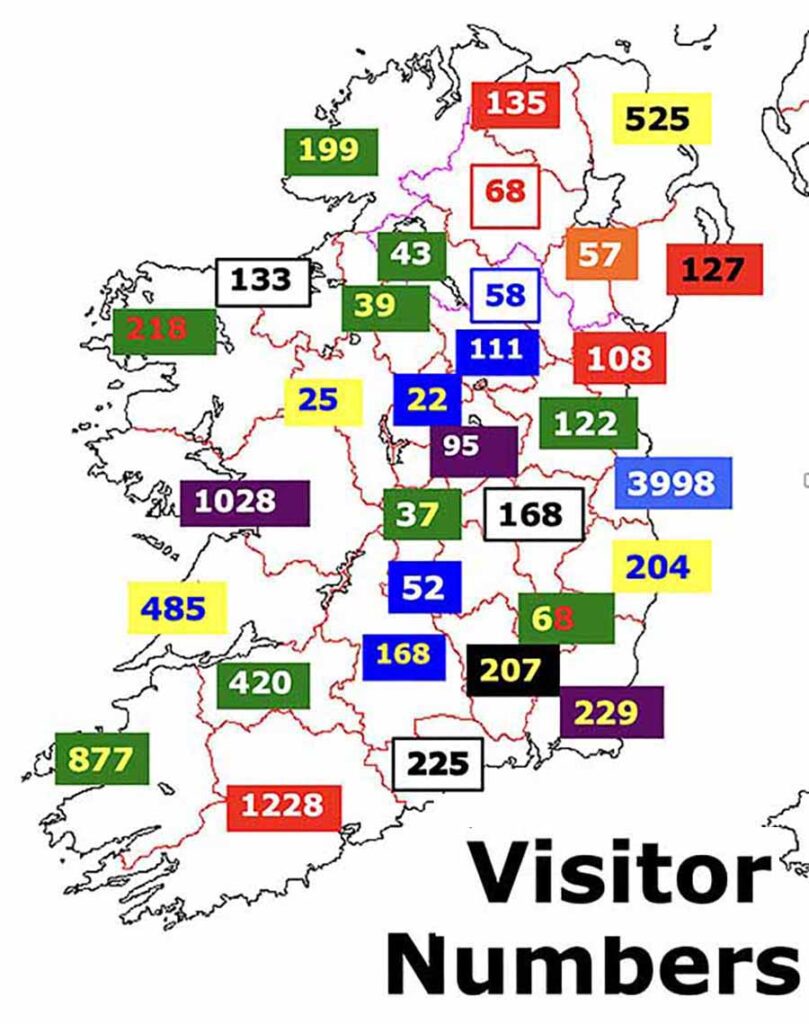
Ireland’s county Kildare blends historic sites with lush countryside, with the National Stud and Japanese Gardens offering a unique mix of equine heritage and serene landscapes. Castletown House, a grand Palladian mansion, provides historical insights, while the Curragh’s open plains are ideal for walking. The ancient Hill of Allen adds archaeological depth, making Kildare an engaging stop for culture and nature. The new Shackleton Experience has opened in Athy. Kildare is Ireland’s eighth smallest county by size (1,694 square km) and seventh largest by population (247,774). Population reached its lowest point, 57,892 in 1936. In terms of hospitality, Kildare is Ireland’s 15th most visited tourist county with around 168,000 international visitors per year.
Introduction – Adventure – Anthem – Archaeology – Attractions – Awards – Birdwatching – Camping – Castles– Churches – Contact list – Cycling – Dining – Equestrian – Festivals – Fishing – Folklore – Gardens – Golf – Graveyards – Happening – Haunted – Highest – Hiking – History – Holy Wells – Hotels – Hotels top 8 – Hunting & shooting – Instagrammable – Itineraries – Largest town – Luxury – MICE – Movies – Music – Name – New – Novelists – Off the beaten track – Poets – Pubs – Quotes – Random Facts – Restaurant Awards – Sacred Places – Saints – Songs – Spas – Sports – Sunsets – Sustainable – Things to do – Towns – Video – Villages – Walking – Wanderlist – Weddings – Wild swimming – Writers – 1837 – 1846 – 1852 – 1909 – 1955 – 1980 –