- Cathedral of St Eunan and Saint Columba, Letterkenny: Designed by William Hague. Completed in 1901, this Catholic cathedral features a Gothic Revival design with a 240-foot spire. It serves as the seat of the Diocese of Raphoe and was built with local sandstone. Convent Road, Letterkenny.
- Saint Naul’s Church, Ards: Built in 1836, this Catholic church features a simple Gothic design with a modest tower. It serves the Ards community near Lough Eske and is tied to St Naul’s monastic legacy. Ards, near Donegal town.
- Saint John’s Church, Dunfanaghy: Constructed in 1830, this Church of Ireland church features a Georgian design with a small bell tower. It serves the Dunfanaghy parish and reflects the area’s Anglican heritage. Main Street, Dunfanaghy.
- Saint Anne’s Church, Ballyshannon: Designed by William Atkins. Built in 1841, this Church of Ireland church features a Gothic Revival style with a prominent tower. It replaced an earlier 18th-century church and serves Ballyshannon’s Anglican community. Church Lane, Ballyshannon.
- Saint Patrick’s Church, Donegal Town: Erected in 1842, this Catholic church features a Gothic Revival design with pointed arches. It serves Donegal town’s Catholic community and reflects post-emancipation architecture. Main Street, Donegal town.
- Conwal Parish Church, Letterkenny: Dating to the 17th century, this Church of Ireland church was rebuilt in 1820 with a simple Gothic design. It houses historic memorials and serves the Letterkenny Anglican community. Church Lane, Letterkenny.
- Saint Mary’s Church, Ramelton: Built in 1824, this Catholic church features a modest Gothic Revival style. It serves Ramelton’s Catholic community and is part of the town’s historic streetscape. Church Road, Ramelton.
- Saint Columba’s Church, Glenties: Constructed in 1853, this Catholic church features a simple cruciform plan with Gothic elements. It serves the Glenties parish and is known for its community role. Main Street, Glenties.
- Saint Crone’s Church, Dungloe: Built in 1848, this Catholic church features a Gothic Revival design with a small tower. It serves Dungloe’s Catholic community in the Rosses region. Chapel Road, Dungloe.
- All Saints’ Church, Newtowncunningham: Erected in 1832, this Church of Ireland church features a simple Gothic design with a modest tower. It serves the rural Newtowncunningham parish and reflects 19th-century Anglican architecture. Main Street, Newtowncunningham.
Churches
Antrim – Armagh – Carlow – Cavan – Clare – Cork – Derry – Donegal – Down – Dublin – Fermanagh – Galway – Kerry – Kildare – Kilkenny – Laois – Leitrim – Limerick – Longford – Louth – Mayo – Meath – Monaghan – Offaly – Roscommon – Sligo – Tipperary – Tyrone – Waterford – Westmeath – Wexford – Wicklow
Holy Wells
Antrim – Armagh – Carlow – Cavan – Clare – Cork – Derry – Donegal – Down – Dublin – Fermanagh – Galway – Kerry – Kildare – Kilkenny – Laois – Leitrim – Limerick – Longford – Louth – Mayo – Meath – Monaghan – Offaly – Roscommon – Sligo – Tipperary – Tyrone – Waterford – Westmeath – Wexford – Wicklow
Sacred Places
Antrim – Armagh – Carlow – Cavan – Clare – Cork – Derry – Donegal – Down – Dublin – Fermanagh – Galway – Kerry – Kildare – Kilkenny – Laois – Leitrim – Limerick – Longford – Louth – Mayo – Meath – Monaghan – Offaly – Roscommon – Sligo – Tipperary – Tyrone – Waterford – Westmeath – Wexford – Wicklow
Saints
Antrim – Armagh – Carlow – Cavan – Clare – Cork – Derry – Donegal – Down – Dublin – Fermanagh – Galway – Kerry – Kildare – Kilkenny – Laois – Leitrim – Limerick – Longford – Louth – Mayo – Meath – Monaghan – Offaly – Roscommon – Sligo – Tipperary – Tyrone – Waterford – Westmeath – Wexford – Wicklow
County Donegal:
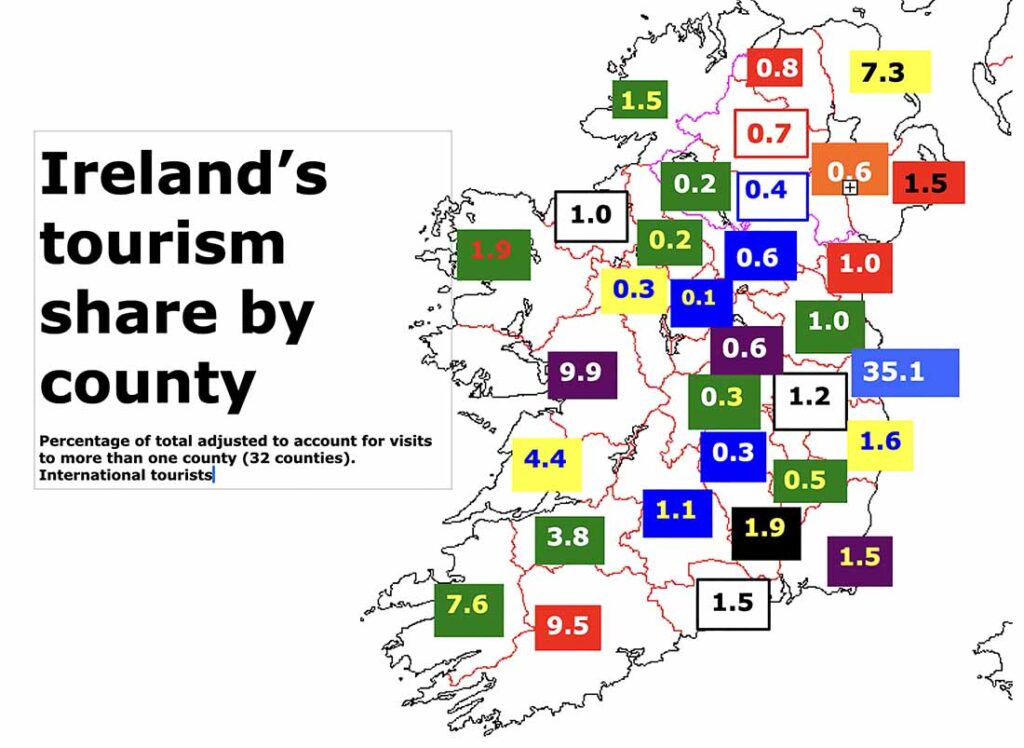
Ireland’s county Donegal is a land of wild coastlines and Gaelic heritage, with Slieve League’s towering sea cliffs offering some of Europe’s highest coastal views. Glenveagh National Park features a historic castle and sprawling gardens amidst rugged mountains. The beaches of Bundoran and the traditional tweed workshops of Ardara make Donegal an engaging destination for nature and cultural enthusiasts. The Grianan of Aileach stone fort adds ancient intrigue and splendid views. Donegal is Ireland’s fourth largest county by size (4,830 square km) and 13th largest by population (167,084). Population peaked at 296,448 in 1841 and reached its lowest point, 108,344 in 1971. In terms of hospitality, Donegal is also Ireland’s 13th most visited tourist county with around 199,000 international visitors per year.
Introduction – Adventure – Anthem – Archaeology – Attractions – Awards – Birdwatching – Camping – Castles – Churches – Contact list – Cycling – Dining – Equestrian – Festivals – Fishing – Folklore – Gardens – Golf – Graveyards – Happening – Haunted – Highest – Hiking – History – Holy Wells – Hotels – Hotels top 8 – Hunting & shooting – Instagrammable – Itineraries – Largest town – Luxury – MICE – Movies – Music – New – Name – Novelists – Off the beaten track – Poets – Pubs – Quotes – Random Facts – Restaurant Awards – Sacred Places – Saints – Songs – Spas – Sports – Sunsets – Sustainable – Things to do – Towns – Video – Villages – Walking – Wanderlist – Weddings – Wild swimming – Writers – 1837 – 1846 – 1852 – 1909 – 1955 – 1980 –