- Saint Columba (Columcille): June 9, c. 521–597: Gartan, Glencolmcille, Tory IslandOne of Ireland’s three patron saints, Columba was born in Gartan, Donegal, to the Uí Néill dynasty. He founded monasteries in Derry and Iona, Scotland, converting the Picts. Known for copying a psalter, sparking the Battle of Cul Dremhe (561), he was exiled as penance. His Life by Adomnán records miracles, and his birthplace in Gartan, churches in Glencolmcille, and Tory Island’s monastic ruins are pilgrimage sites. His feast is in the Martyrology of Donegal.
- Saint Adamnan (Eunan): September 23, c. 624–704: Raphoe (St. Eunan’s Cathedral), DrumhomeBorn in Drumhome, Donegal, Adamnan was the ninth abbot of Iona and wrote the Life of St. Columba and Cáin Adomnáin, protecting non-combatants in war. A scholar, he promoted the Roman Easter date. St. Eunan’s Cathedral in Raphoe honors him, and his feast is in the Martyrology of Donegal. His influence extends to Letterkenny’s St. Eunan’s College, reflecting Donegal’s monastic legacy.
- Saint Ernan: January 1, c. 6th century: DrumhomeErnan, a nephew of St. Columba, was abbot of Drumhome monastery in south Donegal. His feast is recorded in the Martyrology of Oengus, and he is venerated for his role in Columba’s monastic network. Little is known of his life, but Drumhome’s parish church and early Christian site preserve his memory, highlighting Donegal’s kinship-based saintly ties.
- Saint Begley (Beaglaoch): October 12, c. 6th century: Tory Island (Cloghaneely)Begley, a disciple of St. Columba, founded a monastery on Tory Island, where he is patron saint. Known for his ascetic life, his church and holy well are pilgrimage sites, especially during the island’s pattern day. His feast is in the Martyrology of Donegal, and Cloghaneely parish, encompassing Tory, venerates him, reflecting Donegal’s coastal monastic tradition.
- Saint Crone (Crona): February 7, c. 6th century: Termon (Kilmacrenan)Crone, a female saint, founded a monastery at Termon, near Kilmacrenan, where she is patroness. Known for her piety and miracles, her holy well is a local pilgrimage site. Her feast is noted in the Martyrology of Oengus, and Termon’s parish church preserves her legacy, highlighting Donegal’s strong tradition of female monasticism.
- Saint Mura: March 12, c. 6th–7th century: Fahan (Inishowen West)Mura, abbot of Fahan monastery in Inishowen, was a descendant of the Uí Néill. He is credited with the Mura Cross, a 7th-century high cross, and a lost relic, the Fahan Bell. Known for his poetry and sanctity, his feast is in the Martyrology of Donegal. Fahan’s parish church and monastic ruins are key sites, reflecting Donegal’s artistic monastic heritage.
- Saint Davog (Dabhóg): January 1, c. 6th century: Clonmany (Inishowen East)Davog, a disciple of St. Columba, founded a monastery at Clonmany in Inishowen. His holy well and church site are pilgrimage destinations, and his feast is recorded in the Martyrology of Oengus. Little is known of his life, but Clonmany parish venerates him, underscoring Donegal’s role in Columba’s missionary network.
- Saint Fionán: March 23, c. 6th century: KilcarFionán, possibly linked to St. Finnian of Clonard, is associated with Kilcar parish, where he founded a church. His feast is noted in the Martyrology of Donegal, and his work reflects Donegal’s early Christian foundations. Kilcar’s church site and local traditions preserve his memory, though details of his life are sparse.
- Saint Conall: May 22, c. 6th century: Inishkeel (Gweedore)Conall, possibly Conall Coel, founded a monastery on Inishkeel Island, near Gweedore. A contemporary of St. Columba, he is known for his ascetic life and miracles. His feast is in the Martyrology of Oengus, and Inishkeel’s church ruins and holy well are pilgrimage sites, reflecting Donegal’s coastal monastic heritage.
- Saint Naile: January 27, c. 6th century: Inver (historically linked)Naile, a disciple of St. Columba, founded a monastery at Kinawley, Fermanagh, but is linked to Inver parish in Donegal through missionary work. Known for his holiness, his feast is in the Martyrology of Donegal. Inver’s parish church may reflect his influence, tying Donegal to Fermanagh’s monastic network.
- Saint Patrick: March 17, c. 385–461: Carndonagh (Inishowen East)Ireland’s primary patron saint, Patrick is linked to Donegal through Carndonagh, where the 7th-century Donagh Cross, possibly associated with his mission, stands. Tradition holds he evangelized Inishowen, founding churches. His Confession describes his enslavement and missionary work. Carndonagh parish venerates him, with his feast in the Martyrology of Donegal.
- Saint Cuan: October 1, c. 6th century: RaymoghyCuan, an obscure saint, is associated with Raymoghy parish, where he may have founded a church. His feast is recorded in the Martyrology of Oengus, but little is known of his life. Raymoghy’s church site reflects Donegal’s tradition of local saints, tied to Columba’s broader monastic influence.
Saints
Antrim – Armagh – Carlow – Cavan – Clare – Cork – Derry – Donegal – Down – Dublin – Fermanagh – Galway – Kerry – Kildare – Kilkenny – Laois – Leitrim – Limerick – Longford – Louth – Mayo – Meath – Monaghan – Offaly – Roscommon – Sligo – Tipperary – Tyrone – Waterford – Westmeath – Wexford – Wicklow
Sacred Places
Antrim – Armagh – Carlow – Cavan – Clare – Cork – Derry – Donegal – Down – Dublin – Fermanagh – Galway – Kerry – Kildare – Kilkenny – Laois – Leitrim – Limerick – Longford – Louth – Mayo – Meath – Monaghan – Offaly – Roscommon – Sligo – Tipperary – Tyrone – Waterford – Westmeath – Wexford – Wicklow
Holy Wells
Antrim – Armagh – Carlow – Cavan – Clare – Cork – Derry – Donegal – Down – Dublin – Fermanagh – Galway – Kerry – Kildare – Kilkenny – Laois – Leitrim – Limerick – Longford – Louth – Mayo – Meath – Monaghan – Offaly – Roscommon – Sligo – Tipperary – Tyrone – Waterford – Westmeath – Wexford – Wicklow
County Donegal:
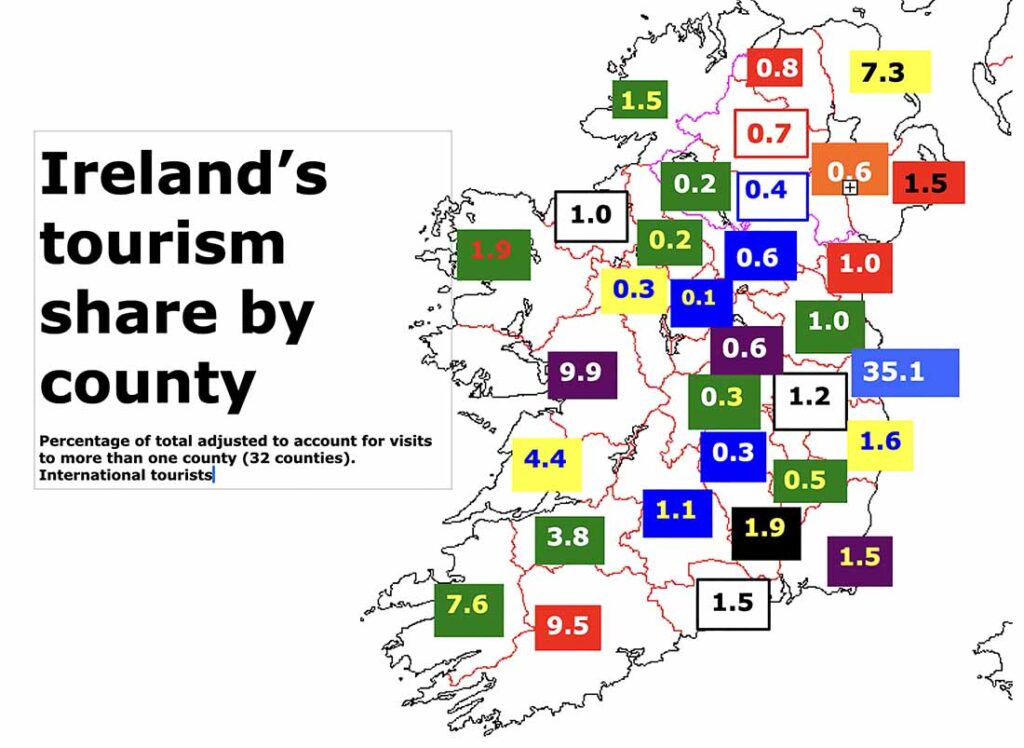
Ireland’s county Donegal is a land of wild coastlines and Gaelic heritage, with Slieve League’s towering sea cliffs offering some of Europe’s highest coastal views. Glenveagh National Park features a historic castle and sprawling gardens amidst rugged mountains. The beaches of Bundoran and the traditional tweed workshops of Ardara make Donegal an engaging destination for nature and cultural enthusiasts. The Grianan of Aileach stone fort adds ancient intrigue and splendid views. Donegal is Ireland’s fourth largest county by size (4,830 square km) and 13th largest by population (167,084). Population peaked at 296,448 in 1841 and reached its lowest point, 108,344 in 1971. In terms of hospitality, Donegal is also Ireland’s 13th most visited tourist county with around 199,000 international visitors per year.
Introduction – Adventure – Anthem – Archaeology – Attractions – Awards – Birdwatching – Camping – Castles – Churches – Contact list – Cycling – Dining – Equestrian – Festivals – Fishing – Folklore – Gardens – Golf – Graveyards – Happening – Haunted – Highest – Hiking – History – Holy Wells – Hotels – Hotels top 8 – Hunting & shooting – Instagrammable – Itineraries – Largest town – Luxury – MICE – Movies – Music – New – Name – Novelists – Off the beaten track – Poets – Pubs – Quotes – Random Facts – Restaurant Awards – Sacred Places – Saints – Songs – Spas – Sports – Sunsets – Sustainable – Things to do – Towns – Video – Villages – Walking – Wanderlist – Weddings – Wild swimming – Writers – 1837 – 1846 – 1852 – 1909 – 1955 – 1980 –