- Roscommon Castle: Roscommon Castle, located just outside Roscommon Town, is a 13th-century Anglo-Norman castle built in 1269 by Robert de Ufford, Justiciar of Ireland, on lands seized from the O’Connor dynasty. This imposing quadrangular fortress features four corner towers, a twin-towered gatehouse, and a moat, though it was partially destroyed in the 17th century during Cromwellian wars. Its lakeside setting by Loughnaneane adds to its dramatic presence. A National Monument, open year-round with free access, managed by the Office of Public Works. Visitors can freely explore the castle’s extensive ruins, including its towers, gatehouse, and curtain walls, with interpretive signs providing historical context about its O’Connor and Norman ties. The grassy grounds are ideal for picnics or photography, and the nearby Loughnaneane offers scenic views. No guided tours or facilities are on-site, so visits are self-guided (45-60 minutes). Reachable by car from Roscommon Town (5-minute drive). Combine with Roscommon County Museum or Strokestown Park. The castle’s massive ruins, historical significance, and serene lakeside setting make it a must-visit for history enthusiasts and families. Uneven terrain and steps; wear sturdy shoes. Bring water, as no amenities are available.
- Lough Key Castle (McDermott’s Castle): McDermott’s Castle, located on Castle Island in Lough Key near Boyle, is a 12th-century ruined castle built by the McDermott clan, rulers of Moylurg. The small keep, enhanced with 19th-century folly additions, creates a fairy-tale appearance on its tiny island. Linked to tragic legends like the lovers Una and Thomas, it’s one of Ireland’s most picturesque ruins, set within the 800-acre Lough Key Forest Park. Historically, it was a Gaelic stronghold, later contested during the 17th century. A ruin, accessible only by boat with no formal public access, viewable from Lough Key’s shores or via private tours. Visitors can admire the castle from Lough Key Forest Park’s shores or book private boat tours (~€20-€30 per person, check loughkeyboats.com) to circle the island, ideal for photography. No interior access due to the ruin’s state. The forest park offers trails, a visitor center, zip-lining, and the Tree Canopy Walk, enhancing the visit. Allow 1-2 hours, including boat or park exploration, reachable by car from Boyle (10-minute drive). Combine with Boyle Abbey or King House. The castle’s romantic island setting and Lough Key’s recreational offerings make it a unique stop for adventurers and photographers. Boat tours depend on weather; book in advance. Dress for outdoor conditions.
- Ballintober Castle: Ballintober Castle, near Ballintober village, is a 13th-century Anglo-Norman castle built around 1297 by the de Burgo (Burke) family, later reclaimed by the O’Conor Roe clan. Known as the “Castle of the Four Towers,” it features a large rectangular keep with corner turrets, though it’s now a ruin. Its historical significance lies in its role as a stronghold for the O’Conors, who maintained influence in Roscommon into the 17th century. A ruin on private land, accessible with free entry but no formal facilities. Visitors can view the castle’s exterior from nearby paths, noting its four towers and crumbling walls. No tours or signage, so research its O’Conor history beforehand. The rural setting is peaceful, ideal for a quick stop or photography (30-45 minutes). Reachable by car from Roscommon Town (15-minute drive). Combine with Tulsk’s Cruachan Aí Visitor Centre for more O’Conor history. The castle’s imposing ruins and connection to the O’Conors appeal to those exploring Roscommon’s Gaelic past. Respect private land boundaries; access may be restricted. Wear sturdy shoes for uneven terrain.
- Donamon Castle: Donamon Castle, near Roscommon Town on the River Suck, is a 12th-century castle, one of Ireland’s oldest, originally built by the O’Finan clan and later held by the O’Connors and Burke families. Rebuilt in the 15th century as a tower house and expanded in the 18th century, it’s now a spiritual retreat center owned by the Divine Word Missionaries. Its riverside setting and mix of medieval and Georgian architecture make it unique. Privately owned, with limited public access for retreats or by appointment for tours. Visitors can arrange guided tours (~€10, contact donamoncastle.com) to see the castle’s medieval tower and later additions, with insights into its O’Conor history and current spiritual use. The grounds, including riverside walks, are occasionally open. Visits last 1 hour, reachable by car from Roscommon Town (10-minute drive). Combine with the nearby Arigna Mining Experience. Retreat stays are available for groups. The castle’s ancient origins, serene river setting, and active use as a retreat center offer a distinctive experience. Pre-book tours or retreats; access is limited. Some areas may have stairs.
Castles
Antrim – Armagh – Carlow – Cavan – Clare – Cork – Derry – Donegal – Down – Dublin – Fermanagh – Galway – Kerry – Kildare – Kilkenny – Laois – Leitrim – Limerick – Longford – Louth – Mayo – Meath – Monaghan – Offaly – Roscommon – Sligo – Tipperary – Tyrone – Waterford – Westmeath – Wexford – Wicklow
County Roscommon:
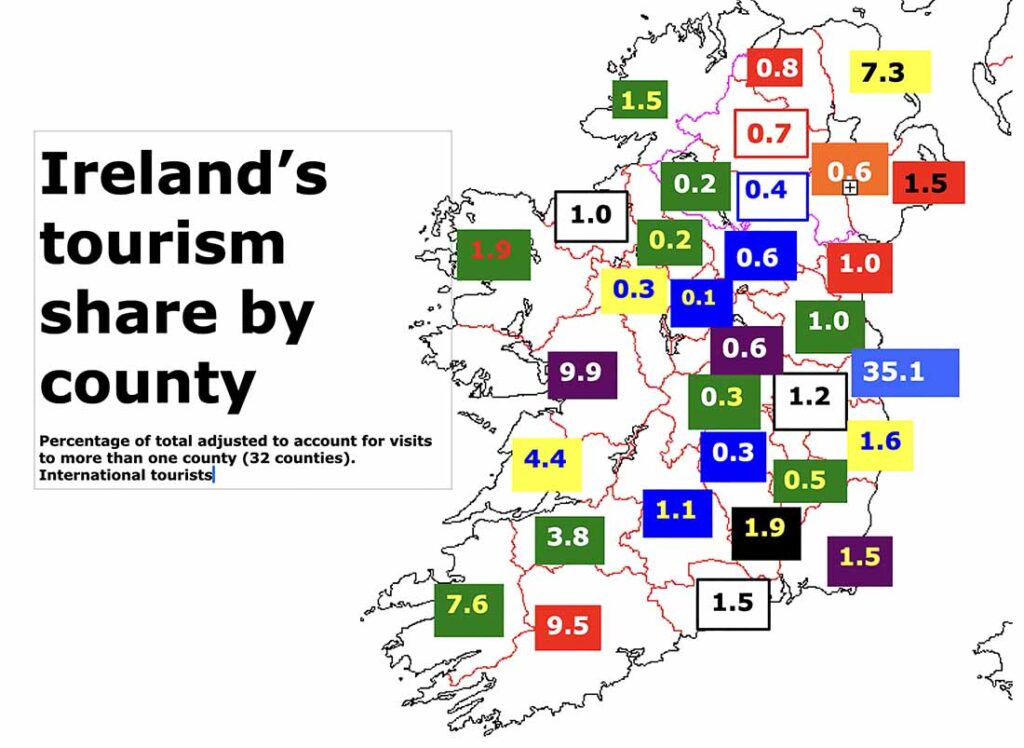
Ireland’s county Roscommon combines historic sites with tranquil landscapes, with Roscommon Castle’s imposing ruins offering a glimpse into medieval Ireland. Lough Key Forest Park provides boating and treetop canopy walks, while the Arigna Mining Experience explores the county’s industrial past. Other attractions include the sacred site of Rathcroghan, linked to ancient mythology. Roscommon is Ireland’s 11th largest county by size (2,463 square km) and eighth smallest by population (70,259). Population peaked at 253,591 in 1841 and reached its lowest point, 53,519 in 1971. In terms of hospitality, Roscommon is Ireland’s 31st most visited and Ireland’s second least visited tourist county with around 25,000 international visitors per year.
Introduction – Adventure – Anthem – Archaeology – Attractions – Awards – Birdwatching – Camping – Castles – Churches – Contact list – Cycling – Dining – Equestrian – Festivals – Fishing – Folklore – Gardens – Golf – Graveyards – Happening – Haunted – Highest – Hiking – History – Holy Wells – Hotels – Hotels top 8 – Hunting & shooting – Instagrammable – Itineraries – Largest town – Luxury – MICE – Movies – Music – Name – New – Novelists – Off the beaten track – Poets – Pubs – Quotes – Random Facts – Restaurant Awards – Sacred Places – Saints – Songs – Spas – Sports – Sunsets – Sustainable – Things to do – Towns – Video – Villages – Walking – Wanderlist – Weddings – Wild swimming – Writers – 1837 – 1846– 1852 – 1909 – 1955 – 1980 –