- Saint Brigid’s Well, Ballysteen (Dabhach Bhríde): Pattern day: February 1 (Saint Brigid’s Day) and August 15 (Feast of the Assumption). Located beside Considine’s Bar on the Moher Road, this celebrated well has an upper sanctuary (with a rag tree and graveyard) and a lower sanctuary (with the well and a Saint Brigid statue). Pilgrims perform a turas, praying silently at the statue, moving to the upper sanctuary, and returning to the well. Linked to a Lughnasa site, it’s famed for healing and adorned with rosaries, candles, and remembrance cards. Ballysteen, near Liscannor, Co. Clare.
- Saint Flannan’s Well, Drumanure (Tobar Fhlannáin): Pattern day: December 18 (Saint Flannan’s Day). In Drumanure, this well is dedicated to Saint Flannan, a 7th-century Killaloe bishop. The well house is ornamented with candles, lamps, and statues, with shrines on nearby trees. Known for general healing, pilgrims leave offerings and perform rounds, often reciting the Rosary. A sacred ash tree enhances the site’s sanctity. Drumanure, near Killaloe, Co. Clare.
- Saint Inghean Bhaoith’s Well, South Commons, Killinaboy: Pattern day: December 29 (Saint Inghean Bhaoith’s Day), though no longer actively observed. One of 17 wells dedicated to Saint Inghean Bhaoith in Clare, this Burren well collects rainwater in a limestone karst, enclosed by a low dry-stone wall. Known for curing warts, it’s adorned with candles, statues, and rosaries. Pilgrims historically performed rounds, but the pattern has faded, leaving a quiet, sacred site. South Commons, Killinaboy, Co. Clare.
- Saint Senan’s Well, Kiltenane: Pattern day: March 8 (Saint Senan’s Day), though no specific pattern day is observed. In Molougha near a cairn and graveyard, this well is dedicated to Saint Senan of Scattery Island. Known for curing sore eyes and horse parasites (bots), it features figurines and floral offerings. Pilgrims walk east along Senan’s Lough for prayer rounds, making it a well-preserved spiritual site. Molougha, near Kilrush, Co. Clare.
- Saint Anastasia’s Well, Tullygarvan: Pattern day: December 25 (Saint Anastasia’s Day), with a Mass in July. On farmland in Tullygarvan West near Lahinch, this well is surrounded by a wall and flagstone roof. Its clear waters ease worries and cure ailments. Pilgrims pray, bring concerns, and take water home, leaving candles and statues. The Christmas feast day makes it unique. Tullygarvan West, near Lahinch, Co. Clare.
- Saint Martin’s Well, Ballynacally: Pattern day: November 11 (Saint Martin’s Day, Martinmas). On the Ballynacally River’s west bank, this well is linked to Saint Martin of Tours, possibly via a relic from Saint Senan. Known for curing sore eyes, feet, and rheumatism, it features a miniature Lourdes grotto and candle-lit visits. No specific rounds are recorded, but offerings include statues and rosaries. Ballynacally, Co. Clare.
- Our Lady’s Well, Drumellihy: Pattern day: August 15 (Feast of the Assumption), with annual Mass and devotions. In Kilmacduane, this well is surrounded by a white and blue shrine with a large figurine and stone fence. Local efforts preserve a nearby Mass Rock and visitor shelters. Pilgrims perform rounds and leave candles and prayers, seeking spiritual and physical healing. The well’s upkeep reflects strong community devotion. Drumellihy, Kilmacduane, Co. Clare.
- Saint Canaoi’s Well, Kilkee: Pattern day: Unknown, possibly summer months like Lughnasa (August 1). Near Kilkee, this well is known for curing eye ailments, with its moss historically exported to the USA for medicinal use. Pilgrims leave mementos like jewelry inside the well house, reflecting sentimental value, such as a necklace left in memory of a loved one. Near Kilkee, Co. Clare.
- Saint Cravan’s Well, Near Ennistymon: Pattern day: Unknown, possibly tied to local saint’s days or summer gatherings. This well near Ennistymon is famed for curing sore eyes. Pilgrims performed rounds and used the water for topical application or drinking, leaving clooties on nearby trees. Its rural setting and specialized healing focus keep it less visited but significant. Near Ennistymon, Co. Clare.
- Saint Michael’s Well, Kilbreckan (Tobar Mhichíl): Pattern day: September 29 (Saint Michael’s Day), though specific patterns are poorly documented. Dedicated to Saint Michael the Archangel in Kilbreckan, this well is used for general healing and adorned with statues and offerings. Pilgrims likely performed rounds and recited prayers. Its remote location keeps it off the main tourist trail. Kilbreckan, Co. Clare.
- Saint Colman Mac Duagh’s Well, Keelhilla: Pattern day: February 3 (Saint Colman Mac Duagh’s Day), though active observance is uncertain. In Keelhilla, this well is linked to Saint Colman Mac Duagh, a 7th-century hermit and Kilmacduagh monastery founder. Known for spiritual blessings and healing, it features a sacred tree with offerings. Pilgrims performed rounds, though the site is now quieter. Keelhilla, near Killinaboy, Co. Clare.
- Slanatoir An Domhain, Killard: Pattern day: Unknown, possibly tied to summer festivals or local traditions. Known as the “Saviour of the World,” this unique well beside Killard graveyard near White Strand is not dedicated to a saint. Pilgrims prayed three decades of the Rosary during 15 rounds, then sampled the water for answered prayers. Its coastal setting and lack of saintly association make it rare. Killard, near Doonbeg, Co. Clare.
- Saint Joseph’s Well, Kilnaboy: Pattern day: March 19 (Saint Joseph’s Day), though active observance is rare today. Located in the Burren near Kilnaboy, this well is dedicated to Saint Joseph and known for curing general ailments, particularly headaches. Housed in a small stone structure, it’s adorned with candles, rosaries, and religious statues. Pilgrims historically performed rounds and left clooties (rags) on nearby bushes, believing ailments would fade as the rags decayed. Kilnaboy, Co. Clare.
- Saint Brecan’s Well, Toomullin: Pattern day: May 22 (Saint Brecan’s Day), though specific pattern records are scarce. Near Doolin, this well is linked to Saint Brecan, a 5th-century missionary associated with Aran Islands and Clare. Its clear waters were used for healing, especially eye ailments, with pilgrims reciting prayers during rounds. A nearby sacred tree enhances the site’s spiritual atmosphere, though it’s less visited than coastal tourist spots. Toomullin, near Doolin, Co. Clare.
- Tobar Iníon Baoith, Carron: Pattern day: December 29 (Saint Inghean Bhaoith’s Day), though patterns have largely faded. One of several wells dedicated to Saint Inghean Bhaoith in Clare, this Burren well is set in a limestone landscape near Carron. Known for curing warts and skin conditions, it features a small enclosure with offerings like candles and medals. Pilgrims performed sunwise rounds (deiseal), but the site’s remote location keeps it quiet. Carron, Co. Clare.
- Saint Enda’s Well, Killeany: Pattern day: March 21 (Saint Enda’s Day), though active rituals are uncertain. Located near Lisdoonvarna, this well is dedicated to Saint Enda, a monk linked to Aran Islands. Its waters were used for spiritual blessings and healing, particularly for joint pain. Pilgrims left offerings like rosaries and performed rounds, often reciting the Rosary. The well’s secluded setting adds to its serene appeal. Killeany, near Lisdoonvarna, Co. Clare.
- Tobar na Súl, Kilfenora: Pattern day: Unknown, possibly tied to Lughnasa (August 1) or local summer gatherings. Known as the “Eye Well,” this well near Kilfenora was famed for curing eye ailments. Pilgrims bathed their eyes with the water and tied clooties to nearby trees, believing ailments would transfer to the rags. Its limestone surroundings and historical significance make it a hidden gem in the Burren. Near Kilfenora, Co. Clare.
- Saint Colman’s Well, Oughtmama: Pattern day: February 3 (Saint Colman Mac Duagh’s Day), though specific patterns are poorly documented. Located in the Oughtmama valley, this well is linked to Saint Colman Mac Duagh, a 7th-century hermit. Known for general healing, it’s surrounded by ancient church ruins and a sacred tree adorned with offerings. Pilgrims performed rounds and used the water for blessings, though the site is now less frequented. Oughtmama, Co. Clare.
- Tobar na nGealt, Near Ennis: Pattern day: Unknown, possibly linked to summer festivals or local saint’s days. The “Well of the Insane” near Ennis was believed to cure mental illnesses, reflecting ancient beliefs in Otherworldly connections. Pilgrims performed rounds, recited prayers, and left clooties or coins. Its rural setting and specialized healing focus keep it off the main tourist trail. Near Ennis, Co. Clare.
- Saint Lachtain’s Well, Miltown Malbay: Pattern day: March 15 (Saint Lachtain’s Day), though active observance is rare. Dedicated to Saint Lachtain, a 7th-century saint, this well near Miltown Malbay was used for healing, particularly for skin ailments. Housed in a small stone structure, it’s adorned with candles and religious statues. Pilgrims performed rounds and left offerings, but the well’s obscurity preserves its quiet sanctity. Miltown Malbay, Co. Clare.
- Tobar na Baiste, Near Corofin: Pattern day: June 24 (Saint John the Baptist’s Day), likely a historical focus. Known as the “Well of Baptism,” this well near Corofin was used for early Christian baptisms and believed to aid children’s ailments. Pilgrims performed rounds and used the water for purification. Its rural Burren setting and lack of signage make it a hidden treasure. Near Corofin, Co. Clare.
- Saint Senan’s Well, Scattery Island: Pattern day: March 8 (Saint Senan’s Day), though patterns are less active due to the island’s isolation. On Scattery Island, this well is dedicated to Saint Senan, who founded a 6th-century monastery here. Its waters were used for spiritual blessings and healing, with pilgrims performing rounds near the monastic ruins. Accessible only by boat, the well’s remote location adds to its mystique. Scattery Island, near Kilrush, Co. Clare.
- Tobar na Plaighe, Near Doonbeg: Pattern day: Unknown, possibly linked to plague-related rituals or local saint’s days. The “Well of the Plague” near Doonbeg was visited during times of disease for protection or healing. Pilgrims performed rounds and left offerings like cloths, believing the water held curative powers. Its coastal location and historical role make it a poignant, obscure site. Near Doonbeg, Co. Clare.
- Saint Brendan’s Well, Near Kilrush: Pattern day: May 16 (Saint Brendan’s Day), though specific patterns are poorly documented. Dedicated to Saint Brendan the Navigator, this well near Kilrush was used for healing, particularly for sailors seeking safe voyages. Pilgrims left votive offerings and performed rounds, often reciting prayers for protection. Its coastal setting and maritime connection make it a unique Clare well.
Holy Wells
Antrim – Armagh – Carlow – Cavan – Clare – Cork – Derry – Donegal – Down – Dublin – Fermanagh – Galway – Kerry – Kildare – Kilkenny – Laois – Leitrim – Limerick – Longford – Louth – Mayo – Meath – Monaghan – Offaly – Roscommon – Sligo – Tipperary – Tyrone – Waterford – Westmeath – Wexford – Wicklow
Sacred Places
Antrim – Armagh – Carlow – Cavan – Clare – Cork – Derry – Donegal – Down – Dublin – Fermanagh – Galway – Kerry – Kildare – Kilkenny – Laois – Leitrim – Limerick – Longford – Louth – Mayo – Meath – Monaghan – Offaly – Roscommon – Sligo – Tipperary – Tyrone – Waterford – Westmeath – Wexford – Wicklow
County Clare:
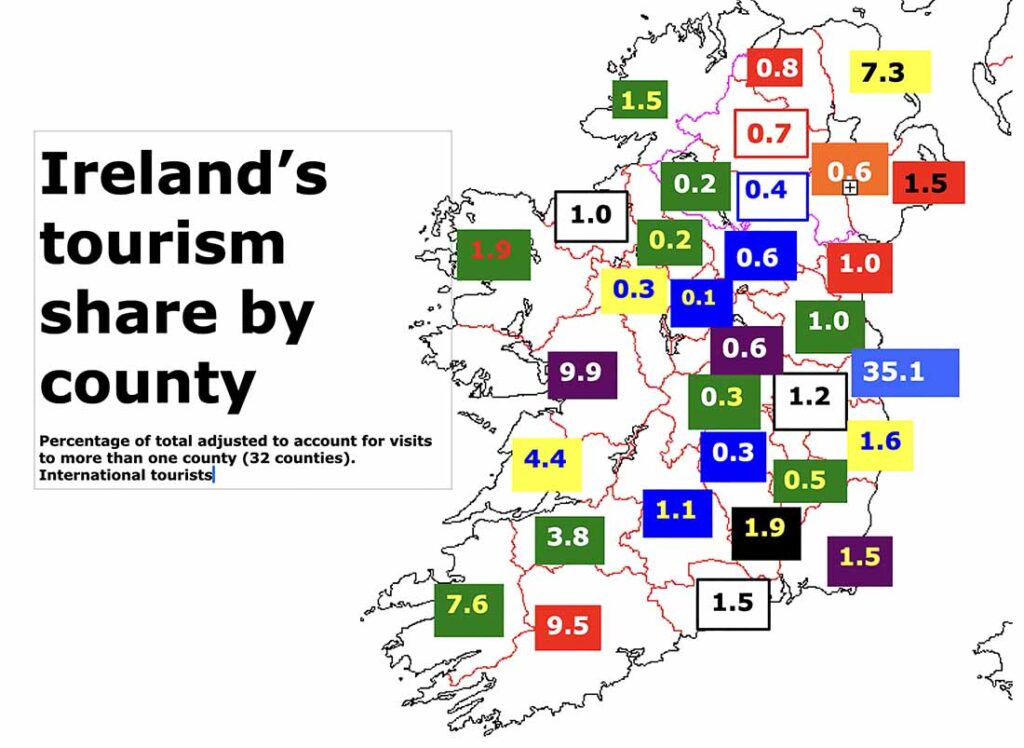
Ireland’s county Clare is renowned for its dramatic cliffs and traditional heritage, with the Cliffs of Moher offering breathtaking views over the Atlantic. The Burren’s unique limestone landscape provides hiking and rare flora, while Bunratty Castle offers medieval history with its restored interiors. Check out the traditional music scene in Doolin and the county’s coastal beaches. Clare is Ireland’s eighth largest county by size (3,188 square km) and 19th largest by population (127,938). Population peaked at 286,394 in 1841 and reached its lowest point, 73,597 in 1966. In terms of hospitality, Clare is Ireland’s sixth most visited tourist county with around 485,000 international visitors per year.
Introduction – Adventure – Anthem – Archaeology – Attractions – Awards – Birdwatching – Camping – Castles – Churches – Contact list – Cycling – Dining – Equestrian – Festivals – Fishing – Folklore – Gardens – Golf – Graveyards – Happening – Haunted – Highest – Hiking – History – Holy Wells – Hotels – Hotels top 8 – Hunting & shooting – Instagrammable – Itineraries – Largest town – Luxury – MICE – Movies – Music – New – Name – Novelists – Off the beaten track – Poets – Pubs – Quotes – Random Facts – Restaurant Awards – Sacred Places – Saints –Songs – Spas – Sports – Sunsets – Sustainable – Things to do – Towns – Video – Villages – Walking – Wanderlist – Weddings – Wild swimming – Writers – 1837– 1846 – 1852 – 1909 – 1955 – 1980 –