- Saint Columba’s Well (Tobar Cholum Cille), Derry City: Pattern day: June 9 (Saint Columba’s Day), though active patterns are rare today. Located near the Derry city walls in the Bogside, this well is dedicated to Saint Columba, Derry’s founder and patron saint. Known for general healing, it was historically a pilgrimage site where locals performed rounds and left offerings like clooties on nearby trees. Its urban setting and proximity to historic sites make it significant, as featured in the TG4 series Ag Triall ar an Tobar, where Mary Delargy discusses its enduring presence. Bogside, Derry City, Co. Derry.
- Saint Patrick’s Well, Maghera: Pattern day: March 17 (Saint Patrick’s Day), likely a historical focus. Near Maghera, this well is associated with Saint Patrick, who is said to have baptized converts here, endowing the water with curative powers. Used for healing ailments like sore eyes, pilgrims performed sunwise rounds (deiseal) and left rags or coins. Its rural setting and connection to Ireland’s patron saint keep it locally revered, though less visited now. Maghera, Co. Derry.
- Tobar na Súl, Near Dungiven: Pattern day: Unknown, possibly tied to Lughnasa (August 1) or summer gatherings. Known as the “Eye Well,” this well near Dungiven was famed for curing eye ailments, a common attribute of holy wells. Pilgrims bathed their eyes with the water and tied clooties to nearby bushes, believing ailments would fade as the rags decayed. Its remote location in Derry’s countryside makes it a hidden spiritual site. Near Dungiven, Co. Derry.
- Saint Brigid’s Well, Near Claudy: Pattern day: February 1 (Saint Brigid’s Day), though specific patterns are poorly documented. Dedicated to Saint Brigid, this well near Claudy was used for healing, particularly for headaches and fertility issues. Pilgrims performed rounds, recited the Rosary, and left offerings like ribbons or rosaries on a nearby tree. Its quiet, rural setting reflects Brigid’s nurturing legacy, though it’s now less frequented. Near Claudy, Co. Derry.
- Saint Ciaran’s Well, Near Magherafelt: Pattern day: September 9 (Saint Ciaran’s Day), though active observance is uncertain. Linked to Saint Ciaran of Clonmacnoise, this well near Magherafelt was known for curing stomach ailments and general vitality. Pilgrims performed rounds and left votive offerings like coins or cloths. Its association with a prominent early saint and its rural location make it a subtle but significant site. Near Magherafelt, Co. Derry.
- Tobar na nGealt, Near Limavady: Pattern day: Unknown, possibly linked to local saint’s days or summer festivals. The “Well of the Insane” near Limavady was believed to cure mental illnesses, reflecting ancient Otherworldly beliefs. Pilgrims performed rounds, recited prayers, and left clooties, hoping ailments would transfer to the cloth. Its remote setting keeps it obscure, preserving its mystical aura. Near Limavady, Co. Derry.
- Saint Canice’s Well, Eglinton: Pattern day: October 11 (Saint Canice’s Day), though patterns are likely lapsed. Dedicated to Saint Canice, a 6th-century saint, this well near Eglinton was used for healing, particularly for skin conditions. Pilgrims performed rounds and applied water to afflicted areas, leaving offerings like medals. Its proximity to a historic church site enhances its spiritual context, though it’s now less visited. Eglinton, Co. Derry.
- Tobar na Baiste, Near Coleraine: Pattern day: June 24 (Saint John the Baptist’s Day), likely a historical focus. Known as the “Well of Baptism,” this well near Coleraine was used for early Christian baptisms and believed to aid children’s ailments. Pilgrims performed rounds and used the water for purification, leaving tokens like coins. Its coastal proximity and historical role make it a quiet but sacred site. Near Coleraine, Co. Derry.
- Saint Colman’s Well, Near Bellaghy: Pattern day: November 24 (Saint Colman’s Day), though specific patterns are scarce. Linked to Saint Colman, this well near Bellaghy was used for general healing, with pilgrims performing rounds and reciting prayers. Offerings like clooties or rosaries were left on a nearby tree. Its rural setting and association with a local saint keep it part of Derry’s spiritual landscape, though now obscure. Near Bellaghy, Co. Derry.
- Our Lady’s Well, Near Desertmartin: Pattern day: August 15 (Feast of the Assumption), with possible local devotions. Dedicated to the Blessed Virgin Mary, this well near Desertmartin was a site for spiritual blessings and healing, particularly for women’s health. Pilgrims performed rounds and left candles or ribbons. Its connection to Marian devotion reflects strong Catholic traditions in Derry, though it’s less active today. Near Desertmartin, Co. Derry.
- Saint Eugene’s Well, Near Kilrea: Pattern day: July 23 (Saint Eugene’s Day), though patterns are poorly documented. Dedicated to Saint Eugene, an early Irish bishop, this well near Kilrea was used for healing ailments like rheumatism. Pilgrims performed rounds, recited prayers, and left offerings like cloths. Its rural location and association with a lesser-known saint make it a hidden gem in Derry’s heritage. Near Kilrea, Co. Derry.
- Tobar na Plaighe, Near Garvagh: Pattern day: Unknown, possibly linked to plague-related rituals or summer gatherings. Known as the “Well of the Plague,” this well near Garvagh was visited during times of disease for protection or healing. Pilgrims performed rounds and left clooties, believing the water held curative powers. Its historical role in community survival makes it a poignant, if obscure, site. Near Garvagh, Co. Derry.
Holy Wells
Antrim – Armagh – Carlow – Cavan – Clare – Cork – Derry – Donegal – Down – Dublin – Fermanagh – Galway – Kerry – Kildare – Kilkenny – Laois – Leitrim – Limerick – Longford – Louth – Mayo – Meath – Monaghan – Offaly – Roscommon – Sligo – Tipperary – Tyrone – Waterford – Westmeath – Wexford – Wicklow
Sacred Places
Antrim – Armagh – Carlow – Cavan – Clare – Cork – Derry – Donegal – Down – Dublin – Fermanagh – Galway – Kerry – Kildare – Kilkenny – Laois – Leitrim – Limerick – Longford – Louth – Mayo – Meath – Monaghan – Offaly – Roscommon – Sligo – Tipperary – Tyrone – Waterford – Westmeath – Wexford – Wicklow
County Derry:
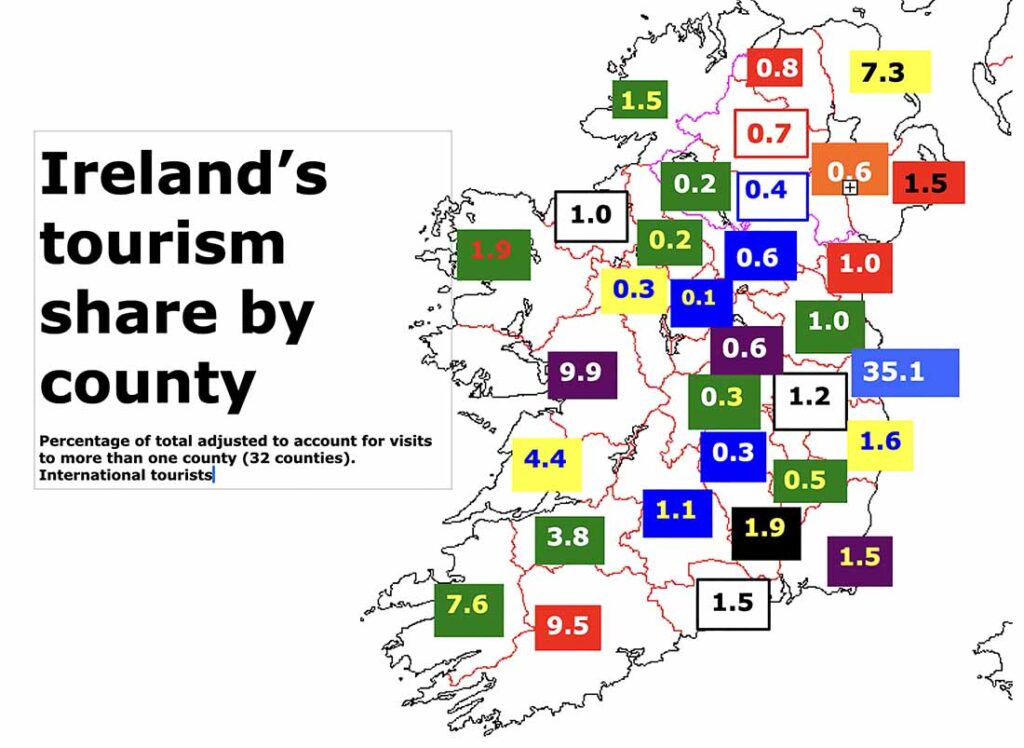
Ireland’s county Derry offers a rich historical tapestry, with the city’s 17th-century walls providing a walkable journey through its past. The Guildhall and Tower Museum explore Derry’s maritime and political history, while the Peace Bridge offers scenic views over the River Foyle. Derry is Ireland’s 15th largest county by size (2,067 square km) and sixth largest by population (252,231). Population previously peaked at 222,174 in 1841 and reached its lowest point, 139,693 in 1926. In terms of hospitality, Derry is Ireland’s 16th most visited tourist county with around 135,000 international visitors per year.
Introduction – Adventure – Anthem – Archaeology – Attractions – Awards – Birdwatching – Camping – Castles – Churches – Contact list – Cycling – Dining – Equestrian – Festivals – Fishing – Folklore – Gardens – Golf – Graveyards – Happening – Haunted – Highest – Hiking – History – Holy Wells – Hotels – Hotels top 8 – Hunting & shooting – Instagrammable – Itineraries – Largest town – Luxury – MICE – Movies – Music – New – Name – Novelists – Off the beaten track – Poets – Pubs – Quotes – Random Facts – Restaurant Awards– Sacred Places – Saints – Songs – Spas – Sports – Sunsets – Sustainable – Things to do – Towns – Video – Villages – Walking – Wanderlist – Weddings – Wild swimming – Writers – 1837 – 1846 – 1852 – 1909 – 1955 – 1980 –