Pre-1000 The Gaelic Nation
County Armagh’s history before 1000 CE is deeply tied to its role as a religious and political centre. The area was home to Emain Macha (Navan Fort), a ceremonial site and reputed capital of the Ulaid kings, central to Ulster’s mythology in the Ulster Cycle, including tales of Cú Chulainn. Archaeological evidence suggests Emain Macha’s prominence from the Iron Age, though its use declined by the 5th century. Saint Patrick’s establishment of a church at Armagh around 445 CE marked its rise as Ireland’s ecclesiastical capital, a status cemented by its claim as the seat of the Irish church. The Annals of Ulster (CELT project) record Armagh’s monastic activities, including the production of the Book of Armagh (c. 807), a key manuscript containing Patrick’s writings. The Uí Néill dynasty exerted influence, with Armagh as a contested site between rival clans. Pre-Christian records are scarce, and ecclesiastical sources may exaggerate Christian influence while marginalising secular Gaelic culture.
1000–1100: Viking Raids and Monastic Resilience
The 11th century saw Armagh maintain its ecclesiastical dominance despite Viking raids. The Annals of Ulster (CELT project) document attacks on Armagh in 1001 and 1020, targeting its monastic wealth, but the city’s inland location offered some protection compared to coastal monasteries. The Uí Néill continued to dominate politically, with Armagh serving as a religious and political hub. The monastery’s scriptorium remained active, preserving texts like the Annals, which reflect a clerical perspective. The period saw little urban development, and Armagh’s significance rested on its spiritual authority rather than secular power. The lack of secular records limits insights into local Gaelic society, and Viking-focused narratives may overshadow internal dynamics.
1100–1200: Norman Arrival and Ecclesiastical Reform
The Norman invasion (1169–1171) had a delayed impact on Armagh due to its inland location. The Synod of Cashel (1172) and subsequent reforms strengthened Armagh’s role as Ireland’s primate see under Archbishop Gilla in Chair. The Normans, under John de Courcy, focused on eastern Ulster, leaving Armagh under Gaelic control, primarily the O’Neills. The establishment of Cistercian monasteries, such as Newry (1153), introduced European monastic influences. The Annals of Ulster (CELT project) record ongoing conflicts between Gaelic lords, with Armagh occasionally caught in disputes. Norman sources, like those in the “Song of Dermot and the Earl” (CELT project), focus on coastal conquests, offering little detail on Armagh, while ecclesiastical records dominate, potentially skewing perspectives toward church affairs.
1200–1300: Gaelic Control and Norman Encroachment
In the 13th century, Armagh remained a Gaelic stronghold under the O’Neills, with limited Norman penetration. The county’s boundaries were not yet formalised, but Armagh was central to the Airgialla confederation. The cathedral at Armagh continued as a major pilgrimage site, with the Bachall Íosa (Staff of Jesus), a relic associated with Saint Patrick, enhancing its prestige. The Normans established a presence in nearby Louth, but Armagh’s inland position and Gaelic resistance limited their influence. The “Kildare Poems” (CELT project), though focused on Leinster, reflect the Anglo-Norman cultural context that marginally affected Armagh. The Annals of Loch Cé (CELT project) mention local skirmishes, but detailed records are sparse, and ecclesiastical sources overemphasise religious continuity over secular struggles.
1300–1400: O’Neill Ascendancy and Gaelic Resilience
The 14th century saw the O’Neills consolidate power in Armagh, capitalising on the decline of Norman authority after the Black Death (1348–1350). The O’Neill chieftains, based in nearby Tyrone, used Armagh as a symbolic centre, leveraging its ecclesiastical status. The Statute of Kilkenny (1366) had little impact in Armagh, where Gaelic law and language prevailed. The period saw increased Scottish-Gaelic ties, with alliances between the O’Neills and clans like the MacDonnells. The Annals of the Four Masters (CELT project) record O’Neill campaigns, but Armagh-specific events are limited. The Dictionary of Irish Biography (dib.ie) provides sparse coverage of local figures, reflecting the dominance of oral tradition. English sources portray Gaelic lords as fractious, necessitating critical reading to highlight local agency.
1400–1500: O’Neill Dominance and Ecclesiastical Continuity
The 15th century saw Armagh under firm O’Neill control, with the family asserting dominance over Ulster. The city remained Ireland’s ecclesiastical capital, with archbishops like John Bole (d. 1471) mediating between Gaelic lords and English authorities. The Wars of the Roses (1460–1485) weakened English influence, allowing the O’Neills to act with near autonomy. The construction of defensive structures, such as Blackwater Fort, reflected ongoing tensions. The Dictionary of Irish Biography details figures like Conn O’Neill, though his prominence peaks later. The CELT project’s annals provide context for Gaelic politics, but Armagh’s role is often secondary to broader Ulster events. The lack of secular records limits insights into daily life, and ecclesiastical sources dominate, focusing on church governance.
1500–1600: Tudor Reconquest and O’Neill Resistance
The 16th century brought significant upheaval to Armagh. The Tudor reconquest, following Henry VIII’s declaration of Ireland as a kingdom (1542), targeted Ulster. The O’Neills, led by Shane O’Neill (d. 1567) and later Hugh O’Neill (d. 1616), resisted English encroachment, with Armagh as a strategic base. The Battle of the Yellow Ford (1598), near Armagh, was a major O’Neill victory against the English. The Dictionary of Irish Biography profiles Hugh O’Neill, detailing his European alliances. The Ulster Plantation (1609) began affecting Armagh, with lands confiscated for English and Scottish settlers. Armagh’s cathedral remained Catholic, resisting Reformation efforts. English records portray the O’Neills as rebels, while the CELT project’s annals offer a Gaelic perspective, though with limited local detail.
1600–1700: Plantation and Confederate Wars
The 17th century transformed Armagh through the Ulster Plantation. Gaelic lands were confiscated, and settlers, primarily Scottish Presbyterians and English Anglicans, were granted estates in Armagh, particularly around Portadown and Lurgan. The 1641 Rebellion saw Catholic Gaelic and Old English forces, including the O’Neills, attempt to reclaim land, with massacres at Portadown inflaming tensions. The Cromwellian conquest (1649–1653) led to further confiscations, with Armagh’s Catholic population marginalized. The Williamite War (1689–1691) solidified Protestant control, with Armagh’s cathedral briefly serving as a military base. The Dictionary of Irish Biography covers figures like Sir Phelim O’Neill, a 1641 rebel leader. The CELT project’s Annals of the Four Masters document Gaelic losses. English sources often vilify Catholic rebels, requiring cautious interpretation.
1700–1800: Protestant Ascendancy and Sectarian Tensions
The 18th century saw Armagh under the Protestant Ascendancy, with Anglo-Irish landlords dominating land ownership. The Penal Laws excluded Catholics, who formed the majority in rural Armagh, from power. The linen industry grew, particularly in Lurgan and Portadown, boosting the economy. Armagh city developed as an ecclesiastical and market centre, with the construction of the Armagh Observatory (1790) reflecting Enlightenment influences. Sectarian tensions escalated, with the formation of the Orange Order in 1795 near Loughgall, a response to Catholic Defenders’ activities. The 1798 Rebellion had limited impact in Armagh but heightened divisions. The Dictionary of Irish Biography profiles figures like Archbishop Richard Robinson, who modernised Armagh city. Historyireland.com offers context, but Engllish narratives may downplay Catholic grievances.
1800–1900: Famine and Industrial Growth
The 19th century brought both hardship and development to Armagh. The Great Famine (1845–1849) reduced the county’s population from 232,000 in 1841 to 196,000 in 1851, with rural areas hardest hit. The linen industry expanded, with Armagh city and Lurgan as key centres, attracting workers. Railways, including the Belfast-Dublin line, enhanced connectivity. The Gaelic Revival had limited impact in Protestant-dominated Armagh, but Catholic nationalist sentiment grew, particularly in south Armagh. The Home Rule movement divided the county, with unionist resistance strong among Protestant communities. The Dictionary of Irish Biography covers figures like John O’Donovan, a scholar of Gaelic culture. Engllish famine records may understate local suffering, while local sources like armaghi.com provide context.
1900–2025: Conflict, Partition, and Modernisation
The 20th and 21st centuries saw Armagh shaped by Ireland’s political upheavals. The War of Independence (1919–1921) and Civil War (1922–1923) saw IRA activity in south Armagh, a republican stronghold. Partition (1921) placed Armagh in The six counties, intensifying sectarian divides. The Troubles (1968–1998) were particularly intense in Armagh, with south Armagh a republican base for the IRA, and atrocities like the Kingsmill massacre (1976) deepening divisions. The Good Friday Agreement (1998) brought relative peace, though tensions persist. Armagh’s economy diversified, with tourism around Navan Fort and the cathedral growing. The GAA remains strong, with Armagh winning the All-Ireland football title in 2002. Armagh is one of 24 Irish counties that still has a smaller population than it did in 1841.
History
Antrim – Armagh – Carlow – Cavan – Clare – Cork – Derry – Donegal – Down – Dublin – Fermanagh – Galway – Kerry – Kildare – Kilkenny – Laois – Leitrim – Limerick – Longford – Louth – Mayo – Meath – Monaghan – Offaly – Roscommon – Sligo – Tipperary – Tyrone – Waterford – Westmeath – Wexford – Wicklow
County Armagh:
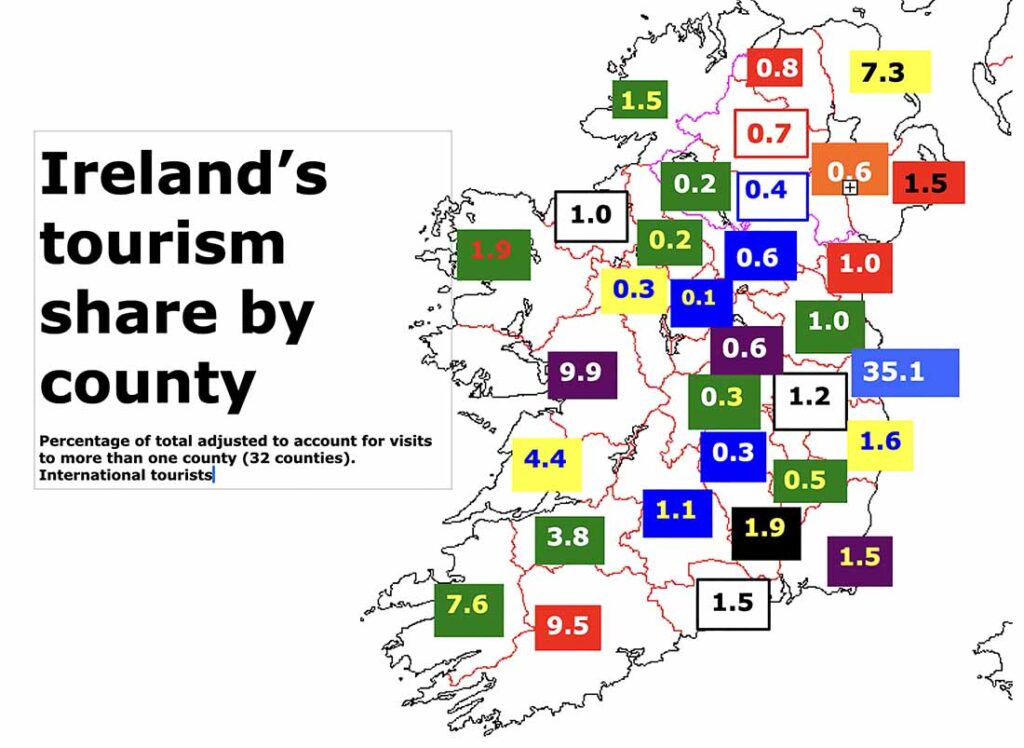
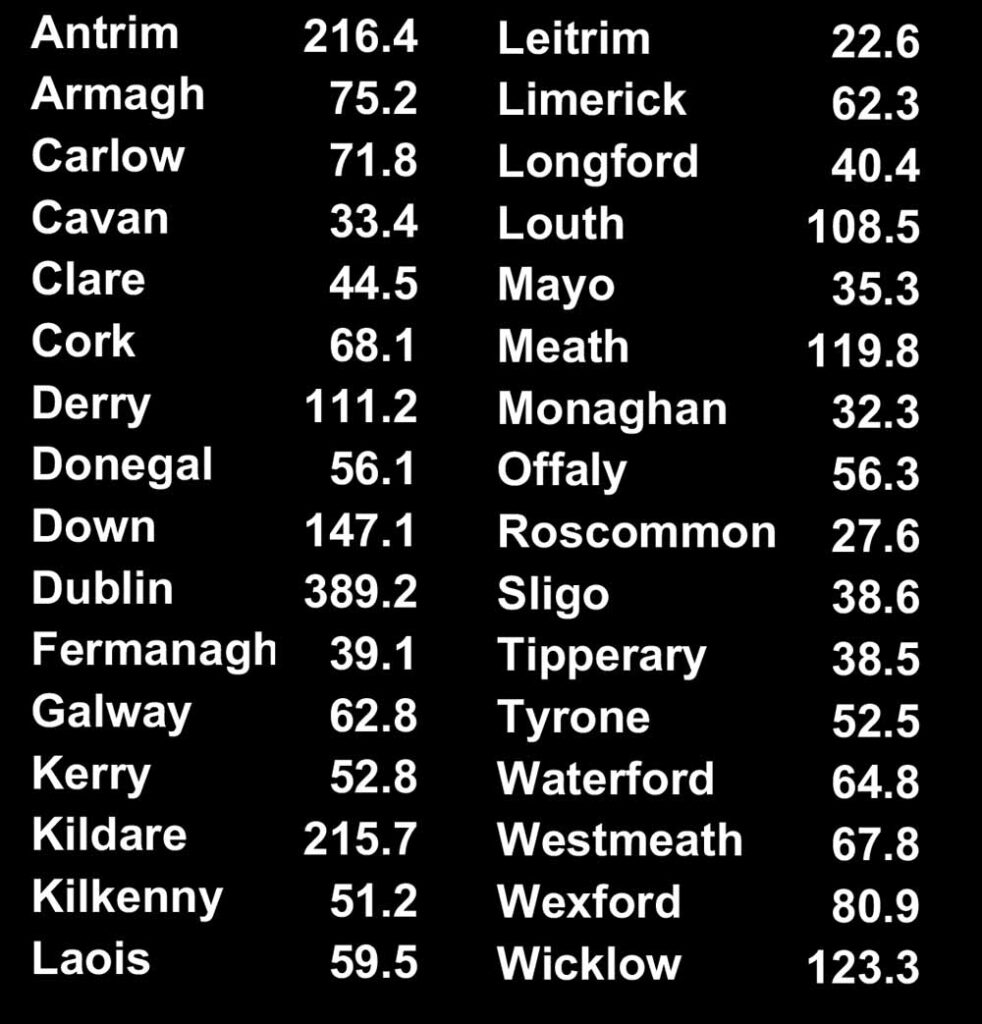
Ireland’s County Armagh is steeped in history and natural beauty, with the Navan Fort, an ancient ceremonial site, offering archaeological intrigue. The Armagh Observatory and Planetarium provide stargazing opportunities, while the city’s two cathedrals reflect its ecclesiastical heritage. Other attractions include the nearby Slieve Gullion Forest Park with its hiking trails and panoramic views. Armagh is Ireland’s fifth smallest county by size (1,253 square km) and tenth largest by population (194,394). Population peaked at 232,393 in 1841 and reached its lowest point, 108,815, in 1937. In terms of hospitality, Armagh is Ireland’s 26th most visited tourist county with around 57,000 international visitors per year.
Introduction – Adventure – Anthem – Archaeology – Attractions – Awards – Birdwatching – Camping – Castles – Churches – Contact list – Cycling – Dining – Equestrian – Festivals – Fishing – Folklore – Gardens – Golf – Graveyards – Happening – Haunted – Highest – Hiking – History – Holy Wells – Hotels – Hotels top 8 – Hunting & shooting – Instagrammable – Itineraries – Largest town – Luxury – MICE – Movies – Music – New – Name – Novelists – Off the beaten track – Poets – Pubs – Quotes – Random Facts – Restaurant Awards – Sacred Places – Saints – Songs – Spas – Sports – Sunsets – Sustainable – Things to do – Towns – Video – Villages – Walking – Wanderlist – Weddings – Wild swimming – Writers – 1837– 1846 – 1852 – 1909 – 1955 – 1980 –