- Rock of Dunamase: The Rock of Dunamase, near Portlaoise, is a dramatic 12th-century castle ruin perched on a limestone outcrop, offering commanding views of the surrounding plains. Originally a 9th-century Gaelic fort, it was rebuilt by the Normans after 1170 under Strongbow and later fortified by the O’Moore clan. The castle includes a great hall, gatehouse, and curtain walls, though it was destroyed in the 17th century during Cromwellian wars. Its strategic hilltop location and evocative ruins make it one of Laois’s most iconic sites. Open year-round with free access, managed by the Office of Public Works as a National Monument. Visitors can explore the ruins via a steep but short climb to the hilltop, with no formal facilities or guided tours. Interpretive signs detail the castle’s history, from its early Christian origins to its Norman and Gaelic phases. The panoramic views across Laois are a highlight, ideal for photography. Allow 45-60 minutes, accessible by car from Portlaoise (10-minute drive). Combine with nearby attractions like the Timahoe Round Tower. The castle’s striking hilltop setting, atmospheric ruins, and sweeping vistas make it a must-visit for history buffs and outdoor enthusiasts. Wear sturdy shoes for uneven terrain and steep paths. No amenities on-site, so bring water.
- Castle Durrow: Castle Durrow, in Durrow, is an 18th-century country house built in 1716 by the Flower family (Viscounts Ashbrook) on the site of an earlier castle. A fine example of early Georgian architecture, it features elegant interiors and is set on 50 acres of parkland with gardens and woodlands. Now a luxury hotel, it blends historical charm with modern amenities, making it one of Laois’s most accessible castles. Operates as a 4-star hotel, open to guests and non-guests for dining, afternoon tea, or occasional tours. Hotel guests can stay in opulent rooms, while non-guests can book afternoon tea (€30-€40) or dine at the restaurant, enjoying locally sourced cuisine. The grounds, with formal gardens and walking trails, are accessible for leisurely strolls. Historical tours, when offered (€10-€15, check castledurrow.com), highlight the castle’s Georgian heritage and Flower family history. Allow 1-2 hours for dining or grounds exploration, longer for stays. Reachable by car from Dublin (1-hour drive) or Portlaoise (20 minutes). The castle’s elegant architecture, luxurious amenities, and scenic grounds appeal to those seeking a refined historical experience. Reservations for dining or tours are recommended. The castle is wheelchair-accessible on the ground floor.
- Ballaghmore Castle: Ballaghmore Castle, near Borris-in-Ossory, is a 15th-century tower house built by the MacGiollaphadraig (Fitzpatrick) clan. Restored in the 19th century and again in the 1990s, it’s a well-preserved example of a medieval Irish castle, featuring a keep, battlements, and a sheela-na-gig carving. Now privately owned, it operates as a guesthouse and event venue, with a reputation for ghostly tales. Open for accommodation and occasional guided tours, with limited public access. Guests can book stays in the castle’s unique rooms, experiencing its medieval ambiance. Guided tours (~€10, by appointment via ballaghmorecastle.com) explore the tower’s interiors, including the great hall and historical artifacts, with stories of its Fitzpatrick history and hauntings. The grounds offer peaceful walks. Non-guests may visit during open days or events like weddings. Allow 1 hour for tours, longer for stays. Reachable by car from Portlaoise (30-minute drive). The castle’s authentic medieval features, intimate tours, and rural setting make it ideal for those seeking a personalized historical experience. Public access is limited; contact the owners in advance. Steep stairs may limit accessibility.
- Lea Castle: Lea Castle, near Portarlington, is a 13th-century Anglo-Norman castle built by the de Vesci family, later associated with the O’Dempsey clan. Once a major fortress with four towers and a moat, it was destroyed in the 17th century and is now a romantic ruin with remnants of walls and a gatehouse. Its riverside location by the River Barrow adds to its scenic appeal. A ruin on private land, accessible with free entry but no formal facilities. Visitors can view the castle’s exterior from nearby paths, exploring its crumbling walls and gatehouse ruins. The site is quiet and lacks signage, so research its O’Dempsey history beforehand. The Barrow’s banks offer a serene setting for walks or photography. Allow 30-45 minutes, reachable by car from Portlaoise (15-minute drive). Combine with the nearby Emo Court or Portarlington’s amenities. The castle’s evocative ruins and tranquil riverside location appeal to those exploring off-the-beaten-path sites. Respect private land boundaries; access may be restricted. Wear sturdy shoes for uneven ground.
Visiting
- Access and Facilities: Rock of Dunamase is the most accessible, with free entry but no amenities, ideal for self-guided exploration. Castle Durrow offers luxury hotel facilities, including dining and gardens, while Ballaghmore provides a unique guesthouse experience with limited tours. Lea Castle is a remote ruin with minimal infrastructure. All are reachable by car from Portlaoise or Dublin.
- Laois’s castles reflect its transition from Gaelic strongholds (Dunamase, Ballaghmore) to Norman fortifications (Lea) and Georgian estates (Durrow), tied to key families like the O’Moores, Fitzpatricks, and Flowers.
- Activities: Combine visits with Laois’s attractions, like Emo Court, the Slieve Bloom Mountains, or the Timahoe Round Tower. Castle Durrow’s dining and Ballaghmore’s guesthouse add unique experiences.
- Practical Tips: Check seasonal hours for Dunamase (heritageireland.ie) and book tours or dining for Durrow and Ballaghmore in advance. Lea Castle requires caution due to its ruinous state. Visit www.laoistourism.ie for planning resources. Wear weather-appropriate clothing for outdoor sites.
Castles
Antrim – Armagh – Carlow – Cavan – Clare – Cork – Derry – Donegal – Down – Dublin – Fermanagh – Galway – Kerry – Kildare – Kilkenny – Laois – Leitrim – Limerick – Longford – Louth – Mayo – Meath – Monaghan – Offaly – Roscommon – Sligo – Tipperary – Tyrone – Waterford – Westmeath – Wexford – Wicklow
County Laois:
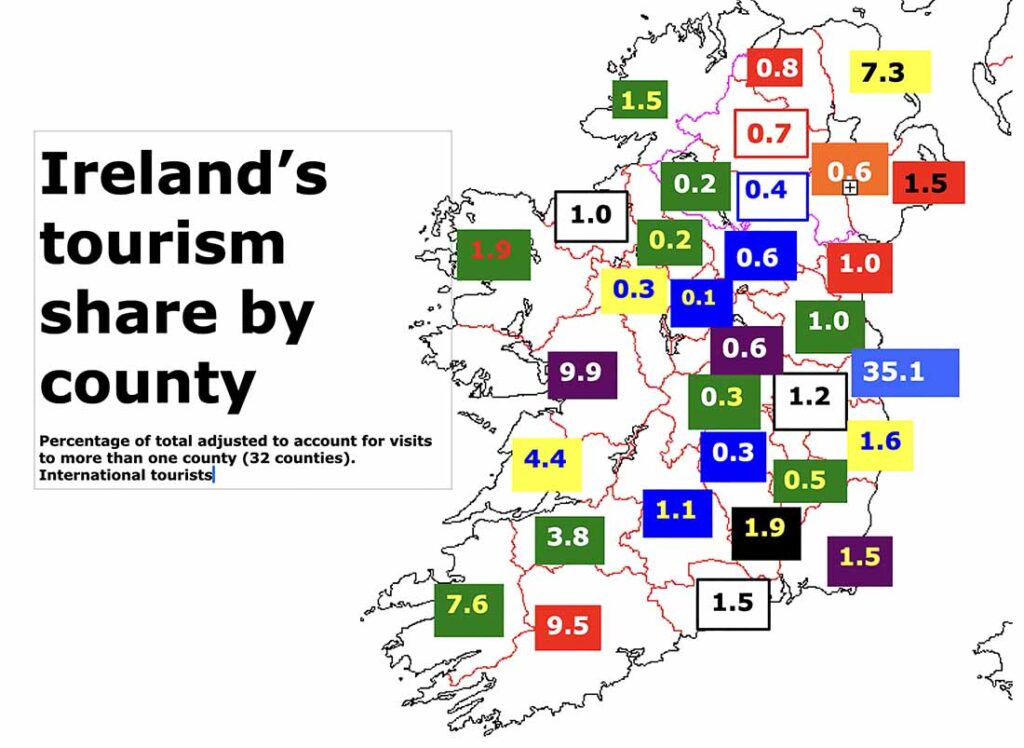
Ireland’s county Laois offers a serene blend of historic sites and natural landscapes, with the Rock of Dunamase providing panoramic views from its ancient castle ruins. Emo Court’s elegant Georgian mansion and gardens offer a peaceful retreat, while the Slieve Bloom Mountains provide hiking trails through rolling hills. Laois is Ireland’s ninth smallest county by size (1,719 square km) and tenth smallest by population (91,877). Population peaked at 153,930 in 1841 and reached its lowest point, 44,595 in 1966. In terms of hospitality, Laois is Ireland’s 27th most visited tourist county with around 52,000 international visitors per year.
Introduction – Adventure – Anthem – Archaeology – Attractions – Awards – Birdwatching – Camping – Castles – Churches – Contact list – Cycling – Dining – Equestrian – Festivals – Fishing – Folklore – Gardens – Golf – Graveyards – Happening – Haunted – Highest – Hiking – History – Holy Wells – Hotels – Hotels top 8 – Hunting & shooting – Instagrammable – Itineraries – Largest town – Luxury – MICE – Movies – Music – Name – New – Novelists – Off the beaten track – Poets – Pubs – Quotes – Random Facts – Restaurant Awards – Sacred Places – Saints – Songs – Spas – Sports – Sunsets – Sustainable – Things to do – Towns – Video – Villages – Walking – Wanderlist – Weddings – Wild swimming – Writers – 1837 – 1846 – 1852 – 1909 – 1955 – 1980 –