- Maynooth Castle: Located in Maynooth, near Dublin, Maynooth Castle is a 13th-century Norman fortress built around 1200 by Gerald FitzMaurice, 1st Lord of Offaly. Home to the powerful Fitzgerald family, Earls of Kildare, it was a key stronghold until its destruction during a 1535 rebellion. The castle’s ruins include a massive keep, gatehouse, and solar, reflecting its medieval grandeur. Restored by the Office of Public Works, it’s now a historical site near Maynooth University. Open seasonally (May-September, weekends in October), managed by the Office of Public Works, with free admission. Visitors can explore the castle’s keep and grounds via self-guided tours, with informative panels detailing its Fitzgerald history and role in Irish politics. A small exhibition in the keep showcases artifacts and the castle’s story. The site is compact, so expect a 30-45 minute visit. The nearby town of Maynooth offers cafés, pubs, and attractions like St. Patrick’s College. Accessible by train or bus from Dublin (25-minute drive). The castle’s imposing ruins, historical significance as a Fitzgerald stronghold, and proximity to Maynooth’s vibrant town make it a compelling stop for history buffs. Closed in winter; check heritageireland.ie for exact dates. Uneven surfaces may challenge mobility.
- Kilkea Castle: Kilkea Castle, near Castledermot, is a 12th-century castle built around 1180 by Hugh de Lacy for the de Riddlesford family, later associated with the Fitzgeralds. One of Ireland’s oldest inhabited castles, it was remodelled in the 19th century into a baronial mansion. Set on 180 acres with gardens and a golf course, it’s now a luxury hotel, reputedly haunted by the “Wizard Earl” Gerald Fitzgerald. Operates as a 5-star hotel and wedding venue, open to guests and non-guests for dining, spa visits, or tours. Hotel guests can stay in luxurious rooms or castle suites, while non-guests can book afternoon tea (~€40), dine at the Keep Restaurant, or enjoy spa treatments. Guided historical tours (occasionally available, ~€15) explore the castle’s medieval roots and ghostly legends. The grounds, including a walled garden and golf course, are accessible for walks. Allow 1-2 hours for dining or grounds exploration, longer for stays. Reachable by car from Dublin (1-hour drive). The castle’s blend of medieval history and modern luxury, scenic grounds, and haunted reputation appeal to those seeking a high-end or atmospheric experience. Book dining or tours in advance via kilkeacastle.ie. Some areas are exclusive to hotel guests.
- Carbury Castle: Carbury Castle, near Edenderry in northwest Kildare, is a 14th-century ruined castle built by the de Bermingham family, later owned by the Colleys. Situated on Carbury Hill, it features remnants of a motte-and-bailey structure and a later tower house, offering panoramic views of the Bog of Allen. Its isolated, ruinous state adds a romantic, mysterious charm. A ruin on private land, accessible with free entry but no formal facilities. Visitors can view the castle’s exterior from public paths, exploring its crumbling walls and towers. The hilltop setting provides stunning views, ideal for photography or quiet reflection. No guided tours or amenities, so visits are self-guided and brief (30-45 minutes). Combine with nearby Edenderry or the Bog of Allen Nature Centre. Reachable by car from Dublin (50-minute drive). The castle’s atmospheric ruins and scenic hilltop location make it a hidden gem for those exploring rural Kildare. Respect private land boundaries; access may be restricted. Wear sturdy shoes for uneven terrain.
- Leixlip Castle: Leixlip Castle, in Leixlip, 15 km west of Dublin, is a 12th-century Norman castle built around 1172 by Adam de Hereford, a follower of Strongbow. One of Ireland’s oldest continuously inhabited castles, it was later owned by the White family and Desmond Guinness, who restored it. The castle blends Norman and Georgian elements and is set on lush grounds by the River Liffey. Privately owned, with rare public openings through the Irish Georgian Society or special events. When open (check irishgeorgiansociety.ie), guided tours (~€10-€15) explore the castle’s medieval and Georgian interiors, showcasing period furnishings and art collections linked to the Guinness family. The grounds, with riverside views, are occasionally accessible. Visits last 1 hour, best combined with Leixlip’s Rye River Brewery or Liffey walks. Reachable by train or bus from Dublin (20-minute drive). The castle’s historical continuity, unique Norman-Georgian blend, and serene Liffey setting appeal to those seeking an exclusive experience. Public access is limited; confirm openings in advance. Tours involve stairs, limiting accessibility.
- Donadea Castle: Donadea Castle, within Donadea Forest Park near Naas, is a 17th-century manor house built by the Aylmer family, with earlier fortifications dating to the 13th century. Now a ruin, it’s part of a 243-hectare park with woodlands, a lake, and a 9/11 memorial. The castle’s remains include a tower and fragments of a 19th-century mansion, reflecting its layered history. The castle is a ruin within a public park, with free access to the grounds year-round, managed by Coillte. Visitors can view the castle’s exterior ruins while exploring Donadea Forest Park’s trails, lake, and walled garden. No interior access or guided tours, but interpretive signs provide historical context. The park offers picnic areas, wildlife spotting, and family-friendly walks. Allow 1-2 hours, reachable by car from Dublin (40-minute drive). Combine with nearby Naas or Mondello Park. The castle’s picturesque ruins, set within a vast park, make it ideal for nature lovers and casual visitors seeking a peaceful outing. No facilities at the castle; park amenities are basic. Wear comfortable shoes for trails.
Visiting
- Access and Facilities: Maynooth Castle offers free, structured tours with exhibits, while Kilkea Castle provides a luxury hotel experience with dining and spa options. Carbury and Donadea are ruins with free access but minimal facilities, appealing to explorers. Leixlip’s limited openings make it exclusive. All are accessible from Dublin by car or public transport.
- Kildare’s castles reflect Norman (Maynooth, Leixlip, Carbury), Gaelic, and early modern (Kilkea, Donadea) influences, tied to powerful families like the Fitzgeralds and Aylmers, showcasing the county’s strategic role near Dublin.
- Activities: Combine visits with Kildare’s attractions, like the Irish National Stud, Kildare Village shopping, or Punchestown Racecourse. Donadea’s park and Kilkea’s golf course add outdoor options.
Practical Tips: Check seasonal hours for Maynooth and Leixlip (heritageireland.ie, irishgeorgiansociety.ie). Book Kilkea dining or tours in advance. Carbury and Donadea require self-guided exploration; bring water and snacks for remote sites.
Castles
Antrim – Armagh – Carlow – Cavan – Clare – Cork – Derry – Donegal – Down – Dublin – Fermanagh – Galway – Kerry – Kildare – Kilkenny – Laois – Leitrim – Limerick – Longford – Louth – Mayo – Meath – Monaghan – Offaly – Roscommon – Sligo – Tipperary – Tyrone – Waterford – Westmeath – Wexford – Wicklow
County Kildare:
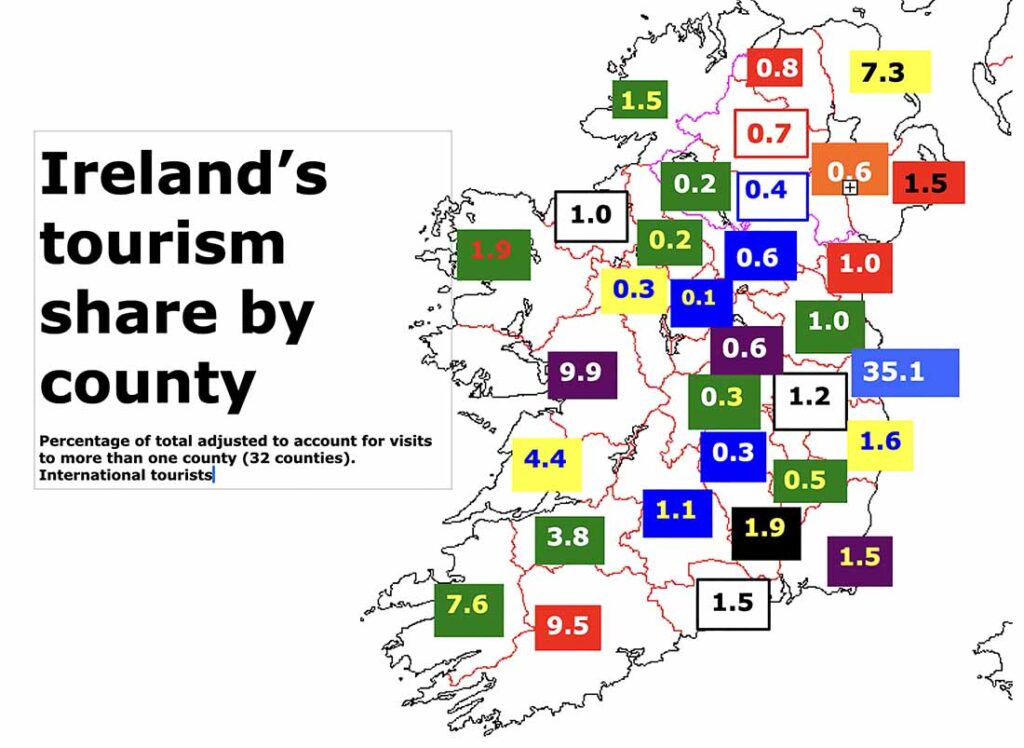
Ireland’s county Kildare blends historic sites with lush countryside, with the National Stud and Japanese Gardens offering a unique mix of equine heritage and serene landscapes. Castletown House, a grand Palladian mansion, provides historical insights, while the Curragh’s open plains are ideal for walking. The ancient Hill of Allen adds archaeological depth, making Kildare an engaging stop for culture and nature. The new Shackleton Experience has opened in Athy. Kildare is Ireland’s eighth smallest county by size (1,694 square km) and seventh largest by population (247,774). Population reached its lowest point, 57,892 in 1936. In terms of hospitality, Kildare is Ireland’s 15th most visited tourist county with around 168,000 international visitors per year.
Introduction – Adventure – Anthem – Archaeology – Attractions – Awards – Birdwatching – Camping – Castles– Churches – Contact list – Cycling – Dining – Equestrian – Festivals – Fishing – Folklore – Gardens – Golf – Graveyards – Happening – Haunted – Highest – Hiking – History – Holy Wells – Hotels – Hotels top 8 – Hunting & shooting – Instagrammable – Itineraries – Largest town – Luxury – MICE – Movies – Music – Name – New – Novelists – Off the beaten track – Poets – Pubs – Quotes – Random Facts – Restaurant Awards – Sacred Places – Saints – Songs – Spas – Sports – Sunsets – Sustainable – Things to do – Towns – Video – Villages – Walking – Wanderlist – Weddings – Wild swimming – Writers – 1837 – 1846 – 1852 – 1909 – 1955 – 1980 –