- Saint Patrick’s Well (Clonmel, near Marlfield): Pattern day: Last Thursday of June (modern Mass, historically March 17 or Pentecost). Located in a tranquil valley west of Clonmel, this is one of Ireland’s largest holy wells, fed by natural springs that never freeze. Associated with Saint Patrick, who reportedly baptized converts here and converted the King of Munster at the Rock of Cashel, it’s known for curing skin diseases, stomach ailments, and chronic conditions like sore eyes or lips. Pilgrims perform rounds at stations, leaving offerings like rosaries or children’s shoes at a 1950s Saint Patrick statue. Remodeled in the 1960s, it’s maintained by locals and remains a popular pilgrimage site.
- Saint Ailbe’s Well (Emly): Pattern day: September 12 (Saint Ailbe’s feast day, or within its octave). A deep spring in a 5m dry-stone shaft in Emly village, tied to Saint Ailbe’s 6th-century monastery. Known for general healing, pilgrims performed rounds until the mid-20th century, often visiting Saint Ailbe’s Cross nearby, believed to mark his grave. The well, with a 19th-century limestone surround and modern concrete hatch, was a focal point for devotion, though active pilgrimages have declined. Folklore recalls cures for pain, like John O’Cullenan’s in 1628.
- Lady’s Well (Thurles, Mullauns/Turtulla): Pattern day: August 15 (Feast of the Assumption, historically observed). On the west bank of the Drish River, this well, also called Virginians Well, was a major pilgrimage site, with a pattern day dating back to the 1400s per a letter from the Earl of Ormonde. Known for curing sore legs, pilgrims threw coins into the well and hung rags on a nearby bush, striking a stone gate thrice in prayer. Its use declined after 1848 due to nearby soldiers, but it remains significant in local folklore.
- Saint Peacaun’s Well (Toureen, near Cahir): Pattern day: August 1 (Lughnasa, historically a major pilgrimage day). A stone-lined, circular well with steps, near a Romanesque church at the foot of the Galtee Mountains. Dedicated to Saint Peacaun, one of three saintly brothers, it’s part of an ecclesiastical site with a bullaun stone and cross fragments. Known for general healing, it drew large crowds for rounds and races during Lughnasa until the 19th century. Pilgrims left offerings like medals or coins, though active devotion has waned.
- Saint Berrihert’s Well (Ardane, near Bansha): Pattern day: February 18 (Saint Berrihert’s feast day, though not actively observed). Linked to Saint Berrihert, an Anglo-Saxon saint, this well is near Saint Berrihert’s Kyle, a circular enclosure with 67 cross-inscribed stones. Associated with general healing, pilgrims left trinkets like coins or statues on a bullaun stone. The well’s remote location and lack of signposting make it hard to find, but it’s part of a trio with Saint Peacaun’s and Saint Naonán’s wells, tied to a legend of three brothers. Active devotion has largely ceased.
- Saint Naonán’s Well (Barnlough, near Bansha): Pattern day: Not specifically recorded, possibly August 1 (Lughnasa). Dedicated to Saint Naonán, another of the three saintly brothers, this well is in a peaceful setting near the Galtee Mountains. Associated with general healing, pilgrims performed rounds and left offerings like rags or coins. Less documented than Saint Peacaun’s, it’s part of the same ecclesiastical landscape, with ruins of a church nearby. Its pattern day is unconfirmed, and active pilgrimage has faded.
- Saint John’s Well (Nenagh North): Pattern day: June 24 (Saint John’s feast day). A stone-faced, square well (1m x 1m) in a hollow by a river, with a stream flowing into the nearby watercourse. Known for curative properties in the 19th century, it was visited during pattern day festivities featuring a local brass band. Pilgrims performed rounds, but votive offerings are no longer common. The well is maintained but less active today, reflecting a decline in traditional practices.
- Saint Cronan’s Well (Clonamuckoge More, near Loughmore): Pattern day: Not specifically recorded, possibly April 28 (Saint Cronan’s feast day). An unrecorded well in the SMR, documented in the 1930s Schools’ Collection, it’s known for curing sore ears. Locals recall pilgrims taking water in bottles to heal others. Situated in a rural setting, it was visited for rounds and prayers, with offerings like medals left behind. Its obscurity highlights the ongoing discovery of Tipperary’s wells.
- The Rag Well (Knockluas, Clonmel): Pattern day: None, visited year-round as a wishing well. Known as Tobar na Gréine in the 19th century, this spring well, enclosed by a circular stone wall, is more a wishing well than a traditional holy well. Pilgrims tie rags to a nearby whitethorn tree to make wishes, facing Slievenamon mountain. It lacks a patron saint and pattern day, with overgrown surroundings noted in 2015, but remains a unique local tradition.
- Abbey Well (Holycross, near Thurles): Pattern day: Not specifically recorded, possibly August 15 (Assumption, due to nearby abbey). Located 10m east of Holycross Abbey’s chancel, this well was associated with the abbey’s relic of the True Cross, a major pilgrimage draw in medieval times. Recorded in 1628 for curing pain (e.g., John O’Cullenan’s case), it was visited until the early 1800s when suppressed by Archbishop Bray. Pilgrims performed rounds, leaving offerings like rags, but active devotion has ceased.
- Saint Catherine’s Well (near Cloughjordan): Pattern day: Not specifically recorded, possibly November 25 (Saint Catherine’s feast day). Documented in the Schools’ Collection, this well was known for curing sore eyes and ringworm. Pilgrims visited three mornings, washing eyes or drinking water, and left offerings like medals or coins. Located in a rural setting, it’s unrecorded in the SMR, reflecting Tipperary’s hidden wells. Active pilgrimage has largely faded.
- Saint Veronica’s Well (Woodville, near Cloughjordan): Pattern day: Not specifically recorded, possibly February 4 (Saint Veronica’s feast day). In Mr. Mackey’s grove, this well was noted in the Schools’ Collection for curing influenza. Pilgrims visited three mornings, drinking the water, and left tokens like rags or coins. Unrecorded in the SMR, it’s a lesser-known site with no active pattern day, but its folklore underscores Tipperary’s tradition of specialized healing wells.
Visiting
- Tipperary’s holy wells often predate Christianity, with pagan water worship adapted by early saints for baptisms, lending them sacred status. Many are near churches or monastic ruins, like Holycross or Emly, reflecting early Christian use.
- Pattern days typically involve deiseal (clockwise) rounds, reciting rosaries, drinking or applying water, and leaving offerings. These peaked during the Penal Laws (1695–1829) as covert worship sites but declined post-Catholic Emancipation due to church reforms, the Famine, and social changes.
- August 15 (Assumption) and Lughnasa (August 1) are common pattern days, reflecting Celtic-Christian syncretism.
- The Tipperary Holy Well Survey (ongoing since 2021) has uncovered unrecorded wells, encouraging community input via TipperaryHolyWells@tipperarycoco.ie.
- Always approach these sites respectfully, as they remain culturally and spiritually significant. Avoid drinking water due to contamination risks, as noted at some wells.
Holy Wells
Antrim – Armagh – Carlow – Cavan – Clare – Cork – Derry – Donegal – Down – Dublin – Fermanagh – Galway – Kerry – Kildare – Kilkenny – Laois – Leitrim – Limerick – Longford – Louth – Mayo – Meath – Monaghan – Offaly – Roscommon – Sligo – Tipperary – Tyrone – Waterford – Westmeath – Wexford – Wicklow
Sacred Places
Antrim – Armagh – Carlow – Cavan – Clare – Cork – Derry – Donegal – Down – Dublin – Fermanagh – Galway – Kerry – Kildare – Kilkenny – Laois – Leitrim – Limerick – Longford – Louth – Mayo – Meath – Monaghan – Offaly – Roscommon – Sligo – Tipperary – Tyrone – Waterford – Westmeath – Wexford – Wicklow
County Tipperary:
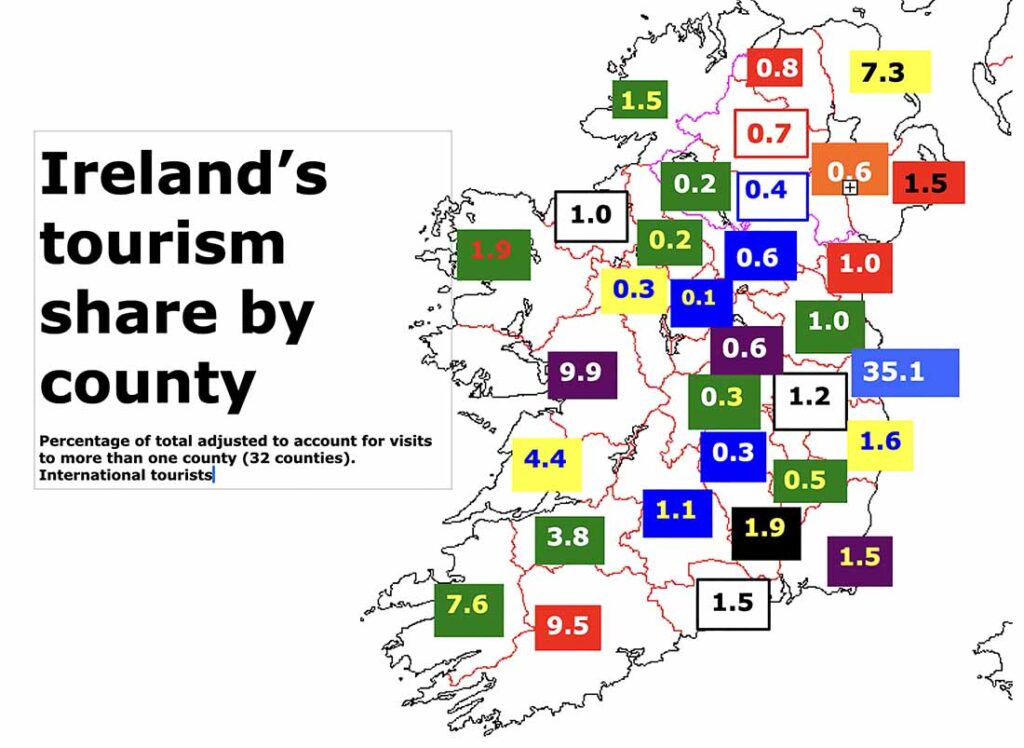
Ireland’s county Tipperary offers a mix of historic landmarks and lush countryside, with the Rock of Cashel’s medieval fortress and cathedral providing a stunning hilltop vista. Cahir Castle, one of Ireland’s best-preserved castles, offers historical insights, while the Glen of Aherlow’s walking trails showcase scenic valleys. Other attractions include the historic town of Clonmel and its markets. Tipperary is Ireland’s sixth largest county by size (4,254 square km) and 12th largest by population (167,895). Population peaked at 435,553 in 1841 and reached its lowest point, 122,812 in 1966. In terms of hospitality, Tipperary is Ireland’s 14th most visited tourist county with around 168,000 international visitors per year.
Introduction – Adventure] – Anthem – Archaeology – Attractions – Awards – Birdwatching – Camping – Castles – Churches – Contact list – Cycling – Dining – Equestrian – Festivals – Fishing – Folklore – Gardens – Golf – Graveyards – Happening – Haunted – Highest – Hiking – History – Holy Wells – Hotels – Hotels top 8 – Hunting & shooting – Instagrammable – Itineraries – Largest town – Luxury – MICE – Movies – Music – Name – New – Novelists – Off the beaten track – Poets – Pubs – Quotes – Random Facts – Restaurant Awards – Sacred Places – Saints – Songs – Spas – Sports – Sunsets – Sustainable – Things to do – Towns – Video – Villages – Walking – Wanderlist – Weddings – Wild swimming – Writers – 1837 – 1846– 1852 – 1909 – 1955 – 1980 –