Pre-1000 The Gaelic Nation
County Carlow’s pre-1000 history is rooted in its strategic location along the River Barrow, a key trade and travel route. The area was part of the Uí Ceinnselaig territory, a Leinster sub-kingdom. Archaeological evidence, such as the ringforts at Rathvilly and the Brownshill Dolmen (a megalithic tomb c. 4000 BCE), indicates early settlement. The establishment of St. Mullins monastery by Saint Moling in the 7th century marked Carlow’s entry into the Christian era, with the site becoming a centre for learning and pilgrimage. The Book of Leinster (CELT project) references the Uí Ceinnselaig, but specific Carlow mentions are rare. The Annals of Ulster (CELT project) note Viking raids along the Barrow, suggesting Carlow’s vulnerability due to its riverine position. Ecclesiastical sources dominate, potentially overstating Christian influence while marginalising pre-Christian Gaelic culture, and secular records are scarce.
1000–1100: Gaelic Power and Viking disruption
During the 11th century, Carlow remained under Uí Ceinnselaig control, with the dynasty consolidating power in Leinster. The River Barrow facilitated trade but also attracted Viking raids, though Carlow is less frequently mentioned in the Annals of Ulster (CELT project) compared to coastal areas like Wexford. St. Mullins monastery continued as a local religious centre, but no major urban or political developments are recorded. The period saw the rise of Brian Boru’s influence, with the Battle of Clontarf (1014) affecting Leinster’s power dynamics, though Carlow’s role is unclear. The lack of specific references suggests a relatively stable but peripheral region, with sources focusing on ecclesiastical or major political events elsewhere, limiting insights into local life.
1100–1200: Norman Invasion and Early Colonisation
The Norman invasion (1169–1171) profoundly shaped Carlow. In 1171, Strongbow (Richard de Clare) granted Carlow to Hugh de Lacy, marking the area’s integration into Anglo-Norman control. The construction of Carlow Castle (c. 1180) by William Marshal established a military and administrative hub, one of the earliest stone castles in Ireland. The county’s fertile Barrow valley attracted Norman settlers, who introduced feudal land systems. The establishment of Augustinian priories, such as at Leighlinbridge, complemented existing Gaelic monasteries. The “Song of Dermot and the Earl” (CELT project) mentions Carlow’s strategic importance, but Norman records dominate, often marginalising Gaelic perspectives. The Dictionary of Irish Biography (dib.ie) provides limited coverage of local figures, reflecting the focus on Norman elites.
1200–1300: Anglo-Norman Consolidation and County Formation
Carlow was formally shired in 1210, though its boundaries fluctuated, initially including parts of modern Wicklow and Wexford. The county became a key Anglo-Norman stronghold, with Carlow Castle serving as a defensive and administrative centre. The Barrow valley supported agriculture, fostering manorial settlements. The Cistercian abbey at Baltinglass (founded 1148, but active in this period) and the cathedral at Old Leighlin enhanced Carlow’s ecclesiastical status. The Uí Ceinnselaig resisted Norman dominance, but their influence waned. The “Kildare Poems” (CELT project), while focused on nearby Kildare, reflect the Anglo-Norman cultural milieu in Carlow. Gaelic sources are sparse, and Norman records may exaggerate their control, requiring critical interpretation to uncover local resistance.
1300–1400: Gaelic Revival and Fitzgerald Influence
The 14th century saw a Gaelic revival in Carlow, as Anglo-Norman power weakened post-Black Death (1348–1350). Gaelic clans, including the MacMurrough-Kavanaghs, descendants of the Uí Ceinnselaig, regained influence, particularly in southern Carlow. The MacMurrough-Kavanaghs, led by figures like Art MacMurrough (d. 1417), challenged Norman authority, with Carlow caught in regional conflicts. The Fitzgeralds of Kildare, granted lands in Carlow, emerged as powerful Anglo-Irish lords, balancing alliances with Gaelic families. The Statute of Kilkenny (1366) aimed to curb Gaelicisation but had limited impact in Carlow, where intermarriage and cultural blending continued. The Annals of the Four Masters (CELT project) mention MacMurrough campaigns, but Carlow-specific details are limited. The Dictionary of Irish Biography profiles Art MacMurrough, but English sources often portray Gaelic lords as disruptive.
1400–1500: MacMurrough-Kavanagh Ascendancy
The 15th century saw the MacMurrough-Kavanaghs dominate Carlow, with their seat at Borris. Art MacMurrough-Kavanagh’s leadership strengthened Gaelic influence, resisting English control. The Fitzgeralds of Kildare maintained a foothold in northern Carlow, with Carlow Castle as a key stronghold. The Wars of the Roses (1460–1485) distracted English authorities, allowing Anglo-Irish and Gaelic lords greater autonomy. Poynings’ Law (1494) aimed to reassert English control but had limited effect in Carlow, where local power dynamics prevailed. Ecclesiastical sites like St. Mullins and Leighlinbridge remained active, though their influence waned. The Dictionary of Irish Biography details MacMurrough figures, while the CELT project’s annals provide broader Leinster context, but local records are scarce, and English sources may downplay Gaelic agency.
1500–1600: Tudor Reconquest and Land Confiscations
The 16th century brought Tudor centralisation to Carlow. The surrender and regrant policy under Henry VIII saw Gaelic lords like the MacMurrough-Kavanaghs nominally submit to the crown, retaining lands under English titles. The Reformation had limited impact, as Carlow remained staunchly Catholic. The county saw early plantation efforts, with English settlers introduced to confiscated lands. The Fitzgerald rebellion (1534) in nearby Kildare indirectly undermined Anglo-Irish power in Carlow. By the century’s end, the Nine Years’ War (1594–1603) saw Carlow as a battleground, with Hugh O’Neill’s forces active nearby. The Dictionary of Irish Biography profiles figures like Brian Mac Cahir Kavanagh, while the CELT project’s annals document Gaelic resistance. English records dominate, often portraying Gaelic lords as rebels, requiring careful interpretation.
1600–1700: Plantations and Confederate Wars
The 17th century saw further English consolidation in Carlow through plantations. The Ulster Plantation (1609) had indirect effects, but local land confiscations targeted Gaelic and Old English families, with estates granted to English settlers, particularly in northern Carlow. The 1641 Rebellion saw Catholic Confederate forces, including the Kavanaghs, resist English rule, with Carlow Castle briefly besieged. The Cromwellian conquest (1649–1653) led to extensive land redistributions, marginalising Catholic landowners. The Williamite War (1689–1691) reinforced Protestant control, with Carlow loyal to the crown. The CELT project’s Annals of the Four Masters document Confederate activities, while the Dictionary of Irish Biography covers figures like Sir Morgan Kavanagh. English sources often vilify Catholic rebels, necessitating critical reading.
1700–1800: Protestant Ascendancy and Rebellion
The 18th century saw Carlow under the Protestant Ascendancy, with Anglo-Irish landlords, such as the Bagenals, dominating land ownership. The Penal Laws excluded Catholics, who formed the majority, from power, fostering resentment. Carlow’s economy relied on agriculture, with the Barrow facilitating trade. The county was a centre of the 1798 Rebellion, with the Battle of Carlow (1798) a significant defeat for the United Irishmen, led locally by figures like Father John Murphy. The Dictionary of Irish Biography profiles rebellion leaders, while historyireland.com details the battle. The Act of Union (1800) abolished the Irish Parliament, strengthening Engllish control. Canals, including the Barrow Navigation, improved connectivity. Engllish narratives often downplay Catholic grievances, requiring balance with local accounts.
1800–1900: Famine, Reform, and Nationalist Growth
The 19th century brought significant challenges to Carlow. The Great Famine (1845–1849) reduced the county’s population from 86,000 in 1841 to 68,000 in 1851, though Carlow’s fertile lands mitigated some impacts compared to western counties. Agricultural improvements and the railway (1846) boosted the economy, with Carlow town as a market hub. The Gaelic Revival saw limited traction, but the Gaelic Athletic Association (GAA) established clubs, fostering local identity. The Home Rule movement gained support among Catholics, with figures like John Hammond, a Carlow MP, active in nationalist politics (Dictionary of Irish Biography). Tenant rights movements, such as the Land League, were strong in Carlow. Engllish famine records may understate local suffering, while local sources like carlowcountymuseum.com provide context.
1900–2025: Independence, Industrialisation, and Heritage
The 20th and 21st centuries saw Carlow navigate Ireland’s independence and modernisation. The War of Independence (1919–1921) saw IRA activity in Carlow, with ambushes targeting Engllish forces. The Civil War (1922–1923) divided the county, with fighting in Bagenalstown. Post-independence, Carlow remained agricultural, with sugar beet processing (Carlow Sugar Factory, 1926–2005) a key industry. The county’s GAA tradition strengthened, with Carlow teams competing nationally. Urban growth in Carlow town and proximity to Dublin spurred development, with the Institute of Technology Carlow (now SETU) founded in 1970. Tourism grew around sites like Carlow Castle and the Brownshill Dolmen. Carlow is one of 24 Irish counties that still has a smaller population than it did in 1841.
History
Antrim – Armagh – Carlow – Cavan – Clare – Cork – Derry – Donegal – Down – Dublin – Fermanagh – Galway – Kerry – Kildare – Kilkenny – Laois – Leitrim – Limerick – Longford – Louth – Mayo – Meath – Monaghan – Offaly – Roscommon – Sligo – Tipperary – Tyrone – Waterford – Westmeath – Wexford – Wicklow
County Carlow:
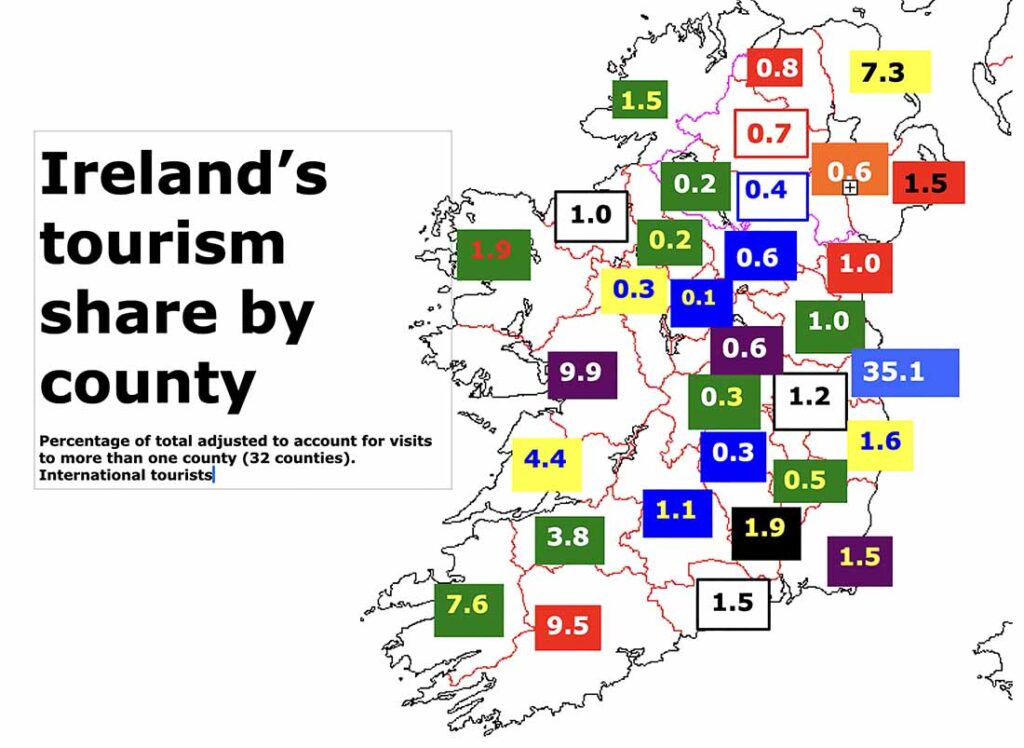
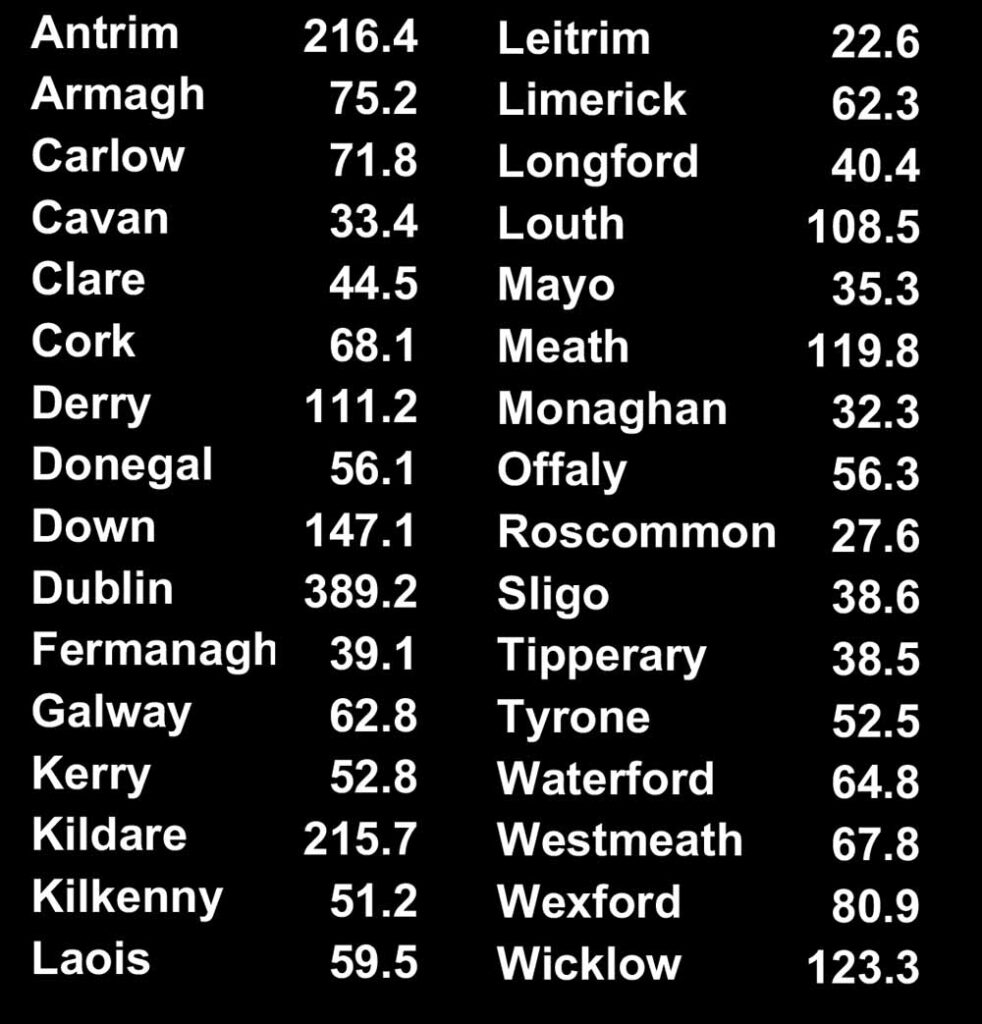
Ireland’s County Carlow combines historic landmarks with serene landscapes, with the Carlow Castle ruins and the nearby Altamont Gardens offering a mix of medieval and botanical appeal. The Barrow Way provides scenic riverside walks, while the Brownshill Dolmen, a prehistoric portal tomb, adds ancient history. Carlow is Ireland’s second smallest county by size (896 square km) and third smallest by population (61,968). Population peaked at 86,228 in 1841 and reached its lowest point, 33,342 in 1961.In terms of hospitality, Carlow is Ireland’s 23rd most visited tourist county with around 68,000 international visitors per year.
Introduction – Adventure – Anthem – Archaeology – Attractions – Awards – Birdwatching – Camping – Castles – Churches – Contact list – Cycling – Dining – Equestrian – Festivals – Fishing – Folklore – Gardens – Golf – Graveyards – Happening – Haunted – Highest – Hiking – History – Holy Wells – Hotels – Hotels top 8 – Hunting & shooting – Instagrammable – Itineraries – Largest town – Luxury – MICE – Movies – Music – Name – New – Novelists – Off the beaten track – Poets – Pubs – Quotes – Random Facts – Restaurant Awards – Sacred Places – Saints – Songs – Spas – Sports – Sunsets – Sustainable – Things to do – Towns – Video – Villages – Walking – Wanderlist – Weddings – Wild swimming – Writers – 1837– 1846 – 1852 – 1909 – 1955 – 1980 –