- Saint Canice (Cainnech): October 11, c. 515–600: AghaboeOne of the “Twelve Apostles of Ireland,” Canice founded Aghaboe monastery, a major ecclesiastical center, before establishing Kilkenny’s monastery. Born in Derry, he studied at Clonard and worked with St. Columba in Scotland. His Life records miracles like calming storms. His feast is in the Martyrology of Donegal, and Aghaboe parish’s St. Canice’s Church and holy well are pilgrimage sites.
- Saint Fintan of Clonenagh: February 17, c. 6th century: Clonenagh (Mountrath)Known as the “father of Irish monasticism,” Fintan founded Clonenagh monastery, a renowned school that trained saints like St. Comgall. Born in Carlow, he studied under St. Columba and enforced a strict rule. His feast is in the Martyrology of Donegal, and Clonenagh parish’s church site near Mountrath honors him, with his holy well a pilgrimage destination.
- Saint Mochua (Cronan) of Timahoe: January 1, c. 6th century: TimahoeMochua, also called Cronan, founded Timahoe monastery, noted for its round tower. A disciple of St. Fintan, he was known for his ascetic life and miracles, including befriending animals. His feast is in the Martyrology of Oengus, and Timahoe parish’s St. Mochua’s Church preserves his legacy, reflecting Laois’s monastic prominence.
- Saint Colman Mac O’Laoighse: May 15, c. 6th century: StradballyColman, patron of the O’Laoighse (Leix) tribe, founded a church at Stradbally, possibly Oughaval. His feast is in the Martyrology of Donegal, and he is venerated for his missionary work among his kin. Stradbally parish’s early Christian sites, including Oughaval’s church ruins, honor him, tying Laois to its tribal heritage.
- Saint Laserian (Molaise): April 18, c. 6th–7th century: Aghaboe (historically linked)Laserian, primarily associated with Leighlin, Carlow, served as abbot of Aghaboe before becoming bishop. He advocated for the Roman Easter at the Synod of Mag Lene (630). His feast is in the Martyrology of Donegal, and Aghaboe parish’s connection reflects Laois’s role in Leinster’s ecclesiastical debates.
- Saint Munnu (Fintan Munnu): October 21, c. 6th–7th century: Clonenagh (early associations)Munnu, a disciple of St. Columba, trained at Clonenagh before founding Taghmon, Wexford. Known for his asceticism and opposition to the Roman Easter, his feast is in the Martyrology of Donegal. Clonenagh parish’s ties to Munnu highlight Laois’s role as a training ground for missionaries.
- Saint Aengus the Culdee: March 11, c. 8th–9th century: Dysartenos (Portlaoise)Aengus, a hermit and scholar, lived at Dysartenos near Portlaoise, where he composed the Félire Óengusso, a calendar of saints. Known for his piety, he later joined Clonenagh. His feast is in the Martyrology of Donegal, and Dysartenos’s parish church site honors him, reflecting Laois’s literary monastic tradition.
- Saint Columba of Terryglass: December 12, c. 6th century: Clonenagh (early training)Columba, one of the “Twelve Apostles of Ireland,” trained at Clonenagh under St. Fintan before founding Terryglass, Tipperary. Known for his missionary work, his feast is in the Martyrology of Donegal. Clonenagh parish’s association underscores Laois’s role in educating early saints.
- Saint Aodh of Sleaty (Sleibhte), in the barony of Slievemargy, Co. Laois, was a historically credible early Irish saint with strong ties to St. Patrick. Recorded as an anchorite at his death in 700, later martyrologies and sources like Muirchú’s Life of Patrick style him a bishop of Sleaty, who commissioned Muirchú’s work. Aodh reportedly presented his testament to Armagh’s abbot Seghin (†688), granting his Leinster church to Armagh “till Doom,” an act interpreted as promoting Roman practices, acknowledging Armagh’s adoption of them, or asserting independence from Brigid’s Leinster paruchia. He also endorsed the Law of Adomnán alongside other dignitaries. His cult may have spread to nearby sites like Killerrig in Co. Carlow, where another Aodh was patron. His feast day is 7 February, and his genealogy links him to the Uí Bhairrche of north Carlow through his father Brocin.
- Saint Molua (Lugaid): August 4, c. 6th century: Kyle (Borris-in-Ossory)Molua founded a monastery at Kyle, near Borris-in-Ossory, before establishing Clonfert-Mulloe, Tipperary. Known for his gentle rule and miracles, his feast is in the Martyrology of Oengus. Kyle parish’s church site and holy well preserve his legacy, linking Laois to Munster’s monastic network.
- Saint Fiacra: August 30, c. 7th century: Portlaoise (historically linked)Fiacra, born in Laois, founded a monastery at Meaux, France, becoming patron of gardeners. Tradition links him to Portlaoise through early missionary work. His feast is in the Martyrology of Donegal, and Portlaoise parish’s early sites reflect his European influence, tying Laois to global monasticism.
- Saint Gobban: March 23, c. 6th century: Killeshin, Gobban, an obscure saint, founded a church at Killeshin, near Carlow, but within Laois’s historical monastic network. His feast is in the Martyrology of Donegal, and Killeshin’s Romanesque church doorway preserves his legacy, reflecting Laois’s artistic monastic heritage.
- Saint Sincheall: March 26, c. 6th century: CoolbanagherSincheall, an obscure saint, is linked to Coolbanagher, where he may have founded a church. His feast is in the Martyrology of Oengus, but details are sparse. Coolbanagher parish’s early Christian site honors him, underscoring Laois’s tradition of local saints tied to small monastic communities.
Saints
Antrim – Armagh – Carlow – Cavan – Clare – Cork – Derry – Donegal – Down – Dublin – Fermanagh – Galway – Kerry – Kildare – Kilkenny – Laois – Leitrim – Limerick – Longford – Louth – Mayo – Meath – Monaghan – Offaly – Roscommon – Sligo – Tipperary – Tyrone – Waterford – Westmeath – Wexford – Wicklow
Sacred Places
Antrim – Armagh – Carlow – Cavan – Clare – Cork – Derry – Donegal – Down – Dublin – Fermanagh – Galway – Kerry – Kildare – Kilkenny – Laois – Leitrim – Limerick – Longford – Louth – Mayo – Meath – Monaghan – Offaly – Roscommon – Sligo – Tipperary – Tyrone – Waterford – Westmeath – Wexford – Wicklow
Holy Wells
Antrim – Armagh – Carlow – Cavan – Clare – Cork – Derry – Donegal – Down – Dublin – Fermanagh – Galway – Kerry – Kildare – Kilkenny – Laois – Leitrim – Limerick – Longford – Louth – Mayo – Meath – Monaghan – Offaly – Roscommon – Sligo – Tipperary – Tyrone – Waterford – Westmeath – Wexford – Wicklow
County Laois:
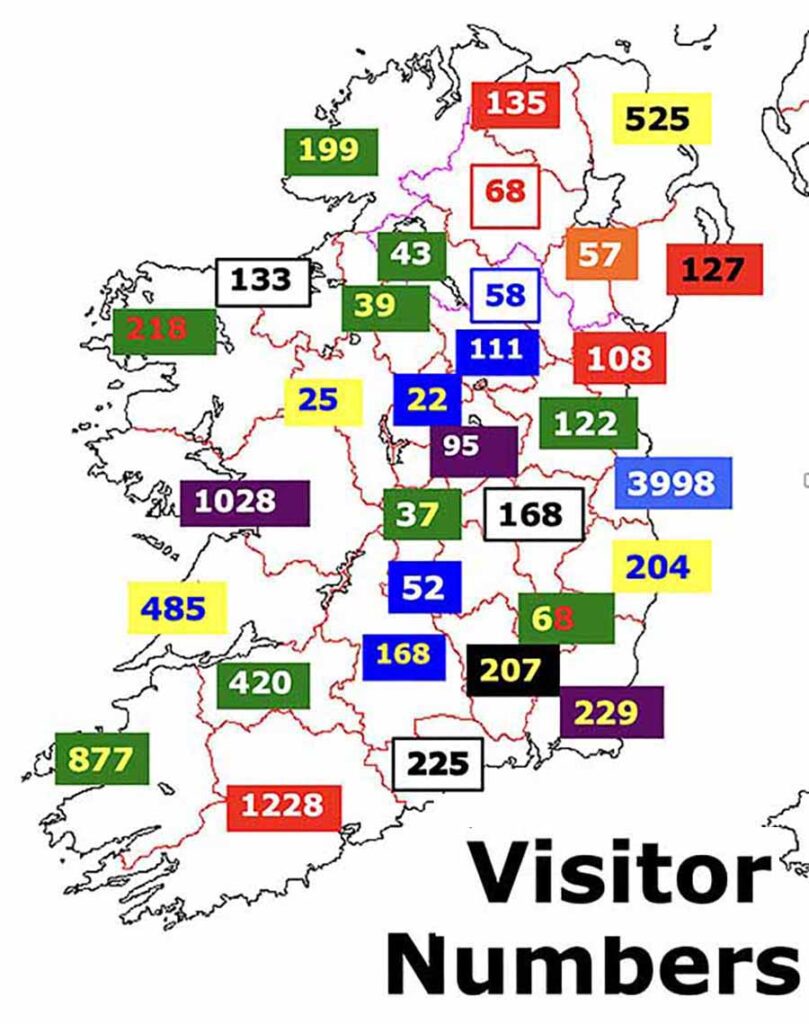
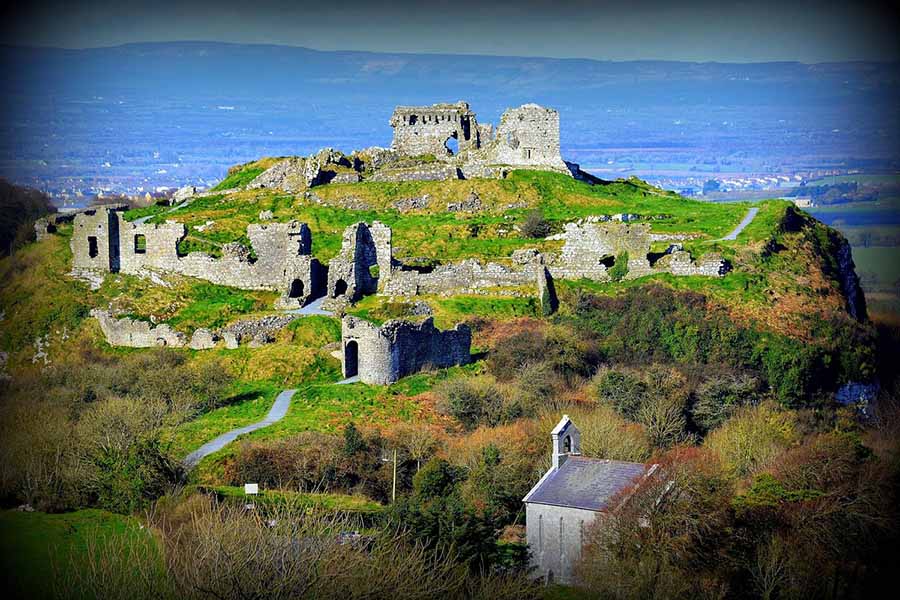
Ireland’s county Laois offers a serene blend of historic sites and natural landscapes, with the Rock of Dunamase providing panoramic views from its ancient castle ruins. Emo Court’s elegant Georgian mansion and gardens offer a peaceful retreat, while the Slieve Bloom Mountains provide hiking trails through rolling hills. Laois is Ireland’s ninth smallest county by size (1,719 square km) and tenth smallest by population (91,877). Population peaked at 153,930 in 1841 and reached its lowest point, 44,595 in 1966. In terms of hospitality, Laois is Ireland’s 27th most visited tourist county with around 52,000 international visitors per year.
Introduction – Adventure – Anthem – Archaeology – Attractions – Awards – Birdwatching – Camping – Castles – Churches – Contact list – Cycling – Dining – Equestrian – Festivals – Fishing – Folklore – Gardens – Golf – Graveyards – Happening – Haunted – Highest – Hiking – History – Holy Wells – Hotels – Hotels top 8 – Hunting & shooting – Instagrammable – Itineraries – Largest town – Luxury – MICE – Movies – Music – Name – New – Novelists – Off the beaten track – Poets – Pubs – Quotes – Random Facts – Restaurant Awards – Sacred Places – Saints – Songs – Spas – Sports – Sunsets – Sustainable – Things to do – Towns – Video – Villages – Walking – Wanderlist – Weddings – Wild swimming – Writers – 1837 – 1846 – 1852 – 1909 – 1955 – 1980 –