County Armagh, known as the ecclesiastical capital of Ireland, is rich in spiritual heritage, with holy wells that blend pre-Christian and Christian traditions.
These wells, often associated with local saints and healing rituals, were historically focal points for community devotion, particularly on pattern days (feast days of patron saints). While some wells remain in use, others are obscure or neglected, and pattern days may no longer be actively observed. NI Sites and Monuments Record (NISMR), lists 187 holy wells across the jurisdiction of the six counties.
- Saint Moninna’s Well (Tobar Bláthnaid/St. Blinne’s Well), Killeavy: Pattern day: July 6 (Saint Moninna’s feast day), historically observed with pilgrimages. Located on Slieve Gullion’s southern slopes near Killeavy, this well is dedicated to Saint Moninna (also known as Blinne or Bláthnaid), a 5th-century saint of royal descent. Pilgrims would complete rounds at her grave in Killeavy churchyard before ascending to the well, believed to cure ailments and offer spiritual blessings. The mountaintop setting offers stunning views of the Ring of Gullion. Slieve Gullion, near Killeavy, Co. Armagh.
- Saint Mochua’s Well, Derrynoose: Pattern day: August 3 (Saint Mochua’s feast day), though active observance may have declined. Situated in Derrynoose, this well is linked to Saint Mochua, a local saint associated with healing. Pilgrims historically performed rounds and left votive offerings like rags or coins, believing the water could cure physical and spiritual ailments. The well’s rural setting and connection to early Christian practices make it a hidden gem. Derrynoose, Co. Armagh.
- Saint Patrick’s Well, Armagh City: Pattern day: March 17 (Saint Patrick’s Day), likely a key date for historical visits. Near Armagh’s Saint Patrick’s Cathedrals, this well is tied to Saint Patrick, who founded his main church in Armagh in 445 AD. Legend says he blessed the well for baptisms, endowing it with curative powers, particularly for eye ailments. Its urban proximity contrasts with its spiritual significance, though it’s less visited today. Armagh City, near Navan Fort.
- Tobar na Súl, Near Crossmaglen: Pattern day: Unknown, possibly linked to summer festivals like Lughnasa (August 1). Known as the “Eye Well,” this well near Crossmaglen was famed for curing eye-related ailments, a common attribute of holy wells. Pilgrims likely performed sunwise circumambulations (deiseal) and left clooties (rags) on nearby trees, believing ailments would fade as the rags decayed. Its remote location keeps it off the tourist radar. Near Crossmaglen, Co. Armagh.
- Saint Brigid’s Well, Near Loughgall: Pattern day: February 1 (Saint Brigid’s Day), historically significant but possibly inactive now. Dedicated to Saint Brigid, this well in a quiet rural area near Loughgall was used for healing headaches and fertility issues. Pilgrims tied ribbons or rosaries to nearby trees, following traditional rituals. The well’s association with Brigid’s nurturing qualities adds to its spiritual allure, though it’s now lesser-known. Near Loughgall, Co. Armagh.
- Tobar na nGealt, Near Portadown: Pattern day: Unknown, possibly tied to local saint’s days or summer gatherings. Known as the “Well of the Insane,” this well near Portadown was believed to cure mental illnesses, a specialized healing attribute. Pilgrims performed rounds and left offerings, reflecting ancient beliefs in the well’s connection to the Otherworld. Its obscurity and rural setting make it a hidden treasure. Near Portadown, Co. Armagh.
- Saint Colman’s Well, Near Lurgan: Pattern day: June 7 (Saint Colman’s Day), though records of active patterns are scarce. Linked to Saint Colman, this well near Lurgan was historically visited for healing wounds or joint pain. Pilgrims would circumambulate the well, reciting prayers, and use its water for topical application or drinking. The well’s quiet location and early Christian ties make it a subtle but significant site. Near Lurgan, Co. Armagh.
- Tobar na Baiste, Near Tandragee: Pattern day: June 24 (Saint John the Baptist’s Day), likely a historical focus. Known as the “Well of Baptism,” this well near Tandragee was used for early Christian baptisms and believed to offer spiritual purification. Its waters were also thought to aid children’s ailments. The well’s rural setting and lack of modern signage keep it largely undiscovered. Near Tandragee,
- Saint Ciaran’s Well, Near Markethill: Pattern day: September 9 (Saint Ciaran’s Day), though specific pattern observances may have faded. Dedicated to Saint Ciaran, a 6th-century missionary, this well near Markethill was believed to cure ailments like stomach issues or fatigue. Pilgrims historically performed rounds and left votive offerings, such as coins or cloths, on nearby bushes. The well’s tranquil, rural setting adds to its spiritual ambiance. Near Markethill, Co. Armagh.
- Tobar na Plaighe, Near Newry: Pattern day: Unknown, possibly linked to plague-related rituals or local saint’s days. Known as the “Well of the Plague,” this well near Newry was historically visited during times of disease for protection or healing. Its waters were used in rituals involving prayers and offerings, reflecting its role as a community gathering point during crises. The well remains obscure due to its rural location. Near Newry, Co. Armagh.
- Saint Jarlath’s Well, Near Moy: Pattern day: June 6 (Saint Jarlath’s Day), though active pilgrimages are likely rare today. Dedicated to Saint Jarlath, a lesser-known Irish saint, this well near Moy was used for general healing and spiritual blessings. Pilgrims would perform sunwise rounds and leave small tokens like medals or ribbons. Its quiet, pastoral setting makes it a hidden gem of Armagh’s Christian heritage. Near Moy, Co. Armagh.
- Holy Well, Lisnadill: Pattern day: Unknown, possibly aligned with local traditions or summer festivals. Located in Lisnadill, this well is a simple spring with a history of local veneration, likely tied to early Christian or pre-Christian rituals. Its waters were used for cures, particularly for skin ailments, with pilgrims leaving clooties on nearby trees. The well’s obscurity and rural charm preserve its sacred character. Lisnadill, Co. Armagh.
Holy Wells
Antrim – Armagh – Carlow – Cavan – Clare – Cork – Derry – Donegal – Down – Dublin – Fermanagh – Galway – Kerry – Kildare – Kilkenny – Laois – Leitrim – Limerick – Longford – Louth – Mayo – Meath – Monaghan – Offaly – Roscommon – Sligo – Tipperary – Tyrone – Waterford – Westmeath – Wexford – Wicklow
Sacred Places
Antrim – Armagh – Carlow – Cavan – Clare – Cork – Derry – Donegal – Down – Dublin – Fermanagh – Galway – Kerry – Kildare – Kilkenny – Laois – Leitrim – Limerick – Longford – Louth – Mayo – Meath – Monaghan – Offaly – Roscommon – Sligo – Tipperary – Tyrone – Waterford – Westmeath – Wexford – Wicklow
County Armagh:
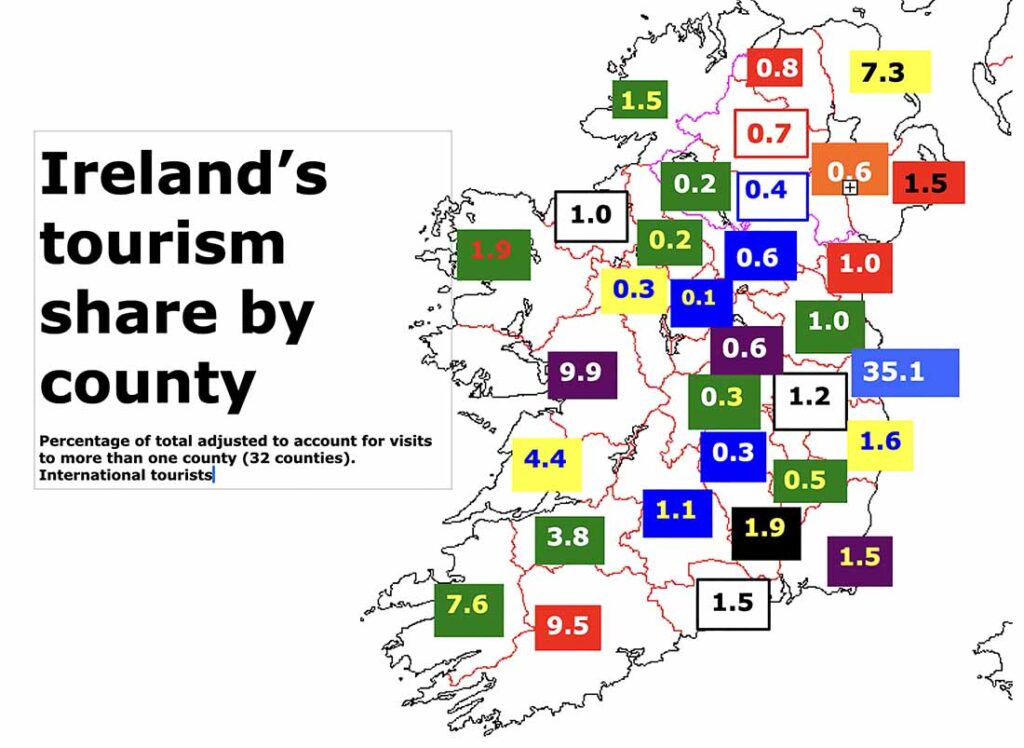
Ireland’s County Armagh is steeped in history and natural beauty, with the Navan Fort, an ancient ceremonial site, offering archaeological intrigue. The Armagh Observatory and Planetarium provide stargazing opportunities, while the city’s two cathedrals reflect its ecclesiastical heritage. Other attractions include the nearby Slieve Gullion Forest Park with its hiking trails and panoramic views. Armagh is Ireland’s fifth smallest county by size (1,253 square km) and tenth largest by population (194,394). Population peaked at 232,393 in 1841 and reached its lowest point, 108,815, in 1937. In terms of hospitality, Armagh is Ireland’s 26th most visited tourist county with around 57,000 international visitors per year.
Introduction – Adventure – Anthem – Archaeology – Attractions – Awards – Birdwatching – Camping – Castles – Churches – Contact list – Cycling – Dining – Equestrian – Festivals – Fishing – Folklore – Gardens – Golf – Graveyards – Happening – Haunted – Highest – Hiking – History – Holy Wells – Hotels – Hotels top 8 – Hunting & shooting – Instagrammable – Itineraries – Largest town – Luxury – MICE – Movies – Music – New – Name – Novelists – Off the beaten track – Poets – Pubs – Quotes – Random Facts – Restaurant Awards – Sacred Places – Saints – Songs – Spas – Sports – Sunsets – Sustainable – Things to do – Towns – Video – Villages – Walking – Wanderlist – Weddings – Wild swimming – Writers – 1837– 1846 – 1852 – 1909 – 1955 – 1980 –