- Cathedral of the Immaculate Conception, Sligo Town.: Designed by George Goldie and completed in 1874, this Romanesque Catholic cathedral features a 200-foot tower and intricate mosaics. Its construction was funded by local subscriptions post-Emancipation. It is located on Temple Street.
- Saint John’s Cathedral, Sligo Town.: Built in 1730 and remodelled in 1812 by Richard Cassels, this Church of Ireland cathedral incorporates Gothic Revival elements. Its interior includes a 17th-century oak pulpit from an earlier church. It stands on John Street.
- Saint Anne’s Church, Cranmore.: Constructed in 1826, with no recorded architect, this Church of Ireland church features a simple Georgian design with a square tower. Its graveyard contains 18th-century headstones. It is situated on Cranmore Road.
- Holy Cross Friary, Sligo Town.: Designed by James Joseph McCarthy in 1848, this Gothic Revival Dominican church replaced a 13th-century friary. Its pointed arches and stained glass reflect Catholic revivalism. It is found on High Street.
- Saint Joseph’s Church, Ballytivnan.: Built in 1880 by Patrick Kilgallen, this Gothic Revival Catholic church features a tall spire and local limestone construction. Its interior includes a carved stone altar. It is located on Ballytivnan Road.
- Saint Mary’s Church, Enniscrone.: Completed in 1850, with no documented architect, this Catholic church showcases a cruciform layout and modest belfry. It serves a coastal parish with 19th-century stained glass. It stands on Main Street.
- Saint Patrick’s Church, Coolaney.: Designed by John Benson in 1835, this Catholic church blends Gothic and classical styles with a small tower. Its construction reflected the growing Catholic presence. It is situated on Rockfield Road.
- Saint Molaise’s Church, Grange.: Built in 1860, with no known architect, this Catholic church features a simple Gothic design and a bell tower added in 1900. It serves a rural congregation. It is found on Church Road.
- Church of the Assumption, Collooney.: Constructed in 1843 by Thomas Cobden, this Gothic Revival Catholic church includes pointed windows and a modest spire. Its interior features a wooden ceiling. It is located on Main Street.
- Saint Columba’s Church, Drumcliffe: Rebuilt in 1809 on a 6th-century monastic site, with no recorded architect, this Church of Ireland church features a square tower. Its graveyard includes W.B. Yeats’ tomb. It is situated on the N15 road.
Churches
Antrim – Armagh – Carlow – Cavan – Clare – Cork – Derry – Donegal – Down – Dublin – Fermanagh – Galway – Kerry – Kildare – Kilkenny – Laois – Leitrim – Limerick – Longford – Louth – Mayo – Meath – Monaghan – Offaly – Roscommon – Sligo – Tipperary – Tyrone – Waterford – Westmeath – Wexford – Wicklow
Holy Wells
Antrim – Armagh – Carlow – Cavan – Clare – Cork – Derry – Donegal – Down – Dublin – Fermanagh – Galway – Kerry – Kildare – Kilkenny – Laois – Leitrim – Limerick – Longford – Louth – Mayo – Meath – Monaghan – Offaly – Roscommon – Sligo – Tipperary – Tyrone – Waterford – Westmeath – Wexford – Wicklow
Sacred Places
Antrim – Armagh – Carlow – Cavan – Clare – Cork – Derry – Donegal – Down – Dublin – Fermanagh – Galway – Kerry – Kildare – Kilkenny – Laois – Leitrim – Limerick – Longford – Louth – Mayo – Meath – Monaghan – Offaly – Roscommon – Sligo – Tipperary – Tyrone – Waterford – Westmeath – Wexford – Wicklow
Saints
Antrim – Armagh – Carlow – Cavan – Clare – Cork – Derry – Donegal – Down – Dublin – Fermanagh – Galway – Kerry – Kildare – Kilkenny – Laois – Leitrim – Limerick – Longford – Louth – Mayo – Meath – Monaghan – Offaly – Roscommon – Sligo – Tipperary – Tyrone – Waterford – Westmeath – Wexford – Wicklow
County Sligo:
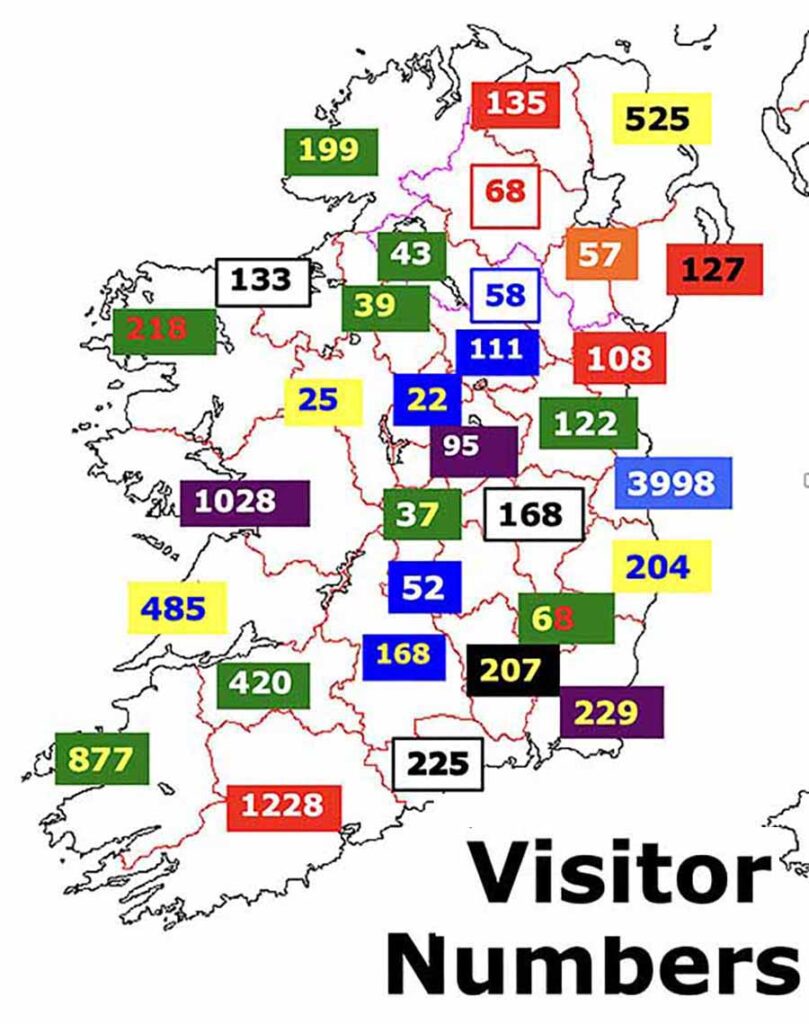
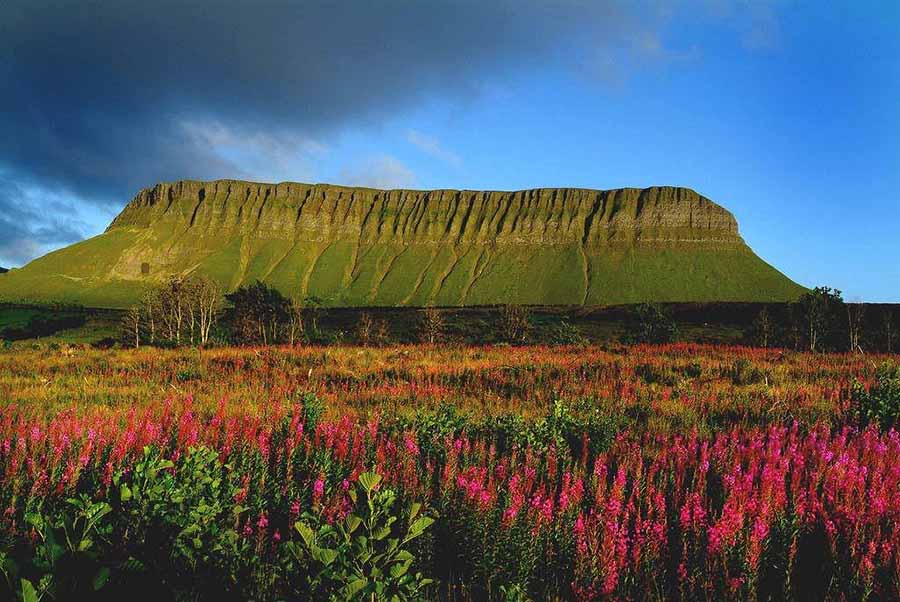
Ireland’s county Sligo is renowned for its poetic heritage and coastal scenery, with the Carrowmore Megalithic Cemetery offering one of Europe’s oldest prehistoric sites. The Benbulben mountain provides striking hiking trails, while Strandhill’s beaches are ideal for surfing. Other attractions include the historic Lissadell House and its gardens. Sligo is Ireland’s 22nd largest county by size (1,796 square km) and seventh smallest by population (70,198). Population peaked at 180,886 in 1841 and reached its lowest point, 50,275 in 1971. In terms of hospitality, Sligo is Ireland’s 17th most visited tourist county with around 133,000 international visitors per year.
Introduction – Adventure – Anthem – Archaeology – Attractions – Awards – Birdwatching – Camping – Castles – Churches – Contact list – Cycling – Dining – Equestrian – Festivals – Fishing – Folklore – Gardens – Golf – Graveyards – Happening – Haunted – Highest – Hiking – History – Holy Wells – Hotels – Hotels top 8 – Hunting & shooting – Instagrammable – Itineraries – Largest town – Luxury – MICE – Movies – Music – Name – New – Novelists – Off the beaten track – Poets – Pubs – Quotes – Random Facts – Restaurant Awards – Sacred Places – Saints – Songs – Spas – Sports – Sunsets – Sustainable – Things to do – Towns – Video – Villages – Walking – Wanderlist – Weddings – Wild swimming – Writers – 1837 – 1846– 1852 – 1909 – 1955 – 1980 –