- Saint Brigid of Kildare: February 1, c. 451–525: Bride Street (St. Brigid’s Church), KilbrideOne of Ireland’s three patron saints, Brigid founded a convent in Kildare but is linked to Dublin through churches dedicated to her, notably St. Brigid’s on Bride Street. Known for her generosity and miracles, such as weaving a cross from rushes, her cult spread widely. Tradition claims she is buried in Downpatrick with St. Patrick. Her feast is in the Martyrology of Donegal, and Dublin’s parishes honor her national significance.
- Saint Kevin (Coemgen): June 3, c. 498–618: Glendalough (historically linked to Dublin Archdiocese)Kevin founded the monastic settlement at Glendalough, now in Wicklow but historically tied to Dublin’s ecclesiastical jurisdiction. A hermit and abbot, he lived ascetically in a cave, known as St. Kevin’s Bed. His Life records miracles, like a blackbird nesting in his hand. His feast is in the Martyrology of Donegal, and Glendalough’s cathedral and round tower are major pilgrimage sites.
- Saint Laurence O’Toole (Lorcán Ua Tuathail): November 14, 1128–1180: Dublin City (Christ Church Cathedral, St. Laurence O’Toole’s Church)Archbishop of Dublin from 1162, Laurence reformed the church, mediated during the Norman invasion, and supported the poor. Born in Kildare, he was educated at Glendalough. Canonized in 1225, he is Dublin’s patron saint. His heart is a relic at Christ Church Cathedral. His feast is in the Martyrology of Donegal, and parishes like St. Laurence O’Toole’s in Baldoyle honor him.
- Saint Mobhí (Berchán): October 12, c. 6th century: GlasnevinMobhí, one of the “Twelve Apostles of Ireland,” founded a monastery at Glasnevin, where he taught St. Columba. Known as “Berchán of the Prophecy,” he predicted his monastery’s dispersal due to plague. His feast is in the Martyrology of Oengus, and Glasnevin parish, with its holy well, preserves his legacy, reflecting Dublin’s early monastic role.
- Saint Canice (Cainnech): October 11, c. 515–600: FinglasA member of the “Twelve Apostles of Ireland,” Canice founded a church at Finglas before establishing Aghaboe in Laois. Trained at Clonard, he worked with St. Columba in Scotland. His Life records miracles like calming storms. His feast is in the Martyrology of Donegal, and Finglas parish’s St. Canice’s Church (Church of Ireland) honors him, tied to Dublin’s monastic network.
- Saint Maighneann: December 18, c. 6th century: KilmainhamMaighneann, an obscure saint, founded a church at Kilmainham, one of Dublin’s earliest Christian sites. His feast is in the Martyrology of Donegal, but little is known of his life. Kilmainham parish, now encompassing St. James’s Church, preserves his memory, reflecting Dublin’s dense network of local saints linked to pre-Norman Christianity.
- Saint Ailbe of Emly: September 12, c. 5th–6th century: Clondalkin (historically linked)Ailbe, a pre-Patrician saint, is primarily associated with Emly, Tipperary, but tradition links him to Clondalkin through missionary work in Dublin’s monastic network. Known as Munster’s patron, he baptized St. David of Wales. His feast is in the Martyrology of Oengus, and Clondalkin’s round tower and church site reflect his influence.
- Saint Doulagh: November 17, c. 6th century: Balgriffin (St. Doulagh’s Church)Doulagh, a hermit, founded a church at Balgriffin, north Dublin, now St. Doulagh’s Church, one of Ireland’s oldest stone churches. His holy well and octagonal baptistery are unique. His feast is in local traditions, and his ascetic life is celebrated in Balgriffin parish, reflecting Dublin’s early eremitical tradition.
- Saint Brigid of Faughart: January 9, c. 6th century: Dublin City (shared veneration)Distinct from Brigid of Kildare, this Brigid is mistakenly linked to Faughart, Louth, but venerated in Dublin through shared devotion to female saints named Brigid. Her feast is in the Martyrology of Donegal, and her influence in Dublin’s parishes, like Bride Street, reflects the city’s embrace of Brigid’s legacy, though her life is obscure.
- Saint Colman of Lusk: June 7, c. 6th century: LuskColman founded a monastery at Lusk, north Dublin, known for its round tower and medieval church. His feast is in the Martyrology of Oengus, and he is venerated for his missionary work in Fingal. Lusk parish’s St. Macculin’s Church (named for another local saint) preserves his legacy, reflecting Dublin’s rural monastic heritage.
- Saint Macculin (Mac Tail): June 7, c. 6th century: LuskMacculin, possibly identical to Colman of Lusk, is linked to Lusk parish, where he served as a bishop. His feast coincides with Colman’s, as noted in the Martyrology of Donegal. His work strengthened Lusk’s monastic community, and the parish’s church and round tower honor his contributions to Dublin’s early Christianity.
- Saint Congall: May 10, c. 516–602: Drimnagh (historically linked)Congall, primarily known for founding Bangor Abbey in Down, is linked to Dublin through Drimnagh, where he may have established a church. A member of the “Twelve Apostles of Ireland,” he trained St. Columbanus. His feast is in the Martyrology of Donegal, and Drimnagh’s parish reflects his influence in Dublin’s monastic network.
Saints
Antrim – Armagh – Carlow – Cavan – Clare – Cork – Derry – Donegal – Down – Dublin – Fermanagh – Galway – Kerry – Kildare – Kilkenny – Laois – Leitrim – Limerick – Longford – Louth – Mayo – Meath – Monaghan – Offaly – Roscommon – Sligo – Tipperary – Tyrone – Waterford – Westmeath – Wexford – Wicklow
Sacred Places
Antrim – Armagh – Carlow – Cavan – Clare – Cork – Derry – Donegal – Down – Dublin – Fermanagh – Galway – Kerry – Kildare – Kilkenny – Laois – Leitrim – Limerick – Longford – Louth – Mayo – Meath – Monaghan – Offaly – Roscommon – Sligo – Tipperary – Tyrone – Waterford – Westmeath – Wexford – Wicklow
Holy Wells
Antrim – Armagh – Carlow – Cavan – Clare – Cork – Derry – Donegal – Down – Dublin – Fermanagh – Galway – Kerry – Kildare – Kilkenny – Laois – Leitrim – Limerick – Longford – Louth – Mayo – Meath – Monaghan – Offaly – Roscommon – Sligo – Tipperary – Tyrone – Waterford – Westmeath – Wexford – Wicklow
County Dublin:
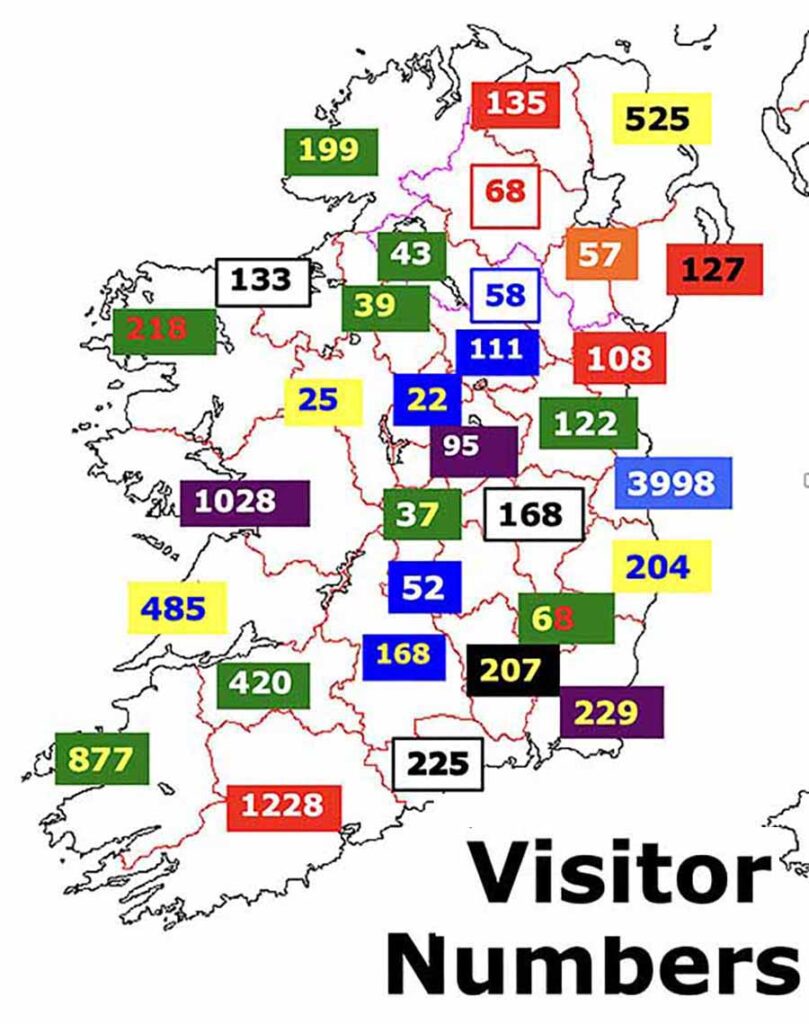
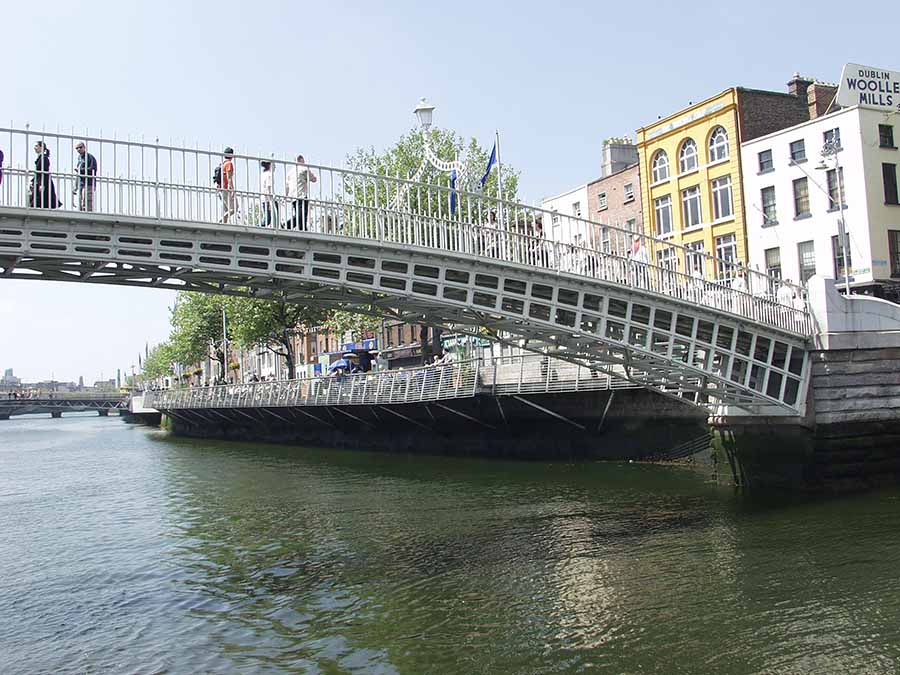
Ireland’s county Dublin combines cultural heritage with urban appeal, with Trinity College’s Book of Kells and Dublin Castle offering historical depth. The Guinness Storehouse provides a journey through Ireland’s iconic stout, while Phoenix Park’s vast green spaces are ideal for cycling. The River Liffey’s scenic walks and Kilmainham Gaol’s historical tours make Dublin a versatile destination for culture and history. Dublin is Ireland’s third smallest county by size (922 square km) and largest by population (1,458,154). Dublin is also Ireland’s most visited tourist county by a margin, with around four million international visitors per year. In terms of hospitality,
Introduction – Adventure – Anthem – Archaeology – Attractions – Awards – Birdwatching – Camping – Castles – Churches – Contact list – Cycling – Dining – Equestrian – Festivals – Fishing – Folklore – Gardens – Golf – Graveyards – Happening – Haunted – Highest – Hiking – History – Holy Wells – Hotels – Hotels top 8 – Hunting & shooting – Instagrammable – Itineraries – Largest town – Luxury – MICE – Movies – Music – New – Name – Novelists – Off the beaten track – Poets – Pubs – Quotes – Random Facts – Restaurant Awards – Sacred Places – Saints – Songs – Spas – Sports – Sunsets – Sustainable – Things to do – Towns – Video – Villages – Walking – Wanderlist – Weddings – Wild swimming – Writers – 1837 – 1846 – 1852 – 1909 – 1955 – 1980 –