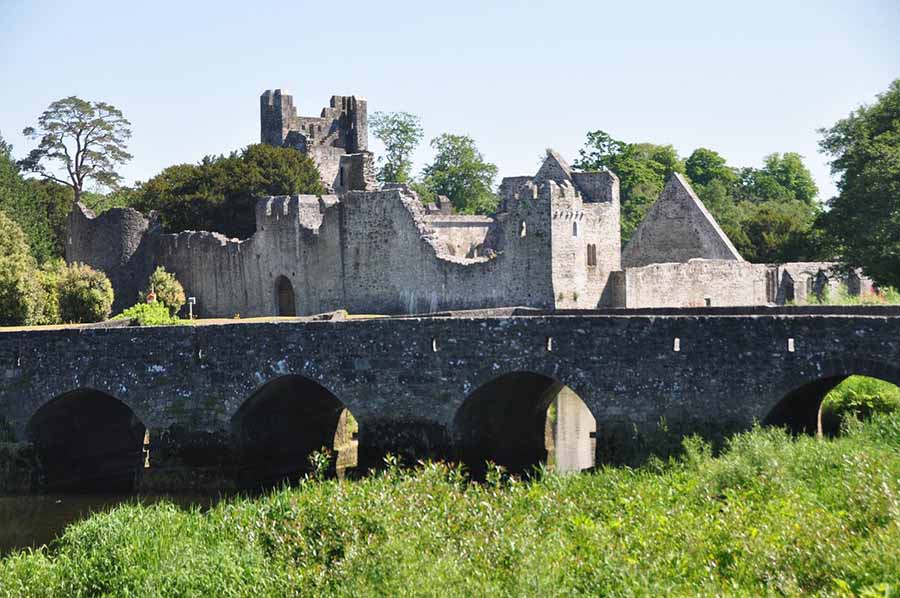
- Saint Munchin (Mainchín): January 2, c. 6th century: Limerick City (St. Munchin’s Church)Patron saint of Limerick, Munchin is traditionally considered the first bishop of the diocese. He founded a church on King’s Island, now St. Munchin’s (Church of Ireland). Little is known of his life, but his feast is in the Martyrology of Donegal. Limerick City’s parish venerates him, with his holy well near the church a pilgrimage site, reflecting the city’s early Christian roots.
- Saint Ita (Íde): January 15, c. 475–570: KilleedyKnown as the “Brigid of Munster,” Ita founded a convent at Killeedy, fostering saints like St. Brendan. Born in Waterford, she was renowned for her asceticism, visions, and miracles, including nurturing the infant Jesus in a vision. Her feast is in the Martyrology of Donegal, and Killeedy parish’s St. Ita’s Church and holy well are pilgrimage sites, highlighting Limerick’s female monastic tradition.
- Saint Nessan: July 25, c. 6th century: MungretNessan, a disciple of St. Patrick, founded Mungret monastery, a major center reputed to house 1,500 monks. Born in Cork, he is known for his ascetic life and missionary work. His feast is in the Martyrology of Oengus, and Mungret parish’s church ruins and holy well preserve his legacy, reflecting Limerick’s monastic prominence.
- Saint Molua (Lugaid): August 4, c. 6th century: Killaloe (historically linked)Molua founded a monastery at Killaloe, Clare, but is linked to Limerick through missionary work in the diocese’s border region. Known for his gentle rule and miracles, he also established Clonfert-Mulloe, Tipperary. His feast is in the Martyrology of Donegal, and Killaloe’s parish ties reflect Limerick’s shared monastic heritage with Clare.
- Saint Patrick: March 17, c. 385–461: Singland (Limerick City)Ireland’s primary patron saint, Patrick is linked to Limerick through tradition claiming he preached at Singland, baptizing converts in the Shannon. His Confession describes his missionary work. His feast is in the Martyrology of Donegal, and Limerick City’s St. Patrick’s Church honors him, reflecting his national significance.
- Saint Senan of Scattery Island: March 8, c. 488–544: ShanagoldenSenan, patron of Clare, founded churches in Limerick, including Shanagolden, before establishing Scattery Island’s monastery. His Life records miracles like banishing a monster. His feast is in the Martyrology of Donegal, and Shanagolden parish’s St. Senan’s Church and holy well tie Limerick to Clare’s monastic network.
- Saint Brigid of Kildare: February 1, c. 451–525: St. Brigid’s (Limerick City)One of Ireland’s three patron saints, Brigid’s cult spread to Limerick, where she is venerated in St. Brigid’s parish. Known for her generosity and miracles, like weaving a cross from rushes, her feast is in the Martyrology of Donegal. Limerick’s devotion reflects her national prominence, with her holy well in the city a pilgrimage site.
- Saint Colman of Templeshanbo: October 27, c. 6th century: AskeatonColman, primarily linked to Templeshanbo, Wexford, is associated with Askeaton through missionary work. His feast is in the Martyrology of Oengus, but details are sparse. Askeaton parish’s early Christian sites may honor him, reflecting Limerick’s connections to Leinster’s monastic tradition.
- Saint Moling: June 17, c. 614–697: Rathkeale (historically linked)Moling, known for St. Mullins, Carlow, is linked to Rathkeale through missionary activity in Munster. He abolished the Borumha cattle tribute and wrote the Book of Mulling. His feast is in the Martyrology of Donegal, and Rathkeale’s parish reflects Limerick’s ties to Leinster’s saints.
- Saint Cuan: October 1, c. 6th century: CroomCuan, an obscure saint, is linked to Croom, where he may have founded a church. His feast is in the Martyrology of Oengus, but his life is poorly documented. Croom parish’s early Christian site honors him, underscoring Limerick’s tradition of local saints tied to small monastic communities.
- Saint Ailbe of Emly: September 12, c. 5th–6th century: Emly (historically linked to Limerick Diocese)Ailbe, patron of Munster, founded Emly, Tipperary, but is linked to Limerick through the diocese’s early history. A pre-Patrician saint, he baptized St. David of Wales. His feast is in the Martyrology of Donegal, and Emly’s influence extends to Limerick parishes like Adare.
- Saint Odhrán: October 2, c. 6th century: Newcastle WestOdhrán, an obscure saint, is associated with Newcastle West, where he may have founded a church. His feast is in the Martyrology of Donegal, but details are limited. Newcastle West parish’s early Christian sites reflect his role, highlighting Limerick’s network of local monastic founders.
Saints
Antrim – Armagh – Carlow – Cavan – Clare – Cork – Derry – Donegal – Down – Dublin – Fermanagh – Galway – Kerry – Kildare – Kilkenny – Laois – Leitrim – Limerick – Longford – Louth – Mayo – Meath – Monaghan – Offaly – Roscommon – Sligo – Tipperary – Tyrone – Waterford – Westmeath – Wexford – Wicklow
Sacred Places
Antrim – Armagh – Carlow – Cavan – Clare – Cork – Derry – Donegal – Down – Dublin – Fermanagh – Galway – Kerry – Kildare – Kilkenny – Laois – Leitrim – Limerick – Longford – Louth – Mayo – Meath – Monaghan – Offaly – Roscommon – Sligo – Tipperary – Tyrone – Waterford – Westmeath – Wexford – Wicklow
Holy Wells
Antrim – Armagh – Carlow – Cavan – Clare – Cork – Derry – Donegal – Down – Dublin – Fermanagh – Galway – Kerry – Kildare – Kilkenny – Laois – Leitrim – Limerick – Longford – Louth – Mayo – Meath – Monaghan – Offaly – Roscommon – Sligo – Tipperary – Tyrone – Waterford – Westmeath – Wexford – Wicklow
County Limerick:
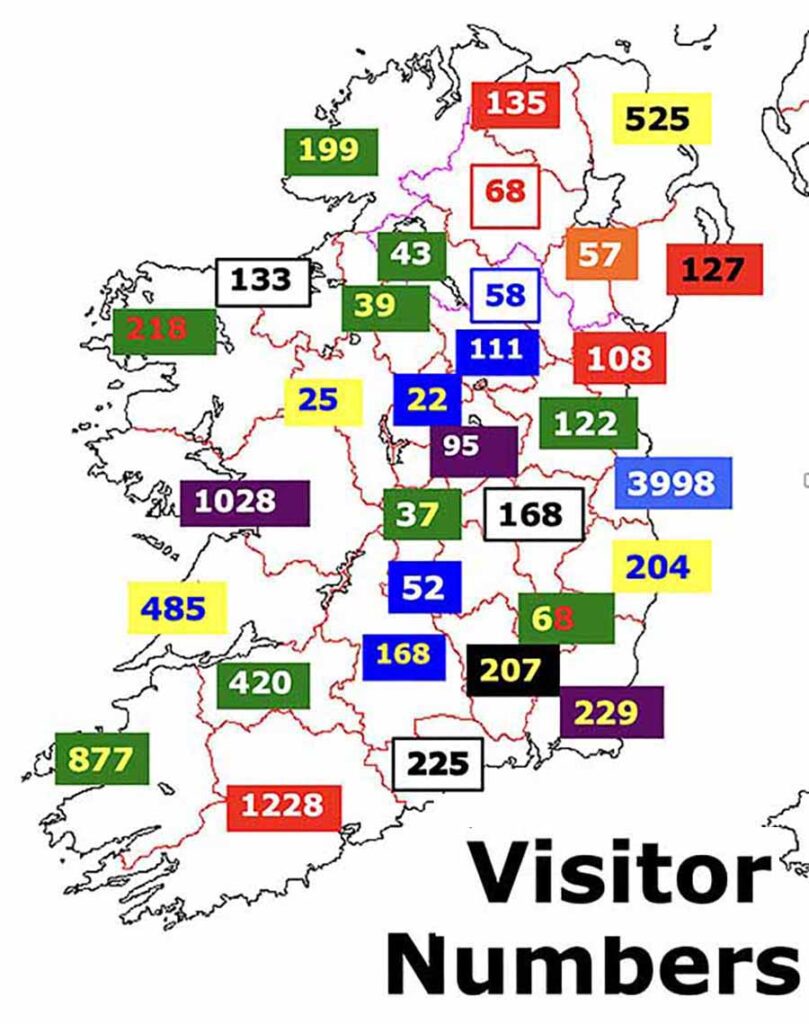
Ireland’s county Limerick combines historic landmarks with riverside charm, with Limerick City’s King John’s Castle offering insights into medieval history along the Shannon. The Hunt Museum showcases an eclectic art collection, while Adare’s thatched cottages and historic manor add picturesque appeal. Other attractions include the nearby Ballyhoura Mountains’ cycling trails. Limerick is Ireland’s tenth largest county by size (2,686 sq km), and ninth largest by population (209,536). Population peaked at 330,029 in 1841 and reached its lowest point, 133,339 in 1971. In terms of hospitality, Limerick is Ireland’s seventh most visited tourist county with around 420,000 international visitors per year.
Introduction – Adventure – Anthem – Archaeology – Attractions – Awards – Birdwatching – Camping – Castles – Churches – Contact list – Cycling – Dining – Equestrian – Festivals – Fishing – Folklore – Gardens – Golf – Graveyards – Happening – Haunted – Highest – Hiking – History – Holy Wells – Hotels – Hotels top 8 – Hunting & shooting – Instagrammable – Itineraries – Largest town – Luxury – MICE – Movies – Music – Name – New – Novelists – Off the beaten track – Poets – Pubs – Quotes – Random Facts – Restaurant Awards – Sacred Places – Saints – Songs – Spas – Sports – Sunsets – Sustainable – Things to do – Towns – Video – Villages – Walking – Wanderlist – Weddings – Wild swimming – Writers – 1837 – 1846 – 1852 – 1909 – 1955 – 1980 –