- Saint Peter’s Church, Drogheda: Built in 1884 by architects O’Neill & Byrne, this Gothic Revival Catholic church replaced an earlier structure. Its 200-foot spire dominates Drogheda’s skyline, and the interior houses a reliquary with the head of St Oliver Plunkett, martyred in 1681. It is located on West Street.
- Saint Nicholas’s Church, Ballymakenny: Designed by Thomas Cooley for Archbishop Richard Robinson, this 18th-century Gothic church was completed by Francis Johnston after Cooley’s death in 1784. Its limestone facade features the archiepiscopal insignia and Robinson’s arms. Situated north of Drogheda, it is now used by a Baptist group.
- Saint Patrick’s Pro-Cathedral, Dundalk: Constructed in 1842 by Thomas Duff, this Gothic Revival Catholic church features a high altar of Caen stone and Italian marble. Its spire, added later, reaches 180 feet. It served as the cathedral for the Archdiocese of Armagh until 1986. It stands on Roden Place.
- Saint Mary’s Church, Collon: Commissioned by John Foster and Designed by Rev. Daniel Augustus Beaufort in 1811, this Perpendicular Gothic church mirrors King’s College Chapel, Cambridge. Its open interior lacks pillars, with pews facing a central aisle. It is located at the southern approach to Collon village.
- Saint Joseph’s Church, Dundalk: Built in 1865 by J.J. McCarthy in Gothic Revival style, this Redemptorist church features a 200-foot tower and intricate stained glass. Its construction reflected the growing Catholic confidence post-Emancipation. It is situated on Anne Street.
- Saint Augustine’s Church, Drogheda: Designed by William Hague in 1878, this Catholic church combines Gothic and Romanesque elements. Its interior includes a marble altar and stained glass by Harry Clarke. Built for the Augustinian order, it is located on Shop Street.
- Monasterboice Monastic Site, near Drogheda: Founded by St Buite in the 5th century, this early Christian site includes a 9th-century round tower and two stone churches. Its high crosses, dating to the 10th century, feature biblical carvings. It is found off the M1 motorway.
- Saint Mary’s Abbey, Louth Village: Established in 1148 as a Cistercian monastery, this medieval church, with no recorded architect, features remnants of 13th-century Gothic arches. Abandoned after the Dissolution, its ruins reflect early monastic life. It is located in Louth village.
- Saint Mochta’s Church, Louth Village: Dating to the 13th century, this church, likely built by local craftsmen, replaced an earlier structure linked to St Mochta, a 5th-century disciple of St Patrick. Its simple stone design includes a pointed arch doorway. It stands near Louth Hall.
- Saint James’ Church, Termonfeckin: Rebuilt in the 19th century on a medieval site, this Church of Ireland building, with no documented architect, features a square tower and lancet windows. It serves a small rural congregation. It is located in Termonfeckin village.
Churches
Antrim – Armagh – Carlow – Cavan – Clare – Cork – Derry – Donegal – Down – Dublin – Fermanagh – Galway – Kerry – Kildare – Kilkenny – Laois – Leitrim – Limerick – Longford – Louth – Mayo – Meath – Monaghan – Offaly – Roscommon – Sligo – Tipperary – Tyrone – Waterford – Westmeath – Wexford – Wicklow
Holy Wells
Antrim – Armagh – Carlow – Cavan – Clare – Cork – Derry – Donegal – Down – Dublin – Fermanagh – Galway – Kerry – Kildare – Kilkenny – Laois – Leitrim – Limerick – Longford – Louth – Mayo – Meath – Monaghan – Offaly – Roscommon – Sligo – Tipperary – Tyrone – Waterford – Westmeath – Wexford – Wicklow
Sacred Places
Antrim – Armagh – Carlow – Cavan – Clare – Cork – Derry – Donegal – Down – Dublin – Fermanagh – Galway – Kerry – Kildare – Kilkenny – Laois – Leitrim – Limerick – Longford – Louth – Mayo – Meath – Monaghan – Offaly – Roscommon – Sligo – Tipperary – Tyrone – Waterford – Westmeath – Wexford – Wicklow
Saints
Antrim – Armagh – Carlow – Cavan – Clare – Cork – Derry – Donegal – Down – Dublin – Fermanagh – Galway – Kerry – Kildare – Kilkenny – Laois – Leitrim – Limerick – Longford – Louth – Mayo – Meath – Monaghan – Offaly – Roscommon – Sligo – Tipperary – Tyrone – Waterford – Westmeath – Wexford – Wicklow
County Louth:
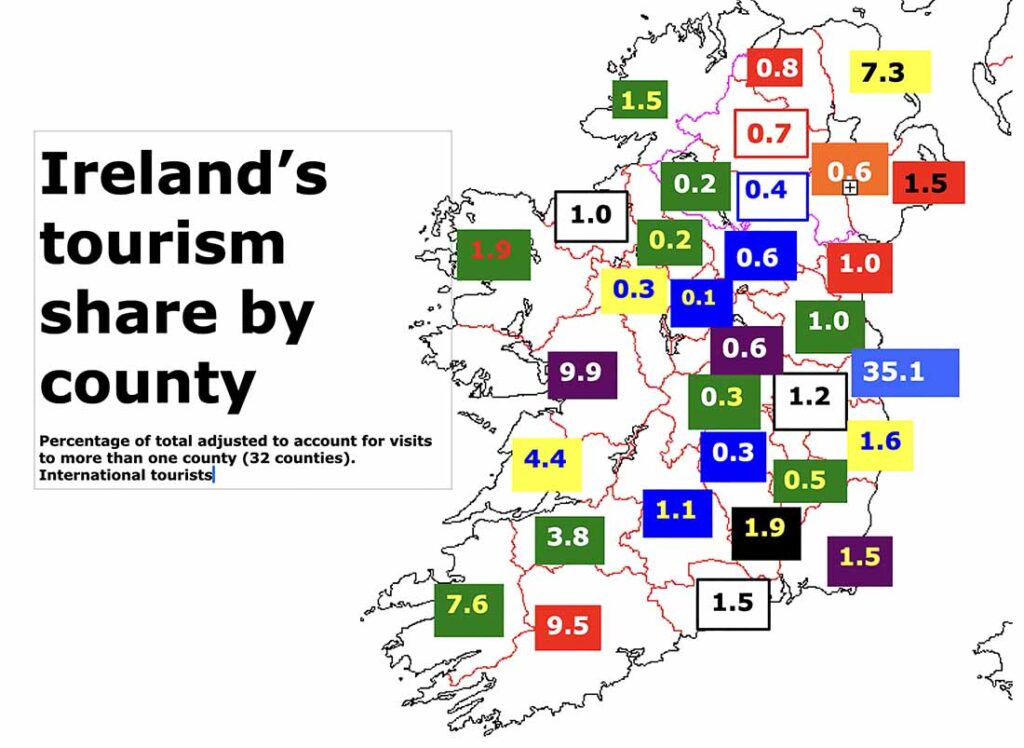
Ireland’s county Louth is a county of historic depth and coastal beauty, with Drogheda’s St Peter’s Church housing a historic shrine and the Boyne Valley offering ancient sites like Newgrange, a UNESCO-listed passage tomb just over the border in county Meath. Carlingford’s medieval streets and castle provide scenic walks, while Dundalk’s coastal paths add natural allure. Other attractions include the Cooley Peninsula’s hiking trails. Louth is Ireland’s smallest county by size (821 sq km) and 17th largest by population (139,703). Population peaked at 128,240 in 1841 and reached its lowest point, 63,665 in 1926. In terms of hospitality, Louth is Ireland’s 21st most visited tourist county with around 108,000 international visitors per year.
Introduction – Adventure – Anthem – Archaeology – Attractions – Awards – Birdwatching – Camping – Castles – Churches – Contact list – Cycling – Dining – Equestrian – Festivals – Fishing – Folklore – Gardens – Golf – Graveyards – Happening – Haunted – Highest – Hiking – History – Holy Wells – Hotels – Hotels top 8 – Hunting & shooting – Instagrammable – Itineraries – Largest town – Luxury – MICE – Movies – Music – Name – New – Novelists – Off the beaten track – Poets – Pubs – Quotes – Random Facts – Restaurant Awards – Sacred Places – Saints – Songs – Spas – Sports – Sunsets – Sustainable – Things to do – Towns – Video – Villages – Walking – Wanderlist – Weddings – Wild swimming – Writers – 1837 – 1846 – 1852 – 1909 – 1955 – 1980 –