- Saint Patrick: March 17, c. 385–461: Dundalk (St. Patrick’s Church)Ireland’s primary patron saint, Patrick is linked to Louth through his missionary work in Dundalk, where tradition claims he preached. His Confession describes his evangelization of Ireland. His feast is in the Martyrology of Donegal, and Dundalk’s St. Patrick’s Church, a prominent cathedral, honors him, reflecting Louth’s role in early Christianity.
- Saint Brigid of Faughart: Febraury 1, c. 6th century: Faughart (Dundalk) Mistakenly attributed to be the birthplace of Brigid of Kildare, Faughart’s parish, with its holy well and shrine, is a pilgrimage site.
- Saint Mochta: August 19, c. 5th–6th century: Louth VillageA disciple of St. Patrick, Mochta founded a monastery at Louth Village, a significant early Christian center. Born in Britain, he is credited with 300 monks under his rule. His feast is in the Martyrology of Oengus, and Louth parish’s St. Mochta’s Church preserves his legacy, with ruins marking the site’s importance.
- Saint Buite (Boice): December 7, c. 5th century: MonasterboiceBuite founded Monasterboice, renowned for its high crosses and round tower. Tradition claims he was blessed by St. Patrick and performed miracles, including raising the dead. His feast is in the Martyrology of Donegal, and Monasterboice’s parish, within Tenure, is a major pilgrimage site, reflecting Louth’s monastic heritage.
- Saint Oliver Plunkett: July 1, 1625–1681: Drogheda (St. Peter’s Church)Archbishop of Armagh, Plunkett was martyred in London for his faith during the Popish Plot. Born in Meath, he ministered in Drogheda, where his head is enshrined at St. Peter’s Church. Canonized in 1975, his feast is universal. Drogheda’s parish venerates him, with his shrine a pilgrimage destination.
- Saint Colman of Dromin: October 27, c. 6th century: DrominColman founded a church at Dromin, near Ardee. An obscure saint, his feast is in the Martyrology of Donegal, and he is venerated for his missionary work in Louth. Dromin parish’s St. Finian’s Church (named for another saint) reflects his legacy, underscoring Louth’s network of local monastic founders.
- Saint Finian of Clonard: December 12, c. 470–549: Dromin (historically linked)One of the “Twelve Apostles of Ireland,” Finian founded Clonard, Meath, but is linked to Dromin through early missionary activity. Known as the “Teacher of Irish Saints,” he mentored St. Columba. His feast is in the Martyrology of Donegal, and Dromin’s parish ties reflect Louth’s connection to Clonard’s school.
- Saint Malachy: November 3, 1094–1148: TermonfeckinArchbishop of Armagh, Malachy was born in Armagh but served as bishop in Louth, including Termonfeckin. He reformed the Irish Church, introduced Roman liturgy, and founded Mellifont Abbey. Canonized in 1190, his feast is in the Martyrology of Donegal. Termonfeckin’s parish honors his legacy, with Mellifont nearby.
- Saint Fursey: January 16, c. 597–650: Clogherhead (historically linked)Fursey, born in Connacht, evangelized in Louth before founding monasteries in East Anglia and France. Known for visions of the afterlife, his Vita influenced Dante. His feast is in the Martyrology of Donegal, and Clogherhead’s parish reflects his missionary work, tying Louth to European Christianity.
- Saint Cillian (Kilian): July 8, c. 640–689: Ardee (historically linked)Cillian, born in Louth, became a missionary in Germany, martyred at Würzburg with Colman and Totnan. Canonized, his feast is in the Martyrology of Donegal. Ardee’s parish, with early Christian sites, reflects his origins, connecting Louth to Europe’s missionary saints.
- Saint Laserian (Molaise): April 18, c. 6th–7th century: Carlingford (historically linked)Laserian, primarily linked to Leighlin, Carlow, is associated with Carlingford through missionary work in Louth’s border region. He advocated for the Roman Easter at the Synod of Mag Lene (630). His feast is in the Martyrology of Donegal, and Carlingford’s parish ties reflect Louth’s Leinster connections.
- Saint Fanchea: January 1, c. 6th century: Faughart (historically linked)Fanchea, sister of St. Enda of Aran, is linked to Faughart through her influence on female monasticism, possibly founding a convent. She converted Enda to monastic life. Her feast is in the Martyrology of Donegal, and Faughart’s parish, alongside Brigid’s shrine, honors her, reflecting Louth’s female saints.
Saints
Antrim – Armagh – Carlow – Cavan – Clare – Cork – Derry – Donegal – Down – Dublin – Fermanagh – Galway – Kerry – Kildare – Kilkenny – Laois – Leitrim – Limerick – Longford – Louth – Mayo – Meath – Monaghan – Offaly – Roscommon – Sligo – Tipperary – Tyrone – Waterford – Westmeath – Wexford – Wicklow
Sacred Places
Antrim – Armagh – Carlow – Cavan – Clare – Cork – Derry – Donegal – Down – Dublin – Fermanagh – Galway – Kerry – Kildare – Kilkenny – Laois – Leitrim – Limerick – Longford – Louth – Mayo – Meath – Monaghan – Offaly – Roscommon – Sligo – Tipperary – Tyrone – Waterford – Westmeath – Wexford – Wicklow
Holy Wells
Antrim – Armagh – Carlow – Cavan – Clare – Cork – Derry – Donegal – Down – Dublin – Fermanagh – Galway – Kerry – Kildare – Kilkenny – Laois – Leitrim – Limerick – Longford – Louth – Mayo – Meath – Monaghan – Offaly – Roscommon – Sligo – Tipperary – Tyrone – Waterford – Westmeath – Wexford – Wicklow
County Louth:
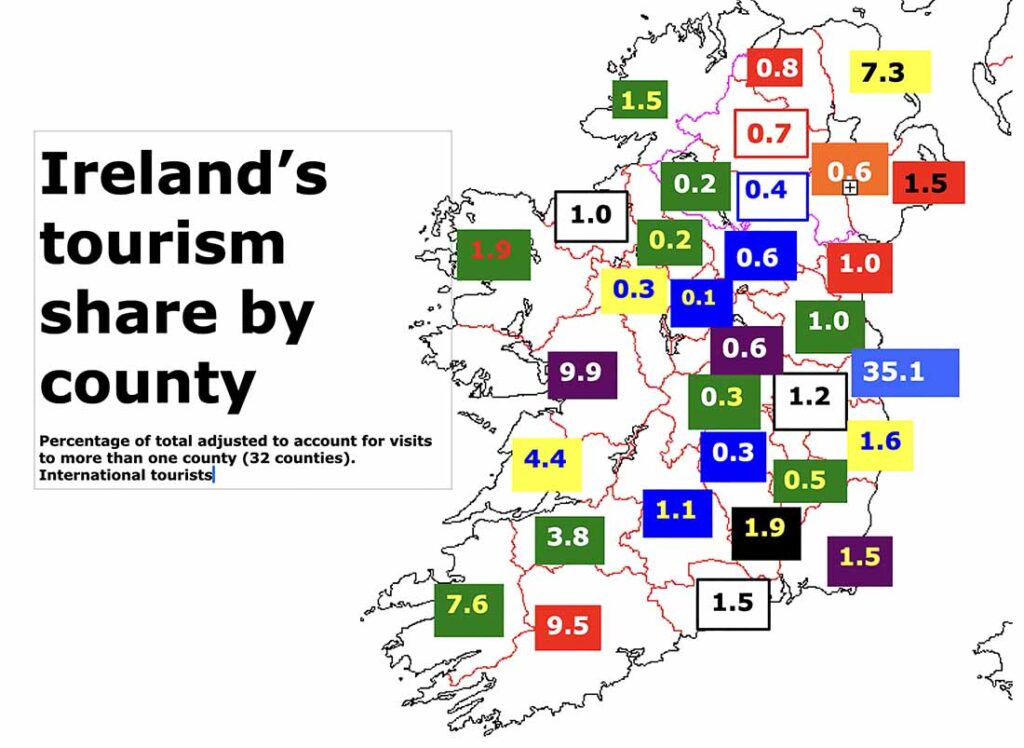
Ireland’s county Louth is a county of historic depth and coastal beauty, with Drogheda’s St Peter’s Church housing a historic shrine and the Boyne Valley offering ancient sites like Newgrange, a UNESCO-listed passage tomb just over the border in county Meath. Carlingford’s medieval streets and castle provide scenic walks, while Dundalk’s coastal paths add natural allure. Other attractions include the Cooley Peninsula’s hiking trails. Louth is Ireland’s smallest county by size (821 sq km) and 17th largest by population (139,703). Population peaked at 128,240 in 1841 and reached its lowest point, 63,665 in 1926. In terms of hospitality, Louth is Ireland’s 21st most visited tourist county with around 108,000 international visitors per year.
Introduction – Adventure – Anthem – Archaeology – Attractions – Awards – Birdwatching – Camping – Castles – Churches – Contact list – Cycling – Dining – Equestrian – Festivals – Fishing – Folklore – Gardens – Golf – Graveyards – Happening – Haunted – Highest – Hiking – History – Holy Wells – Hotels – Hotels top 8 – Hunting & shooting – Instagrammable – Itineraries – Largest town – Luxury – MICE – Movies – Music – Name – New – Novelists – Off the beaten track – Poets – Pubs – Quotes – Random Facts – Restaurant Awards – Sacred Places – Saints – Songs – Spas – Sports – Sunsets – Sustainable – Things to do – Towns – Video – Villages – Walking – Wanderlist – Weddings – Wild swimming – Writers – 1837 – 1846 – 1852 – 1909 – 1955 – 1980 –