- John Millington Synge: Lived in Inishmaan, Aran Islands, County Galway; born in Rathfarnham, County Dublin 1871–1909) Primarily known as a playwright (The Playboy of the Western World), Synge also wrote prose works, including The Aran Islands (1907), a semi-fictional travelogue with novelistic qualities, based on his time in Inishmaan. His stays in Galway’s Aran Islands, encouraged by W.B. Yeats, shaped his vivid depictions of rural Irish life and language, contributing to the Irish Literary Revival.
- Liam O’Flaherty: Born in Gort na gCappall, Inishmore, Aran Islands, County Galway 1896–1984) A major figure in Irish literature, O’Flaherty wrote novels such as The Informer (1925), which won the James Tait Black Memorial Prize, Famine (1937), and The Black Soul (1924). His works, often set in Galway’s Aran Islands or rural Ireland, explore human struggle, nature, and social injustice with a realist and modernist style. His Aran upbringing deeply influenced his raw, elemental storytelling.
- Máirtín Ó Cadhain: Born in An Cnocán Glas, Spiddal, County Galway; lived in Galway City 1906–1970) A leading Irish-language novelist, Ó Cadhain is best known for Cré na Cille (1949, The Churchyard Clay), a satirical novel set in a Connemara graveyard, considered a masterpiece of modern Irish literature. His works, written in the Galway Gaeltacht dialect, explore community dynamics and existential themes. A schoolteacher and IRA member, he was interned during World War II, influencing his politically charged writing.
- Walter Macken: Born and lived in Galway City, County Galway 1915–1967) A novelist, playwright, and actor, Macken wrote historical novels such as Seek the Fair Land (1959), The Silent People (1962), and The Scorching Wind (1964), known as his Irish trilogy, which depict Ireland’s struggles under oppression. His Galway roots, particularly his work with An Taibhdhearc theatre, shaped his vivid portrayals of Irish life and history.
- Elaine Feeney (1979–): Born in Galway, Co. Galway. Longlisted for the Booker Prize in 2023 for How to Build a Boat, a novel about a young boy navigating loss and identity. Feeney, also a poet, is part of Ireland’s contemporary literary scene.
- Doireann Ní Ghríofa (1981–): Born in Galway; raised in Kilkee, Co. Clare. A poet and essayist, Ní Ghríofa’s genre-bending prose work A Ghost in the Throat (2020), blending memoir and historical fiction, won the Irish Book Awards’ Book of the Year. It explores motherhood and the life of 18th-century poet Eibhlín Dubh Ní Chonaill. Her Clare and Galway connections inform her lyrical style.
- Doireann Ní Ghríofa (1981–): Born in Galway; raised in Kilkee, Co. Clare. A poet and essayist, Ní Ghríofa’s genre-bending prose work A Ghost in the Throat (2020), blending memoir and historical fiction, won the Irish Book Awards’ Book of the Year. It explores motherhood and the life of 18th-century poet Eibhlín Dubh Ní Chonaill. Her Clare and Galway connections inform her lyrical style.
- Deirdre Sullivan (1981–): Born in Galway. A novelist and short-story writer, Sullivan is known for her young adult novels like Tangleweed and Brine (2017) and Savage Her Reply (2020), feminist retellings of fairy tales. Her work blends Gothic and Irish mythological elements, rooted in her Galway background.
Novelists
Antrim – Armagh – Carlow – Cavan – Clare – Cork – Derry – Donegal – Down – Dublin – Fermanagh – Galway – Kerry – Kildare – Kilkenny – Laois – Leitrim – Limerick – Longford – Louth – Mayo – Meath – Monaghan – Offaly – Roscommon – Sligo – Tipperary – Tyrone – Waterford – Westmeath – Wexford – Wicklow
Poets
Antrim – Armagh – Carlow – Cavan – Clare – Cork – Derry – Donegal – Down – Dublin – Fermanagh – Galway – Kerry – Kildare – Kilkenny – Laois – Leitrim – Limerick – Longford – Louth – Mayo – Meath – Monaghan – Offaly – Roscommon – Sligo – Tipperary – Tyrone – Waterford – Westmeath – Wexford – Wicklow
Writers
Antrim – Armagh – Carlow – Cavan – Clare – Cork – Derry – Donegal – Down – Dublin – Fermanagh – Galway – Kerry – Kildare – Kilkenny – Laois – Leitrim – Limerick – Longford – Louth – Mayo – Meath – Monaghan – Offaly – Roscommon – Sligo – Tipperary – Tyrone – Waterford – Westmeath – Wexford – Wicklow
County Galway:
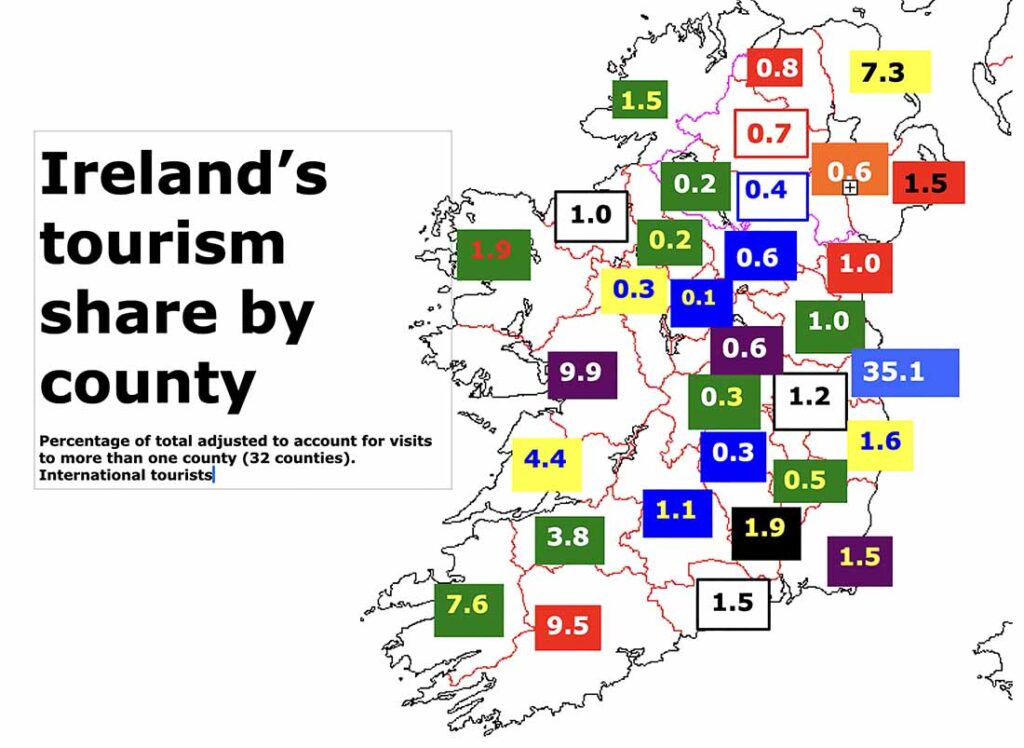
Ireland’s county Galway offers a delightful mix of cultural heritage and coastal beauty, with Galway City’s Latin Quarter showcasing historic streets and traditional music venues. The Connemara National Park provides hiking trails through rugged mountains and bogs, while the Aran Islands offer ancient stone forts like Dún Aonghasa. Other favourite stop is ithe Kylemore Abbey’s Victorian gardens and coastal cliffs. Galway is Ireland’s second largest county by size (5,939 sq km) and fifth largest by population (277,737). Population peaked at 440,198 in 1841 and reached its lowest point, 148,340 in 1966. In terms of hospitality, Galway is Ireland’s third most visited tourist county with around 1,028,000 international visitors per year.
Introduction – Adventure – Anthem – Archaeology – Attractions – Awards – Birdwatching – Camping – Castles – Churches – Contact list – Cycling – Dining – Equestrian – Festivals – Fishing – Folklore – Gardens – Golf – Graveyards – Happening – Haunted – Highest – Hiking – History – Holy Wells – Hotels – Hotels top 8 – Hunting & shooting – Instagrammable – Itineraries – Largest town – Luxury – MICE – Movies – Music – Name – New – Novelists – Off the beaten track – Poets – Pubs – Quotes – Random Facts – Restaurant Awards – Sacred Places – Saints – Songs – Spas – Sports – Sunsets – Sustainable – Things to do – Towns – Video – Villages – Walking – Wanderlist – Weddings – Wild swimming – Writers – 1837 – 1846 – 1852 – 1909 – 1955 – 1980 –