- Maria Edgeworth: Born in Black Bourton, Oxfordshire, England; lived in Edgeworthstown (Mostrim), County Longford 1768–1849) A pioneering novelist of the early 19th century, Edgeworth is best known for Castle Rackrent (1800), often considered the first historical and regional novel in English, and The Absentee (1812), which critiques absentee landlordism. Raised in Edgeworthstown from age five, she managed the family estate and used her literary earnings to support it. Her novels, blending realism and social commentary, influenced writers like Jane Austen and Walter Scott, and she was a key figure in the Anglo-Irish literary tradition.
- Richard Lovell Edgeworth: Lived in Edgeworthstown (Mostrim), County Longford 1744–1817) Primarily an inventor, educator, and memoirist, Edgeworth co-authored the novel The Parent’s Assistant (1796) with his daughter Maria and contributed to her early works, such as Letters for Literary Ladies (1795). His residence in Edgeworthstown, where he managed the family estate, shaped his and Maria’s literary focus on Irish society. Though less prominent as a novelist than Maria, his collaborative fiction and influence on her career mark him as a significant literary figure in Longford.
- Pádraic Colum (1881–1972): Born in the Longford workhouse, he was a central figure in the Irish Literary Revival, known as a poet, novelist, and folklorist.
- John Keegan Casey (“Leo”) (1846–1870): A poet and writer born near Mullingar, known for his Fenian songs and literature, including A Wreath of Shamrocks.
- Noel Monaghan: A contemporary poet and writer whose work often explores rural life.
Novelists
Antrim – Armagh – Carlow – Cavan – Clare – Cork – Derry – Donegal – Down – Dublin – Fermanagh – Galway – Kerry – Kildare – Kilkenny – Laois – Leitrim – Limerick – Longford – Louth – Mayo – Meath – Monaghan – Offaly – Roscommon – Sligo – Tipperary – Tyrone – Waterford – Westmeath – Wexford – Wicklow
Poets
Antrim – Armagh – Carlow – Cavan – Clare – Cork – Derry – Donegal – Down – Dublin – Fermanagh – Galway – Kerry – Kildare – Kilkenny – Laois – Leitrim – Limerick – Longford – Louth – Mayo – Meath – Monaghan – Offaly – Roscommon – Sligo – Tipperary – Tyrone – Waterford – Westmeath – Wexford – Wicklow
Writers
Antrim – Armagh – Carlow – Cavan – Clare – Cork – Derry – Donegal – Down – Dublin – Fermanagh – Galway – Kerry – Kildare – Kilkenny – Laois – Leitrim – Limerick – Longford – Louth – Mayo – Meath – Monaghan – Offaly – Roscommon – Sligo – Tipperary – Tyrone – Waterford – Westmeath – Wexford – Wicklow
County Longford:
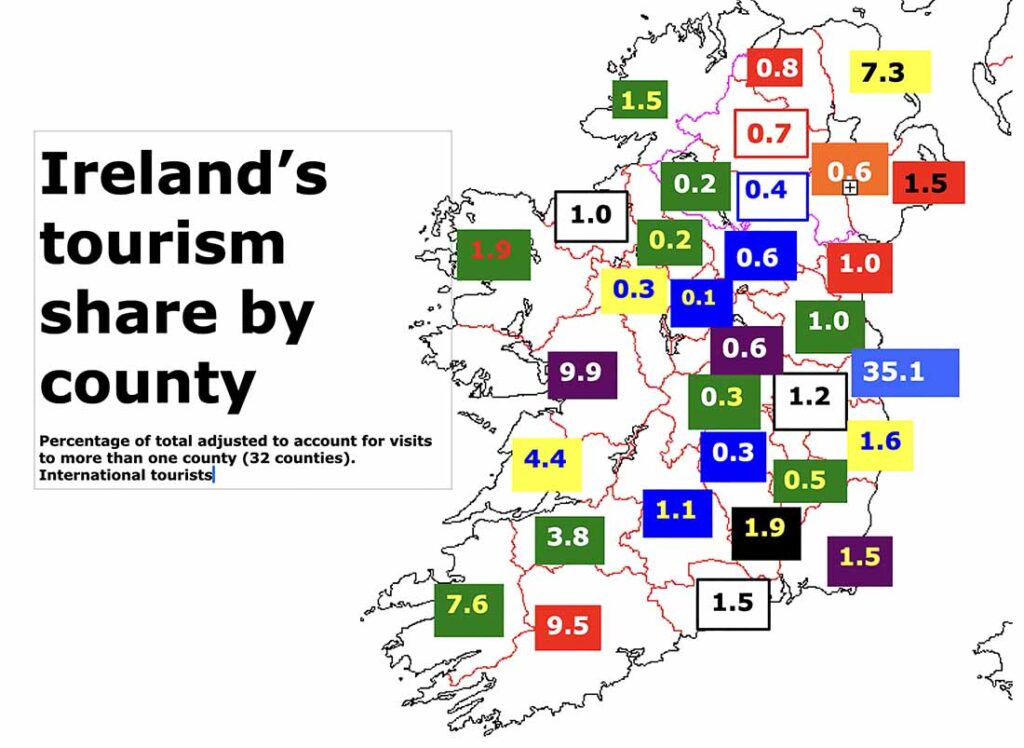
Ireland’s county Longford offers a peaceful blend of history and countryside, with the Corlea Trackway Visitor Centre showcasing an ancient Iron Age road. The county’s St Mel’s Cathedral in Longford town provides architectural beauty, while the River Inny offers opportunities for kayaking and fishing. Other attractions include the rolling farmlands and historic Ardagh village. Longford is Ireland’s fourth smallest county by size and second smallest by population (46,751). Population peaked at 115,491 in 1841 and reached its lowest point, 28,250 in 1971. In terms of hospitality, Longford is Ireland’s 32nd most visited and Ireland’s least visited tourist county with around 22,000 international visitors per year.
Introduction – Adventure – Anthem – Archaeology – Attractions – Awards – Birdwatching – Camping – Castles – Churches – Contact list – Cycling – Dining – Equestrian – Festivals – Fishing – Folklore – Gardens – Golf – Graveyards – Happening – Haunted – Highest – Hiking – History – Holy Wells – Hotels – Hotels top 8 – Hunting & shooting – Instagrammable – Itineraries – Largest town – Luxury – MICE – Movies – Music – Name – New – Novelists – Off the beaten track – Poets – Pubs – Quotes – Random Facts – Restaurant Awards – Sacred Places – Saints – Songs – Spas – Sports – Sunsets – Sustainable – Things to do – Towns – Video – Villages – Walking – Wanderlist – Weddings – Wild swimming – Writers – 1837 – 1846 – 1852 – 1909 – 1955 – 1980 –