- Markree Castle: Located near Collooney, Markree Castle is a 17th-century castle originally built by the Cooper family during the Cromwellian conquest, transformed into a Gothic Revival mansion in the 19th century by Edward Joshua Cooper, an astronomer who established the Markree Observatory. Now a luxury hotel, it’s set on 500 acres of countryside with a Victorian walled garden, known for its romantic elegance and historical significance. Open year-round as a 4-star hotel (check markreecastle.ie, rooms €150–€300/night), visitors can stay in opulent rooms with historical features like mahogany staircases and stucco work, or book non-guest tours by appointment (€10–€15). The grounds offer fishing, horseback riding, and garden walks. Expect a 1–2 hour tour or longer for stays, with dining at the castle’s restaurant (mains €15–€30). Amenities include parking, WiFi, and a bar. Events like weddings or cultural festivals are common. Partial wheelchair access. Combine with nearby Knocknarea or Carrowmore Megalithic Cemetery for a full day. Ideal for luxury travelers, history buffs, and those seeking a fairy-tale wedding venue.
- Classiebawn Castle: Built in 1874 for Lord Palmerston, an English Prime Minister, Classiebawn Castle is a Baronial-style country house on the Mullaghmore Peninsula, constructed with Donegal sandstone. On a former O’Connor Sligo estate, it’s infamous for its connection to Lord Mountbatten, who was assassinated nearby in 1979. Privately owned, it’s a striking landmark with views of Benbulben and the Atlantic. Not open to the public due to private ownership, visitors can view the castle from a distance along the Mullaghmore Peninsula (free, year-round). Expect a 15–30 minute stop to admire its fairy-tale silhouette and coastal scenery, with information boards detailing its history. No facilities on-site; parking is limited, and an electric fence restricts close access. Nearby Mullaghmore Beach (5 minutes) or the Pier Head Hotel offer dining. The rugged cliffs and ocean views are stunning, but photography requires a long lens for best results. Combine with Glencar Waterfall or Streedagh Beach. Best for a scenic drive-by, appealing to history enthusiasts and photographers.
- Parke’s Castle: Built in the early 17th century by Robert Parke on the shores of Lough Gill, Parke’s Castle is a restored Plantation-era fortified manor on the site of a 15th-century O’Rourke tower house. A National Monument managed by the OPW, it features a bawn, corner towers, and a reconstructed interior, offering insights into Gaelic and Plantation history. Open late March–late September (daily, 10 AM–6 PM, check heritageireland.ie, €5 adults, €3 children/seniors, €13 family), visitors can take guided tours (45 minutes) of the manor, courtyard, and exhibitions, exploring 17th-century life. Expect a 1–1.5 hour visit with Lough Gill views. Amenities include parking, toilets, and a small visitor center. Ground floor is wheelchair-accessible. Combine with Hazelwood Demesne trails or Sligo Abbey. A top choice for history lovers seeking a well-preserved, accessible site.
- Ballymote Castle: Constructed around 1300 by Richard de Burgh, Earl of Ulster, Ballymote Castle is one of Ireland’s largest Norman castles, featuring six towers and a double gateway. Controlled by the O’Connor Sligo and O’Donnell clans, it was a key stronghold during medieval conflicts. Now a ruin, it’s a National Monument in Ballymote town. Open year-round (free, dawn–dusk), visitors can explore the castle’s exterior and limited interior (at own risk due to loose stones). Expect a 30–45 minute visit, with a park and stream enhancing the setting. Information boards detail its history. No facilities on-site; parking and cafes are in Ballymote. Wear sturdy shoes for wet ground. Combine with nearby Carrowmore or Gurteen’s attractions. Suits those seeking a medieval ruin in a quiet, park-like setting.
- Enniscrone Castle (O’Dowd Castle): Built in the 15th century by the O’Dowd clan, Enniscrone Castle, also known as O’Dowd Castle, is a coastal tower house ruin near Enniscrone. Once a Gaelic stronghold, it’s now a scenic ruin with a history of changing owners, set against the rugged Atlantic coast. Open year-round (free, dawn–dusk), visitors can view the small ruin from public paths, with an electric fence limiting close access. Expect a 15–30 minute stop to appreciate the Atlantic scenery and surfers. A sign provides historical context. No facilities; parking is nearby in Enniscrone town, with cafes and seaweed baths. The site is dangerous due to falling stones, so exploration is limited. Combine with Streedagh Beach or Easkey for coastal adventures. A brief stop for those exploring the Wild Atlantic Way, best for rugged scenery.
Sligo has minor castle ruins like Ballinafad Castle (16th-century, near Lough Arrow, free but heavily ruined, limited access) and Castle Dargan (18th-century estate, now a hotel, no historical tours). These are less prominent due to their condition or modern use. Lissadell House, while notable, is a 19th-century mansion, not a castle.
Sligo’s castles are notable for their diverse styles, from Markree’s luxury to Ballymote’s Norman grandeur. Parke’s and Markree are the most accessible, while Classiebawn and Enniscrone offer scenic, limited-access ruins.
Castles
Antrim – Armagh – Carlow – Cavan – Clare – Cork – Derry – Donegal – Down – Dublin – Fermanagh – Galway – Kerry – Kildare – Kilkenny – Laois – Leitrim – Limerick – Longford – Louth – Mayo – Meath – Monaghan – Offaly – Roscommon – Sligo – Tipperary – Tyrone – Waterford – Westmeath – Wexford – Wicklow
County Sligo:
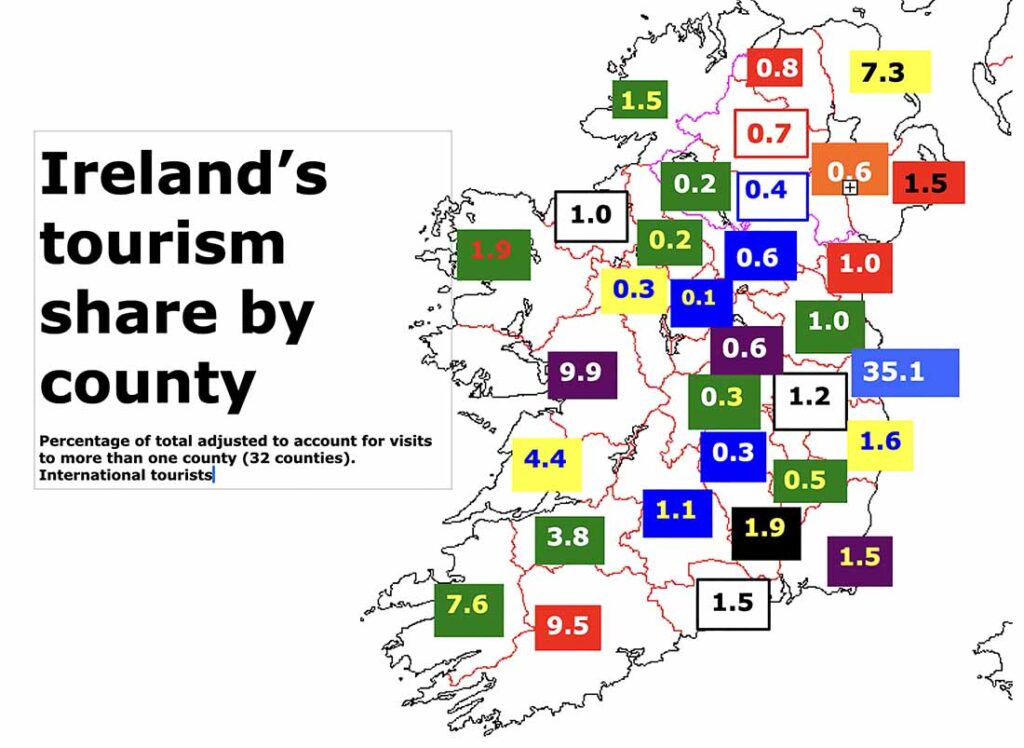
Ireland’s county Sligo is renowned for its poetic heritage and coastal scenery, with the Carrowmore Megalithic Cemetery offering one of Europe’s oldest prehistoric sites. The Benbulben mountain provides striking hiking trails, while Strandhill’s beaches are ideal for surfing. Other attractions include the historic Lissadell House and its gardens. Sligo is Ireland’s 22nd largest county by size (1,796 square km) and seventh smallest by population (70,198). Population peaked at 180,886 in 1841 and reached its lowest point, 50,275 in 1971. In terms of hospitality, Sligo is Ireland’s 17th most visited tourist county with around 133,000 international visitors per year.
Introduction – Adventure – Anthem – Archaeology – Attractions – Awards – Birdwatching – Camping – Castles – Churches – Contact list – Cycling – Dining – Equestrian – Festivals – Fishing – Folklore – Gardens – Golf – Graveyards – Happening – Haunted – Highest – Hiking – History – Holy Wells – Hotels – Hotels top 8 – Hunting & shooting – Instagrammable – Itineraries – Largest town – Luxury – MICE – Movies – Music – Name – New – Novelists – Off the beaten track – Poets – Pubs – Quotes – Random Facts – Restaurant Awards – Sacred Places – Saints – Songs – Spas – Sports – Sunsets – Sustainable – Things to do – Towns – Video – Villages – Walking – Wanderlist – Weddings – Wild swimming – Writers – 1837 – 1846– 1852 – 1909 – 1955 – 1980 –