- Saint Attracta (Athracht): August 11, c. 5th–6th century (exact dates unknown): Killaraght, County Sligo (and Roscommon) Attracta, a contemporary of St. Patrick, founded a convent at Killaraght, near Lough Gara, which spans Sligo and Roscommon. Born to a noble family, she was known for her healing powers and charity, establishing a hospice for the poor. A holy well and a church in Kilmactigue bear her name, as does a secondary school in Tubbercurry. She is a patroness of the Achonry diocese.
- Saint Lomman of Lough Gill: February 4, c. 6th century (exact dates unknown): Lough Gill, County Sligo Lomman, born to a noble lineage, likely established a hermitage on an island in Lough Gill, between Sligo and Leitrim. He participated in the Synod of Dromceat (c. 580–590), possibly meeting St. Columba. Little else is known, but his feast is recorded in the Martyrology of Tallagh, reflecting local veneration.
- Saint Molaise (Laserian) of Inishmurray: August 12, c. 6th century (exact dates unknown): Inishmurray, County Sligo Molaise founded a monastery on Inishmurray Island, off Sligo’s coast, a significant early Christian site with stone churches and crosses. Known for his asceticism, he may be distinct from St. Laserian of Leighlin. His monastery was a spiritual center, and his cult persisted in local tradition, with relics like a holy well.
- Saint Bron of Killaspugbrone: June 8, c. 5th century (exact dates unknown): Killaspugbrone, County Sligo Bron, a disciple of St. Patrick, founded a church at Killaspugbrone (“Church of Bishop Bron”) near Sligo town. He was a missionary bishop known for baptizing converts and establishing Christian communities. The site includes ruins and a holy well, reflecting his local influence.
- Saint Fechin of Fore: January 20, c. 6th–7th century (exact dates unknown): Ballysadare, County Sligo (via influence) Fechin founded a monastery at Fore, Westmeath, but is linked to Sligo through his possible association with Ballysadare’s monastic community. Known for his ascetic life and miracles, such as healing the sick, his influence spread through Connacht. He died of plague, and his cult was strong regionally.
- Saint Columba (Colum Cille): June 9, c. 521–597: Sligo (via regional influence) Columba, one of Ireland’s three chief saints, founded Iona and studied at Clonard, influencing Sligo through monastic networks like Clonmacnoise and Drumcliffe. Exiled after a dispute, he became a missionary in Scotland. Tradition links him to Drumcliffe, where a monastery was later founded in his honour.
- Saint Finbarr of Inis Doimhle: July 4, c. 6th century (exact dates unknown): Inis Doimhle, County Sligo Finbarr, distinct from Finbar of Cork, is associated with a monastic site at Inis Doimhle, an island in Sligo. Little is known, but his feast is recorded in Irish calendars, and he likely led an ascetic life, typical of early Irish monks. His cult reflects Sligo’s monastic heritage.
- Saint Ceannanach of Emlaghfad: Unknown (possibly local veneration), c. 6th century (exact dates unknown): Emlaghfad, County Sligo Ceannanach is linked to Emlaghfad (Ballymote), where he may have founded a church. His name appears in martyrologies, but details are scarce. He represents the obscure saints venerated locally in Sligo, with possible ties to early Christian communities.
- Saint Moling of Drumcliffe: June 17, c. 6th–7th century (exact dates unknown): Drumcliffe, County Sligo Moling, primarily associated with St. Mullins, Carlow, is linked to Drumcliffe, a monastic site in Sligo traditionally tied to St. Columba. He was known for his wisdom and miracles, including building a mill without labor. His Sligo connection is through regional veneration.
- Saint Assicus of Elphin: April 27, c. 5th century (exact dates unknown): Elphin, County Roscommon (near Sligo) Assicus, a disciple of St. Patrick, was the first bishop of Elphin, near Sligo’s border. A skilled metalworker, he crafted sacred vessels. Known for his humility, he retired as a hermit after criticism. His influence extended into Sligo through the Elphin diocese.
- Saint Tri Ingena Ailella (Three Daughters of Ailill): August 9, c. 6th century (exact dates unknown): Unknown (venerated in Sligo) These three saintly sisters, listed in the Martyrology of Tallagh, are associated with Sligo through local tradition. Their identities and specific location are unknown, but their feast reflects the Irish tradition of venerating sibling groups. They likely lived ascetically.
- Saint Cota of Druim-Lomain: February 4, c. 6th century (exact dates unknown): Druim-Lomain, County Sligo Cota is an obscure saint linked to Druim-Lomain, possibly near Lough Gill. Little is known beyond her feast day in the Martyrology of Tallagh, shared with St. Lomman. She likely lived as a hermit or nun, reflecting Sligo’s tradition of early female ascetics.
Saints
Antrim – Armagh – Carlow – Cavan – Clare – Cork – Derry – Donegal – Down – Dublin – Fermanagh – Galway – Kerry – Kildare – Kilkenny – Laois – Leitrim – Limerick – Longford – Louth – Mayo – Meath – Monaghan – Offaly – Roscommon – Sligo – Tipperary – Tyrone – Waterford – Westmeath – Wexford – Wicklow
Sacred Places
Antrim – Armagh – Carlow – Cavan – Clare – Cork – Derry – Donegal – Down – Dublin – Fermanagh – Galway – Kerry – Kildare – Kilkenny – Laois – Leitrim – Limerick – Longford – Louth – Mayo – Meath – Monaghan – Offaly – Roscommon – Sligo – Tipperary – Tyrone – Waterford – Westmeath – Wexford – Wicklow
Holy Wells
Antrim – Armagh – Carlow – Cavan – Clare – Cork – Derry – Donegal – Down – Dublin – Fermanagh – Galway – Kerry – Kildare – Kilkenny – Laois – Leitrim – Limerick – Longford – Louth – Mayo – Meath – Monaghan – Offaly – Roscommon – Sligo – Tipperary – Tyrone – Waterford – Westmeath – Wexford – WicklowCounty Sligo:
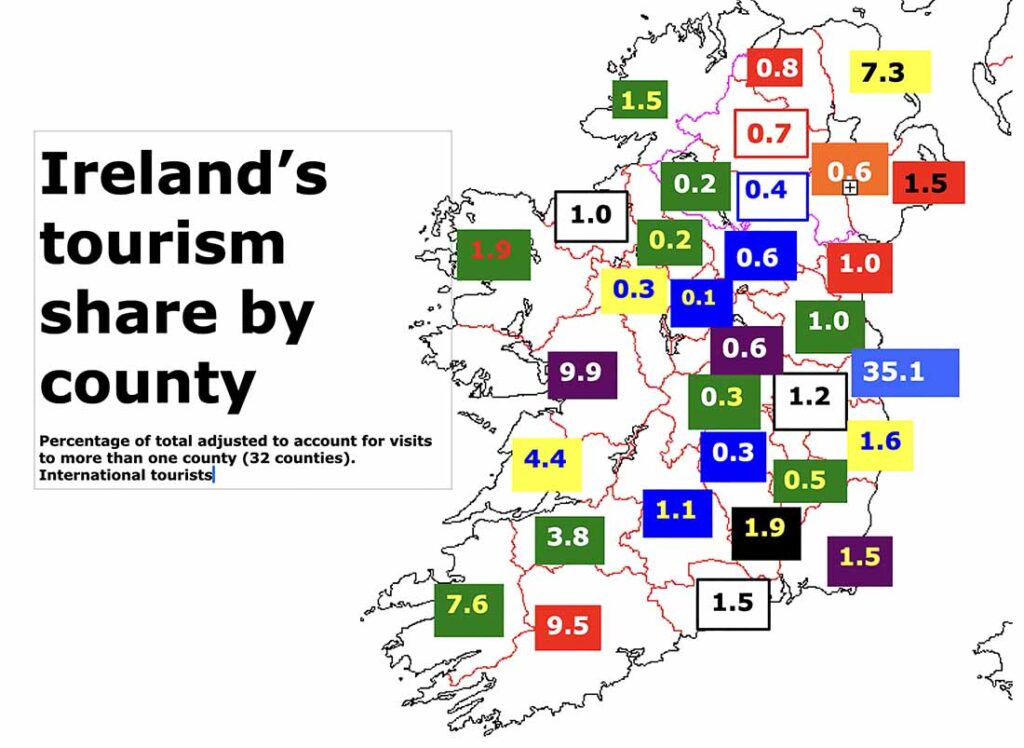
Ireland’s county Sligo is renowned for its poetic heritage and coastal scenery, with the Carrowmore Megalithic Cemetery offering one of Europe’s oldest prehistoric sites. The Benbulben mountain provides striking hiking trails, while Strandhill’s beaches are ideal for surfing. Other attractions include the historic Lissadell House and its gardens. Sligo is Ireland’s 22nd largest county by size (1,796 square km) and seventh smallest by population (70,198). Population peaked at 180,886 in 1841 and reached its lowest point, 50,275 in 1971. In terms of hospitality, Sligo is Ireland’s 17th most visited tourist county with around 133,000 international visitors per year.
Introduction – Adventure – Anthem – Archaeology – Attractions – Awards – Birdwatching – Camping – Castles – Churches – Contact list – Cycling – Dining – Equestrian – Festivals – Fishing – Folklore – Gardens – Golf – Graveyards – Happening – Haunted – Highest – Hiking – History – Holy Wells – Hotels – Hotels top 8 – Hunting & shooting – Instagrammable – Itineraries – Largest town – Luxury – MICE – Movies – Music – Name – New – Novelists – Off the beaten track – Poets – Pubs – Quotes – Random Facts – Restaurant Awards – Sacred Places – Saints – Songs – Spas – Sports – Sunsets – Sustainable – Things to do – Towns – Video – Villages – Walking – Wanderlist – Weddings – Wild swimming – Writers – 1837 – 1846– 1852 – 1909 – 1955 – 1980 –