Pre-1000 The Gaelic Nation
County Louth, part of the ancient kingdom of Airgialla, was shaped by Gaelic regional structures. The region was associated with the house of Niall dynasty and smaller kindred like the Conaille Muirtheimne, who dominated the area around modern Dundalk. Archaeological evidence, such as the Proleek Dolmen, points to prehistoric settlement, with megalithic tombs indicating a ritual landscape by 3000 BCE. By the 5th century, Christianity spread through St. Patrick, who is said to have founded a church in Louth village, giving the county its name (Lú, meaning ‘small enclosure’). Monastic sites, such as Monasterboice (founded c. 5th century), became centres of learning, producing illuminated manuscripts like those preserved in later records. The Annals of Ulster note Viking raids along Louth’s coast, particularly Dundalk Bay, in the 9th century, disrupting Gaelic society but leaving monastic centres resilient.
1000–1100: Gaelic Resilience and Monastic Influence
Louth remained under Gaelic control, with the Conaille Muirtheimne and other local dynasties maintaining power despite Viking pressures. Monasterboice flourished as a major ecclesiastical centre, with its high crosses and round tower (c. 10th century) showcasing artistic and religious significance. The O’Carroll (Ó Cearbhaill) dynasty emerged as key rulers in Airgialla, including Louth. The Battle of Clontarf (1014), documented in The Annals of the Four Masters, indirectly affected Louth, reinforcing Gaelic resistance to external threats. The county’s proximity to Dublin, a Viking stronghold, made it a frontier zone, but its monastic wealth, as at Mellifont (founded later but rooted in this period’s ecclesiastical growth), sustained its cultural importance.
1100–1200: Norman Invasion and Early Anglo-Norman Influence
The Norman invasion (1169) profoundly impacted Louth due to its proximity to Dublin. In 1185, Prince John granted Louth to Bertram de Verdun, establishing it as a county under Anglo-Norman administration. The Normans built castles, such as Castle Roche and Dundalk’s Castletown Castle, to secure their hold. The O’Carrolls and other Gaelic lords resisted but were gradually displaced. Mellifont Abbey, founded in 1142 by St. Malachy as Ireland’s first Cistercian monastery, became a spiritual and economic hub, as noted in The Annals of Tigernach. Drogheda, straddling Louth and Meath, grew as a key port and Norman stronghold. Mellifont played a role in integrating Norman and Gaelic religious practices, though tensions persisted between native lords and Anglo-Norman settlers.
1200–1300: Norman Consolidation and Gaelic Retreat
Louth became a core part of the Anglo-Norman Pale, with Drogheda emerging as a major walled town and economic centre. The de Verduns and later the de Lacy family dominated, building fortified manors like Ardee Castle. Gaelic influence waned, but dynasties like the O’Hanlons maintained a presence in southern Airgialla. The county’s fertile lands supported agriculture, with monasteries like Mellifont driving economic activity. The Black Death (1348–1350) reduced Louth’s population. The Annals of Connacht note regional conflicts and Louth’s strategic importance as a Pale frontier. Norman legal and feudal systems reshaped land ownership, marginalising Gaelic traditions.
1300–1400: The Pale and Gaelic Resurgence
Louth’s position within the Pale solidified, with Drogheda and Dundalk as key administrative and trade centres. The Statute of Kilkenny (1366) aimed to reinforce Anglo-Norman control, but Gaelic clans, including the O’Neills, began reasserting influence from Ulster. The county’s castles, such as Termonfeckin and Carlingford, were strengthened to counter Gaelic raids. Mellifont Abbey remained a religious powerhouse until its decline later in the century. Louth’s economy thrived on grain and wool exports through Drogheda, The county retained a dual identity as a Norman stronghold and a contested frontier, with figures like the de Verduns shaping its governance.
1400–1500: Late Medieval Tensions
Louth remained a Pale stronghold, with Drogheda’s walls and gates symbolising English control. The county’s Anglo-Norman lords, such as the Belles and Dowdalls, intermarried with Gaelic families, creating a hybrid elite. Gaelic resurgence, led by the O’Neills, challenged the Pale’s borders, with skirmishes near Dundalk. Monastic decline began, with Mellifont’s wealth attracting scrutiny. The county’s ports facilitated trade with England, but economic stagnation followed the Wars of the Roses’ impact on the Pale. The Annals of Ulster record regional conflicts, while castles like Darver and Smarmore underscored the county’s militarised landscape.
1500–1600: Tudor Reconquest and Reformation
The Tudor reconquest reshaped Louth. The dissolution of monasteries (1536–1541) saw Mellifont Abbey suppressed, its lands redistributed to Anglo-Irish lords,. The O’Neills’ rebellion during the Nine Years’ War (1593–1603) culminated in the Battle of the Yellow Ford (1598), near Louth’s borders, weakening Gaelic resistance. Drogheda’s strategic importance grew, hosting English garrisons. The county’s Anglo-Irish families, like the Plunketts, navigated Tudor policies, balancing loyalty to the crown with local influence. Louth’s designation as a county was formalised by 1596, reflecting Tudor administrative reforms. The Annals of the Four Masters document the O’Neills’ campaigns, the lives of figures like Oliver Plunkett (later canonised) trace the county’s religious shifts.
1600–1700: Cromwellian Upheaval and Restoration
The 1641 Rebellion saw Louth as a battleground, with Gaelic and Old English forces briefly seizing Drogheda. Cromwell’s siege of Drogheda (1649) was a brutal turning point, with thousands massacred. The Cromwellian confiscations redistributed Louth’s lands to English settlers, though some Old English families, like the Plunketts, retained influence. The Williamite War (1689–1691) saw the Battle of the Boyne (1690) fought partly in Louth, near Oldbridge, cementing Colonial/Protestant Ascendancy. Drogheda and Dundalk grew as commercial hubs, with linen and grain exports. The Confederate Wars documents and the lives of figures like Sir Phelim O’Neill provide context for Louth’s turbulent century.
1700–1800: Ascendancy and Economic Growth
Louth’s Anglo-Irish elite, including the Fortescues and Foster families, dominated under the Penal Laws, which marginalised Catholics. Drogheda and Dundalk thrived as port towns, exporting linen and importing goods via the Boyne Navigation. The county’s fertile lands supported a growing population, though Catholic tenants faced harsh rents. The 1798 Rebellion had limited impact in Louth, but local unrest reflected broader tensions, entries on figures like John Foster. The Act of Union (1800) integrated Louth into English rule, with Drogheda’s MPs losing influence. Archaeological surveys highlight Louth’s 18th-century estates, such as Beaulieu House, reflecting Ascendancy wealth.
1800–1900: Famine and Reform
The Great Famine (1845–1852) devastated Louth, with Drogheda’s workhouse overwhelmed and emigration reducing the population from 128,240 in 1841 to 90,000 by 1851, per census records. The county’s ports facilitated relief efforts but also emigration. Land reforms, spurred by the Land League, challenged Anglo-Irish landlords, with tenants in Ardee and Dundalk active in agitation. The Gaelic Revival fostered interest in Louth’s heritage, including Monasterboice and the Táin Bó Cúailnge, linked to the county’s landscape. St. Oliver Plunkett’s martyrdom (1681) gained renewed attention, with his shrine in Drogheda becoming a pilgrimage site,
1900–2025: Independence and Modernity
Louth played a significant role in the War of Independence (1919–1921), with IRA ambushes in Dundalk and Ardee, as documented in History Ireland. The county joined the Irish Free State in 1922, with Drogheda and Dundalk as economic hubs. The population stabilised, reaching 141,159 by 2022, per census data. Infrastructure, including the M1 motorway, enhanced connectivity, while tourism grew, focusing on sites like Monasterboice, Carlingford’s medieval heritage, and the Boyne Valley. Louth’s economy diversified, with pharmaceuticals and tech industries in Dundalk. Louth is one of just EIGHT Irish counties that has a larger population than it did in 1841.
History
Antrim – Armagh – Carlow – Cavan – Clare – Cork – Derry – Donegal – Down – Dublin – Fermanagh – Galway – Kerry – Kildare – Kilkenny – Laois – Leitrim – Limerick – Longford – Louth – Mayo – Meath – Monaghan – Offaly – Roscommon – Sligo – Tipperary – Tyrone – Waterford – Westmeath – Wexford – Wicklow
County Louth:
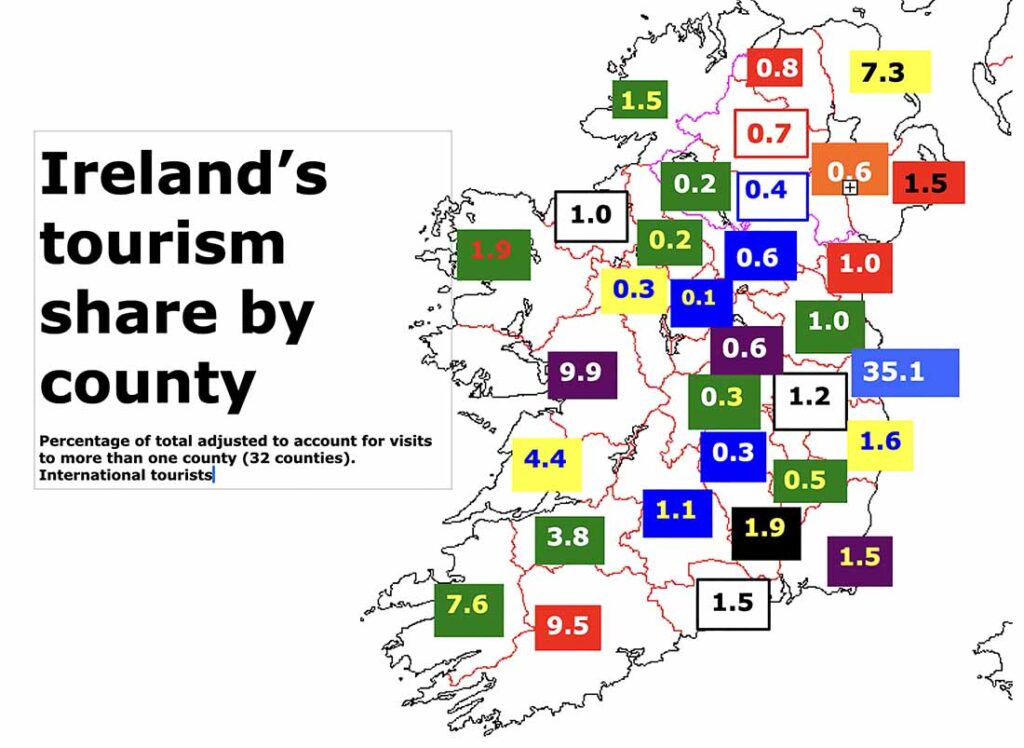
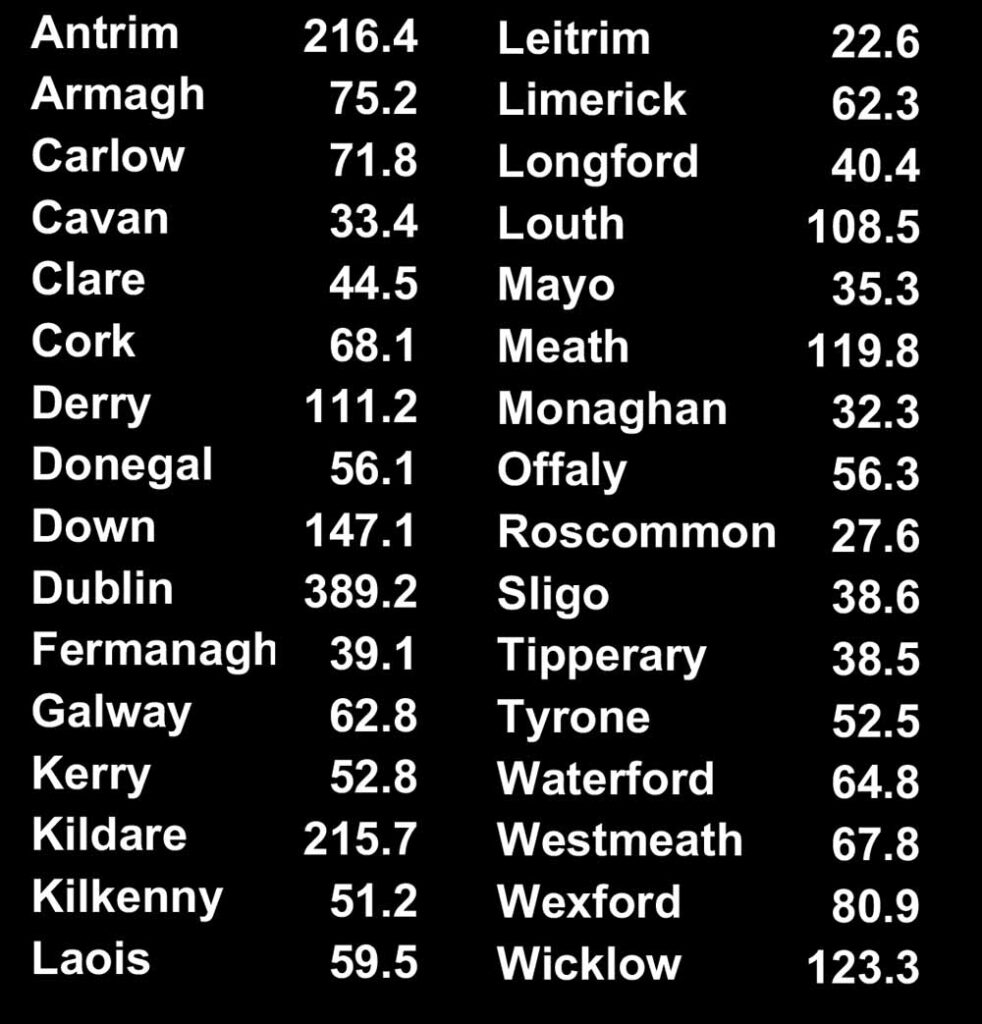
Ireland’s county Louth is a county of historic depth and coastal beauty, with Drogheda’s St Peter’s Church housing a historic shrine and the Boyne Valley offering ancient sites like Newgrange, a UNESCO-listed passage tomb just over the border in county Meath. Carlingford’s medieval streets and castle provide scenic walks, while Dundalk’s coastal paths add natural allure. Other attractions include the Cooley Peninsula’s hiking trails. Louth is Ireland’s smallest county by size (821 sq km) and 17th largest by population (139,703). Population peaked at 128,240 in 1841 and reached its lowest point, 63,665 in 1926. In terms of hospitality, Louth is Ireland’s 21st most visited tourist county with around 108,000 international visitors per year.
Introduction – Adventure – Anthem – Archaeology – Attractions – Awards – Birdwatching – Camping – Castles – Churches – Contact list – Cycling – Dining – Equestrian – Festivals – Fishing – Folklore – Gardens – Golf – Graveyards – Happening – Haunted – Highest – Hiking – History – Holy Wells – Hotels – Hotels top 8 – Hunting & shooting – Instagrammable – Itineraries – Largest town – Luxury – MICE – Movies – Music – Name – New – Novelists – Off the beaten track – Poets – Pubs – Quotes – Random Facts – Restaurant Awards – Sacred Places – Saints – Songs – Spas – Sports – Sunsets – Sustainable – Things to do – Towns – Video – Villages – Walking – Wanderlist – Weddings – Wild swimming – Writers – 1837 – 1846 – 1852 – 1909 – 1955 – 1980 –